Categories
Today

American boundaries

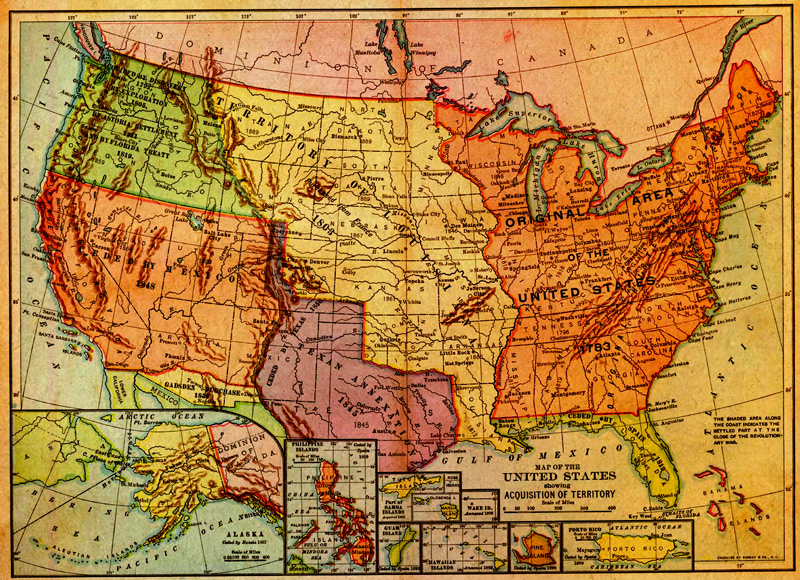
On October 20, 1803, the United States Senate ratified the Louisiana Purchase.

Exactly 15 years later, the Convention of 1818 signed between the United States and the United Kingdom which, among other things, settled the Canada-United States border on the 49th parallel for most of its length.

Categories
Thought

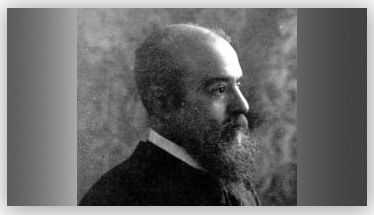
Vilfredo Pareto

Let us suppose that in a country of thirty million inhabitants it is proposed, under some pretext or other, to get each citizen to pay out one franc a year, and to distribute the total amount amongst thirty persons. Every one of the donors will give up one franc a year; every one of the beneficiaries will receive one million francs a year. The two groups will differ very greatly in their response to this situation. . . . In these circumstances the outcome is not in doubt: the spoliators will win hands down.

Categories
Accountability government transparency incumbents local leaders moral hazard national politics & policies term limits

Frail and Disoriented

Senator Thad Cochran sure is experienced: eight years in the House of Representatives followed by 36 years in the upper chamber. So who better to chair the powerful Senate Appropriations Committee?

Rephrase that: who wouldn’t be better?

“The 79-year-old Cochran appeared frail and at times disoriented during a brief hallway interview on Wednesday,” Politico reported. “He was unable to answer whether he would remain chairman of the Appropriations Committee, and at one point, needed a staffer to remind him where the Senate chamber is located.”*

The senator also allegedly had trouble correctly casting his vote on legislation, i.e. deciding between yea and nay.

The Mississippi Republican “has faced questions about his health for the past several years,” the article noted, adding, however, that “his aides and political allies insisted he was fine.”

Fine?

That seems to be the party line. “Top Senate Republicans say they are not pressuring Cochran to retire or step down as Appropriations Committee chairman,” acknowledged Politico.

Why not? Were Cochran to step down — in 2020 or sooner — his replacement would likely be more aligned with President Trump than with Senate Majority Leader Mitch McConnell and the Republican congressional establishment.

Super-incumbent Cochran only narrowly survived a 2014 challenge from a more conservative candidate in the GOP Primary. How? By mobilizing Democrats to cross over and vote for the more liberal Cochran.

A statesman steps down when no longer able to perform effectively. But the Establishment, on the other hand, sees Cochran’s role not as a representative but as a placeholder.

For their power.

This is Common Sense. I’m Paul Jacob.


* Opponents of term limits always told us that it would take six or eight years for newbie legislators to find the capitol’s bathrooms. That hasn’t turned out to be accurate, but obviously finding the Senate chamber, even after four decades in the capitol, is no gimme.


PDF for printing



Categories
Today

Cornwallis Surrenders

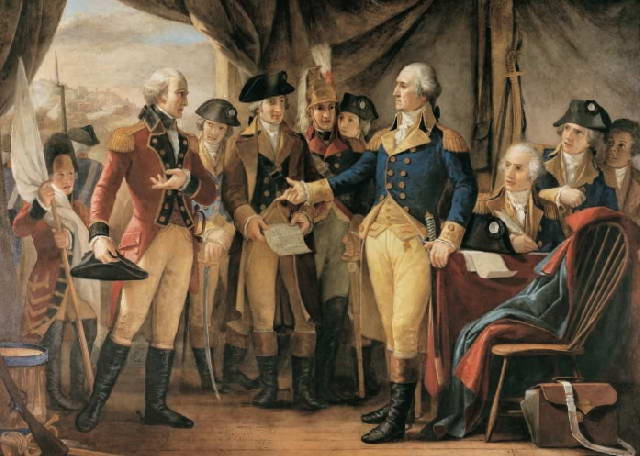
On October 19, 1781, representatives of British commander Lord Cornwallis handed over Cornwallis’s sword and formally surrendered to George Washington and the comte de Rochambeau, at Yorktown, Virginia. The Revolutionary War (or War for Independence, or Colonial Rebellion, or whatever you wish to call it) was over.

In 1918 on this date, conservative writer Russell Kirk was born.

Categories
Thought

Jean-Paul Sartre

We will freedom for freedom’s sake, in and through particular circumstances. And in thus willing freedom, we discover that it depends entirely upon the freedom of others and that the freedom of others depends upon our own. Obviously, freedom as the definition of a man does not depend upon others, but as soon as there is a commitment, I am obliged to will the liberty of others at the same time as my own. I cannot make liberty my aim unless I make that of others equally my aim.

Categories
Accountability general freedom government transparency incumbents initiative, referendum, and recall local leaders political challengers

Initiative Surplus?

Only nine out of 50 states can pay their bills and meet their obligations; 41 cannot, barring major tax increases or spending cuts.

That’s what we learn in last month’s “Financial State of the States” report from Truth in Accounting (TIA).

Alaska is in the best shape, “with $11 billion in assets to pay future bills”; New Jersey’s in the worst, needing “to come up with $208 billion in order to meet its promised obligations.”

Sheila Weinberg, TIA’s founder, works hard to counter governments’ creative accounting. It’s trickery, really, which “would be considered criminal for private sector corporations.” One gimmick is “promising to pay employee benefits in the future, but not fully funding the benefits programs as they rack up obligations.”*

Thankfully, TIA’s financial analysis includes items such as already-made pension and healthcare commitments.

Now, let’s expand the analysis, collating these findings to separate between initiative and non-initiative states**:

  • Seven of the nine states with a “taxpayer surplus” — where government can pay its bills and meet its obligations — have the ballot initiative process.
  • The 23 initiative states comprise 46 percent of the states. Yet, initiative states comprise a whopping 78 percent of financially healthy states.
  • Of the 20 states carrying a larger-than-average taxpayer burden, 15 states (75 percent) lack the initiative process.

Granted, this represents a correlation between states with citizen-initiated ballot measures and healthier fiscal policy, not necessarily causation. Still, I’m not surprised states where citizens have more say so are better governed.

This is Common Sense. I’m Paul Jacob.


* “This short term fix allows governments to artificially ‘balance their budgets’ by not counting certain obligations as official debt.”

** There are 23 initiative states and 27 non-initiative states. Two referendum-only states— Maryland and New Mexico — are considered non-initiative states, and so is Illinois. Illinois is considered a non-initiative state, because its ballot initiative process is so severely restricted as to be non-existent. Only one measure has ever appeared on the ballot.


PDF for printing


Categories
Today

First African-American Author

On October 18, 1775, African-American poet Phillis Wheatley was freed from slavery, upon the death of her master. Widely appreciated in her day, she was the first African-American to publish a book.

Categories
Thought

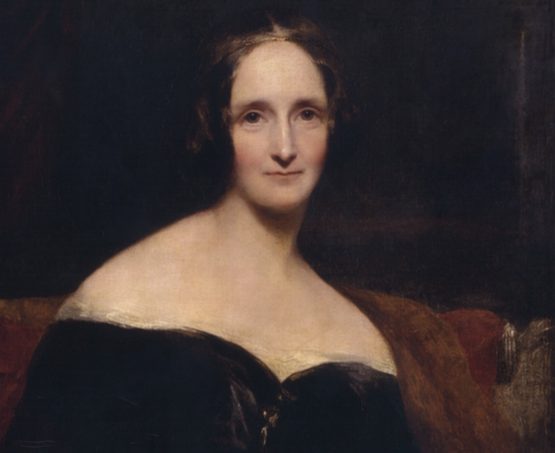
Mary Shelley

I do not wish women to have power over men; but over themselves.


Mary Wollstonecraft Shelley, detail (above) of a portrait by Richard Rothwell, oil on canvas, first exhibited 1840.

Categories
Common Sense

The Immovable Non-movers

You can’t suspend the law of gravity. Nor, apparently, the laws of bureaucratic lethargy and inertia.

Diana Rickert was a policy analyst with the Illinois Policy Institute who accepted a job with the administration of Illinois Governor Bruce Rauner.

She lasted six weeks.

The assignment: combine and streamline several governmental departments. After years of “railing against government,” she felt she must accept this opportunity to improve government from the inside. Or else forever wonder whether she might have made a difference.

She’s learned her answer. She could not. Not as an insider. Not without the authority, at a minimum, to fire useless employees, who abound in Illinois’s state government.

And whose uselessness doesn’t always preclude outrageous expectations about salary and position.

Whether trying to get working computers or to get workers to work on simple but unfamiliar tasks, Diana and the few others eager to get stuff done were constantly thwarted by the apathy and sense of entitlement of the majority — and by endless arcane and senseless rules. Rather than imply tacit acceptance of such a broken, unfixable system, she resigned.

All this sounds familiar, an inevitable feature of government bureaucracy with its glued-in vested interests and lack of market-style profit incentives. Old news if you’ve ever been to the DMV.

So what’s the answer? Give up?

No. Illinois is “ready for change,” Diana Rickert says. But it’s outsiders who will have to change it — from the outside . . . “because the insiders never will.”

This is Common Sense. I’m Paul Jacob.


PDF for printing


Categories
Thought

Auberon Herbert

To live in a state of liberty is not to live apart from law. It is, on the contrary, to live under the highest law, the only law that can really profit a man, the law which is consciously and deliberately imposed by himself on himself.


Auberon Herbert, The Right and Wrong of Compulsion by the State (1885)