Categories
Accountability incumbents insider corruption moral hazard national politics & policies term limits too much government

Most Hated

I was once “the most hated man in Washington.”* Why? For my work on term limits.

I wore the appellation as a badge of honor.

Last year I noted that Ted Cruz had taken up the mantle, but now, certainly, it’s President Donald Trump’s.

Has ever a president been as hated?

Thomas Jefferson was characterized as the Antichrist. Andrew Jackson made many enemies in overthrowing the Second National Bank. But John Tyler is the most interesting case.

President Tyler was a Jeffersonian democrat who took up the office from William Henry Harrison, who died several weeks after being sworn in. Tyler was never accepted as legitimate by — get this — the Whig Party that nominated him. He was dubbed “His Accidency.” After opposing a revival of the national bank notion, there were riots, and his party expelled him. He received hundreds of death threats in the mail. Later he was almost impeached.

Admittedly, Republicans haven’t abandoned Trump — yet. But the Democrats have opposed him from the beginning. And the Entertainment Industrial Complex never ceases to wage a culture war against him. What should the most hated man do?

Make the most of it.

One of his promises was to put congressional term limits into the Constitution. Congress is reluctant. But Trump can do what I couldn’t: use all the powers of the presidency — from the bully pulpit to the veto pen — to leverage those in Congress into proposing a constitutional amendment.

It won’t make President Trump any less hated in Washington, but will win support everywhere else.

This is Common Sense. I’m Paul Jacob.

 

* That was in days of yore, the 1990s, and it was Bob Novak who gave me the appellation. Politicians, lobbyists and other government insiders hate term limits.


Printable PDF


Categories
Thought

John H. Cochrane

Any time economists start telling you to pass complex regulations to enforce morality, run in the opposite direction. The Obama administration had something with the idea of ‘science-based’ policy. At least let’s get the cause and effect science right before we start making moral claims.


John H. Cochrane, “NoahLogic,” The Grumpy Economist, June 4, 2017

Categories
Today

Anti-slavery

On June 13, 1774, Rhode Island became the first British colony in the Americas to prohibit the importation of slaves.

Categories
Accountability general freedom initiative, referendum, and recall local leaders

Citizens Triumphant

Last week, the Ohio Constitutional Modernization Commission considered whether to recommend a constitutional change to create an obvious double standard: requiring citizen-initiated constitutional amendments to obtain a 55 percent supermajority vote, while the very same amendments proposed by legislators would only need 50-percent-plus-one for passage.

I traveled to the capitol in Columbus, joining a room full of Ohio citizens and organizations testifying in opposition. As I explained at Townhall yesterday, after hearing from the people, the Commission tabled the idea.*

For more than four years, the Constitutional Revision and Updating Committee deliberated over how to improve the constitution and came to a consensus in favor of the aforementioned double standard (sent to the full Commission). And yet, at a well-attended public hearing, no one defended the proposal.

While bias favoring the legislature seemed obvious, commissioners bristled at the suggestion that — established and funded by the legislature — they lacked independence. “If there were one or two legislative members on our committee, that was it,” offered non-legislator Janet Abaray.

Actually, four of the nine members on Abaray’s committee are currently state legislators — not one or two. Plus, two more previously served in the legislature. That’s two-thirds of the committee comprised of current or former legislators.

Moreover, the published minutes provide a peek into the thinking behind the proposed double standard. For instance, “what have emerged lately are initiated amendments to the constitution that are inconsistent with the purpose of the constitution.”

It is the people who will decide what belongs in the people’s constitution — not the legislature.

And not the legislature’s commission.

That’s the truth that Ohioans spoke to power.

And power listened.  

This is Common Sense. I’m Paul Jacob.
 

* The commission came to this conclusion with only one dissenting vote.


Printable PDF


Categories
Thought

Jean-Baptiste Say

The best scheme of finance is, to spend as little as possible; and the best tax is always the lightest.

Categories
Today

Rights

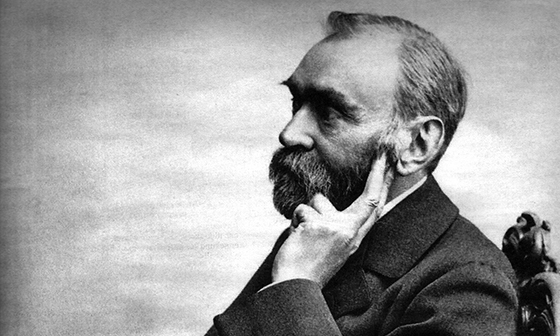
In 1776, on June 12, the Fifth Virginia Convention at Williamsburg, Virginia, unanimously adopted a Declaration of Rights, several weeks prior to the adoption of the state’s constitution. George Mason (pictured above), who drafted the document, stated clearly in the preamble that rights must be “the basis and foundation of Government.”

The first four planks run as follows:

I. That all men are by nature equally free and independent, and have certain inherent rights, of which, when they enter into a state of society, they cannot, by any compact, deprive or divest their posterity; namely, the enjoyment of life and liberty, with the means of acquiring and possessing property, and pursuing and obtaining happiness and safety.

II. That all power is vested in, and consequently derived from, the people; that magistrates are their trustees and servants, and at all times amenable to them.

III. That government is, or ought to be, instituted for the common benefit, protection, and security of the people, nation or community; of all the various modes and forms of government that is best, which is capable of producing the greatest degree of happiness and safety and is most effectually secured against the danger of maladministration; and that, whenever any government shall be found inadequate or contrary to these purposes, a majority of the community hath an indubitable, unalienable, and indefeasible right to reform, alter or abolish it, in such manner as shall be judged most conducive to the public weal.

IV. That no man, or set of men, are entitled to exclusive or separate emoluments or privileges from the community, but in consideration of public services; which, not being descendible, neither ought the offices of magistrate, legislator, or judge be hereditary.

Categories
links

Townhall: They United Against Insiders and Won

“The requirement being proposed by the Constitutional Revision and Review Committee,” M. Dane Waters, a scholar of initiative and referendum processes, testified, “would make Ohio a lonely outlier both in this country and around the world.” And he wasn’t alone to oppose the committee appointed by the Ohio Legislature. In written testimony, for example, Pete Sepp, president of the National Taxpayers Union expressed “great concern” that “the Commission was considering a recommendation that would effectively create second-class ballot measure rights for the people of Ohio.”

This weekend at Townhall.com, Paul Jacob tells the tale of a successful, trans-partisan defense of initiative and referendum rights in the Buckeye State. Click on over. Learn why former State Representative John Adams quipped, “My past service in the legislature has taught me many things — one of those would be not to trust and definitely to verify.”

Footnote in the article:

* The tabling of the recommendation effectively killed it, because funding for the OCMC runs out at the end of this month and a House bill to fund state government contains no new appropriation for the commission established by the Ohio General Assembly.

Outbound Links:

Categories
Thought

Marianne Williamson

Our deepest fear is not that we are inadequate. Our deepest fear is that we are powerful beyond measure. It is our light, not our darkness that most frightens us. We ask ourselves, Who am I to be brilliant, gorgeous, talented, fabulous? Actually, who are you not to be? You are a child of God. Your playing small does not serve the world. There is nothing enlightened about shrinking so that other people won’t feel insecure around you. We are all meant to shine, as children do. We were born to make manifest the glory of God that is within us. It’s not just in some of us; it’s in everyone. And as we let our own light shine, we unconsciously give other people permission to do the same. As we are liberated from our own fear, our presence automatically liberates others.


Marianne Williamson, A Return to Love: Reflections on the Principles of “A Course in Miracles,” Ch. 7, Section 3 (1992), p. 190

Categories
Today

Declarations

On June 11, 1776, the Continental Congress appointed John Adams, Benjamin Franklin, Thomas Jefferson, Robert R. Livingston, and Roger Sherman to draft a declaration of independence from Great Britain.

In 1963, Thich Quang Duc, a Buddhist monk, doused himself with gasoline and set himself aflame in a busy Saigon intersection as a protest against South Vietnam’s lack of religious freedom.

Categories
video

Voter Rights Advocates Block Proposed Ohio ‘Reform’

An outpouring of grassroots, bipartisan opposition to a pending recommendation by the Ohio Constitutional Modernization Commission caused the commission to table that proposed recommendation concerning citizen-initiated ballot measures — in what may be the last meeting of the commission.

The recommendation would have created numerous double standards between constitutional amendments proposed by citizens and those proposed by legislators — all advantaging legislators and disadvantaging citizens. The most outrageous provision would have required citizen-initiated amendments to pass with a supermajority of at least 55 percent, while the very same amendment proposed by the legislature would only need 50 percent plus one for passage.

The full hearing can be viewed here. A synopsized version, here:

After Paul Jacob, president of Citizens in Charge, testified, a motion was made to table the recommendation. That motion passed with only a single dissenting vote, effectively ending the threat to the initiative rights of Ohioans.

Paul Jacob — president of Citizens in Charge . . . followed by the Commission’s vote

Here are the citizen leaders and groups that came to Columbus to testify:

Jack Boyle — a citizen leader in Solon, Ohio

Dane Waters — chairman of the Initiative & Referendum Institute at the University of Southern California

Ron Alban — a citizen leader in Kettering, Ohio

Corey Roscoe — the Ohio state director of the Humane Society of the U.S.

Robert Ryan — a Blue Ash, Ohio, councilman and head of the Ohio Patient Network, a medical marijuana advocacy group

John Adams — former State Representative
“My past service in the legislature has taught me many things – one of those would be not to trust and definitely to verify.”

Greg Pace — co-founder of Columbus Community Bill of Rights