Categories
Thought

C.S. Lewis

It is the magician’s bargain: give up our soul, get power in return. But once our souls, that is, ourselves, have been given up, the power thus conferred will not belong to us. We shall in fact be the slaves and puppets of that to which we have given our souls.

C.S. Lewis, The Abolition of Man (1943).
Categories
Today

Virginia’s Declaration of Rights

In 1776, on June 12, the Fifth Virginia Convention at Williamsburg, Virginia, unanimously adopted a Declaration of Rights, several weeks prior to the adoption of the state’s constitution. George Mason, who drafted the document, stated clearly in the preamble that rights must be “the basis and foundation of Government.”

The first four planks run as follows:

I. That all men are by nature equally free and independent, and have certain inherent rights, of which, when they enter into a state of society, they cannot, by any compact, deprive or divest their posterity; namely, the enjoyment of life and liberty, with the means of acquiring and possessing property, and pursuing and obtaining happiness and safety.

II. That all power is vested in, and consequently derived from, the people; that magistrates are their trustees and servants, and at all times amenable to them.

III. That government is, or ought to be, instituted for the common benefit, protection, and security of the people, nation or community; of all the various modes and forms of government that is best, which is capable of producing the greatest degree of happiness and safety and is most effectually secured against the danger of maladministration; and that, whenever any government shall be found inadequate or contrary to these purposes, a majority of the community hath an indubitable, unalienable, and indefeasible right to reform, alter or abolish it, in such manner as shall be judged most conducive to the public weal.

IV. That no man, or set of men, are entitled to exclusive or separate emoluments or privileges from the community, but in consideration of public services; which, not being descendible, neither ought the offices of magistrate, legislator, or judge be hereditary.

Categories
crime and punishment Regulating Protest

Force Over Reason

L.A. is in flames again, with rioting, looting, attacks on police (with “commercial grade fireworks”) and against the much-despised ICE agents. At issue, they tell us, are the horrible things ICE does to illegal entrants into the United States — kidnap them, say; or deport them, as the government puts it — and this requires. . . .

Well, what does it require in response? Open battles with the feds? 

As in the 2020 BLM riots, rioters are attacking federal buildings, with attempts at violent entry.

This is no way to persuade Americans of much of anything — other than that force triumphs over reason. 

So little wonder that the U.S. president chose to meet force with force by sending in the National Guard. Trump’s explanation on Truth Social qualifies as Classic Trump (not New Trump): “If Governor Gavin Newscum, of California, and Mayor Karen Bass, of Los Angeles, can’t do their jobs, which everyone knows they can’t, then the Federal Government will step in and solve the problem, RIOTS & LOOTERS, the way it should be solved!!!”

Federalizing the Guard will be fought in court — like everything else — but it appears to be yet another case in which folks argue that President Trump does not have the lawful authority . . . only come to find out that Congress does constitutionally enjoy said power but unaccountably legislated it away to the president.  

Rita Panahi of Sky News Australia covered the mayhem in her “Lefties Losing It” segment. “And while the Mexican flag was proudly flying throughout these protests, the American flag was nowhere to be seen,” Ms. Panahi observed, “unless it was being set alight.” 

Protesters waving the flag of the foreign state they’ve fled?!?!? 

That’s not Common Sense. I’m Paul Jacob.


PDF for printing

Illustration created with Krea and Firefly

See all recent commentary
(simplified and organized)
See recent popular posts
Categories
Thought

Nathaniel Hawthorne

Every individual has a place to fill in the world, and is important, in some respect, whether he chooses to be so or not.

Nathaniel Hawthorne, 1836 entry, The American Notebooks (1835, 1853).
Categories
Today

Declarations

On June 11, 1776, the Continental Congress appointed John Adams, Benjamin Franklin, Thomas Jefferson, Robert R. Livingston, and Roger Sherman to draft a declaration of independence from Great Britain.

On the same date in 1963, Thich Quang Duc, a Buddhist monk, doused himself with gasoline and set himself aflame in a busy Saigon intersection as a protest against South Vietnam’s lack of religious freedom.

Categories
privacy

Big Ugly Border Bill

The price of liberty may be more than eternal vigilance. Must we also employ all-knowing vigilance? Encyclopedic knowledge of all possible dirty tricks freedom’s enemies may employ?

One such is burying the latest assault on liberty in legislation about an unrelated matter in hopes that nobody will notice.

In Canada, a controversial effort to sabotage online privacy has wormed its way into a bill supposedly about strengthening border security: the Strong Border Act (Bill C-2).

It’s not exactly new, since, as Reclaim the Net reports, it’s something “law enforcement agencies have been pursuing since the late 1990s.”

As with populations south of the border, the people themselves hate such interference. “Despite being repeatedly rebuffed by public opposition, parliamentary committees, and Canada’s highest court,” observes Ken Macon, “the drive to erode digital privacy protections continues.”

In 2014, the Supreme Court ruled that Canadians have a right to expect that their subscriber information will be kept private. In 2023, the courts affirmed that users’ IP addresses were also entitled to protection. Investigators couldn’t simply rummage through a Canadian’s subscription details and surfing history without a warrant.

But the new legislation would entitle authorities to make warrantless “information demands” on service providers.

If this legislation ostensibly about the border is enacted, service providers would, on demand, have to identify particular users and whether the provider possesses his transmission data. The actual data itself would not have to be handed over, but Macon stresses that permitting such indirect searches would “effectively sidestep the very privacy protections the courts have upheld.”

Vigilance, indeed, knowing our governments’ lust for omniscience about us.

This is Common Sense. I’m Paul Jacob.


PDF for printing

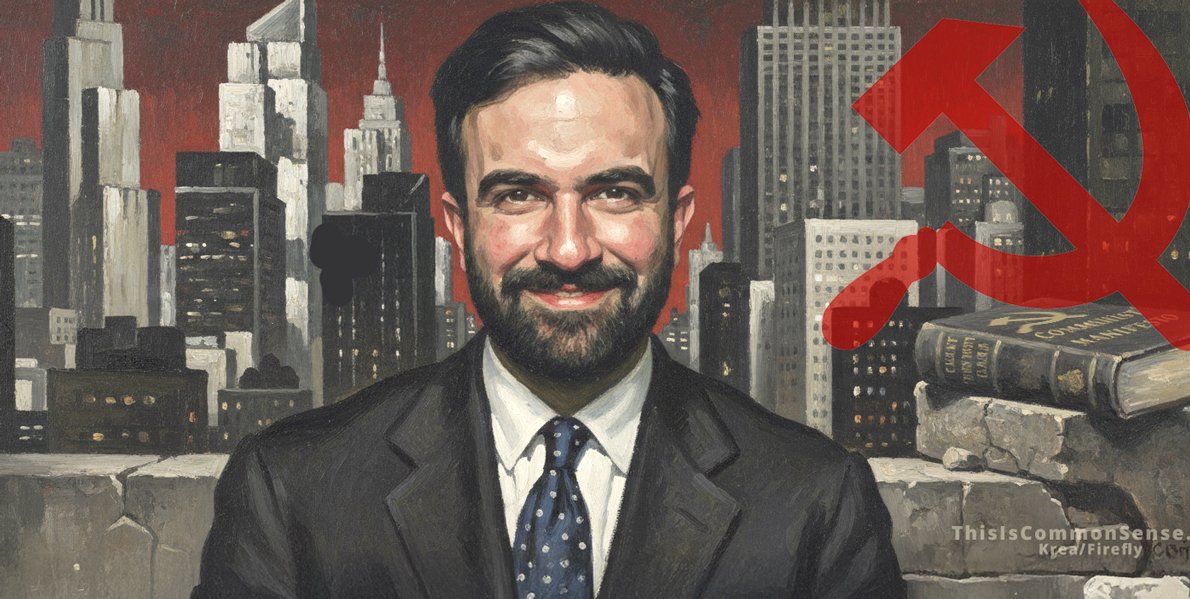
Illustration created with Krea and Firefly

See all recent commentary
(simplified and organized)
See recent popular posts
Categories
Thought

C.S. Lewis

And all the time — such is the tragi-comedy of our situation — we continue to clamor for those very qualities we are rendering impossible. You can hardly open a periodical without coming across the statement that what our civilization needs is more “drive,” or dynamism, or self-sacrifice, or “creativity.” In a sort of ghastly simplicity we remove the organ and demand the function. We make men without chests and expect of them virtue and enterprise. We laugh at honour and are shocked to find traitors in our midst. We castrate and bid the geldings be fruitful.

C.S. Lewis, The Abolition of Man (1943).
Categories
Today

Beginnings

Apple shipped the first Apple II computer on June 10, 1977. It was typographically styled as the “Apple ][” and the series continued long after the specific II model was superseded by the Apple II Plus and was discontinued in 1981. The last II-series Apple in production, the IIe card for Macintoshes, was discontinued on October 15, 1993.

Born on this day (June 10th): historian, jazz critic and civil libertarian Nathan Irving Hentoff (1925); children’s writer Maurice Sendak (1929); scientist and pioneer of “sociobiology,” E. O. Wilson (1929).

Hentoff wrote several works on the history and nature of free speech in America, including The First Freedom (1980). Sendak is most famous for Where the Wild Things Are (1963). Wilson’s many books include Consilience: The Unity of Knowledge (1998).


Sendak died in 2012, Hentoff in 2017, while Wilson died on December 26, 2021.

Categories
defense & war international affairs

Still a Big Advantage

In all the talk of America First — and of the United States as the indispensable nation — we Americans sometimes forget this doesn’t mean “America Alone.” 

“Ultimately, a strong, resolute, and capable network of allies and partners is our key strategic advantage,” U.S. Secretary of Defense Pete Hegseth recently informed the Shangri-La Dialogue in Singapore. “China envies what we have together. And it sees what we can collectively bring to bear on defense.”

Hegseth was speaking directly to Indo-Pacific allies, whom he reminded: “it’s up to all of us to ensure that we live up to that potential by investing” to “quickly upgrade [our] own defenses.”

Our alliances of free nations in Europe and Asia constitute a huge edge against a bullying, totalitarian China.

My entire life, these past six decades, Big Daddy America was by far the biggest, best military on the block. Still is the best. But it’s no longer the biggest: China now has a bigger navy, much greater shipbuilding capacity, and many more soldiers in uniform. Technological and other strategic advantages have been diminished as well.

The defense secretary acknowledged that — after “a lot of ongoing conversations with our military leadership in the Indo-Pacific” — “there is something to be said for the fact that China calculates the possibility and does not appreciate the presence of other countries . . . as part of the dynamics or decision-making process, and, if that is reflected in their calculus, then that’s useful.”

We cannot afford to squander our “ally advantage.” We need each other.

This is Comon Sense. I’m Paul Jacob.


PDF for printing

Illustration created with Krea and Firefly

See all recent commentary
(simplified and organized)
See recent popular posts

Categories
Thought

Auberon Herbert

Private property and free trade stand on exactly the same footing, both being essential and indivisible parts of liberty, both depending upon rights, which no body of men, whether called governments or anything else, can justly take from the individual.

Auberon Herbert, The Right and Wrong of Compulsion by the State (1885).