Categories
Today

Corn Law

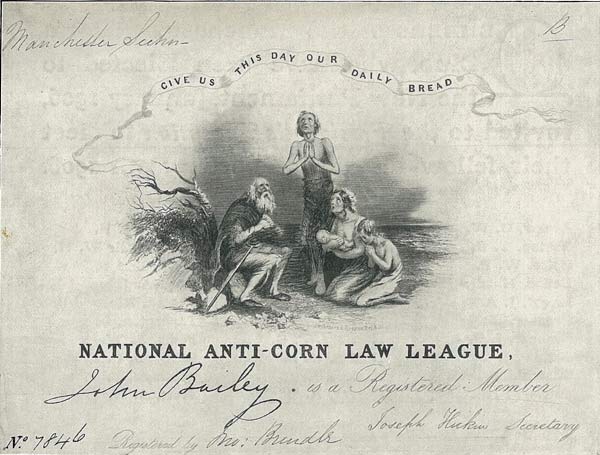
On January 31, 1849, the Corn Laws were abolished in the United Kingdom, one of the most impressive and far-reaching anti-protectionist moves of all time. “Corn” stood for all grains, including wheat, oats, barley, etc.; the free-trade agitation by John Bright and Richard Cobden was one of the main impetuses for the reform.

On Jan. 31, 1865, the United States Congress proposed the Thirteenth Amendment to the U.S. Constitution, submitting it to the states for ratification. The Amendment’s main section reads: “Neither slavery nor involuntary servitude, except as a punishment for crime whereof the party shall have been duly convicted, shall exist within the United States, or any place subject to their jurisdiction.”

On Jan. 31, 1990, the first McDonald’s fast food restaurant opens in the Soviet Union. Having once traveled to Moscow, I’m exceedingly thankful for this.
Categories
Thought

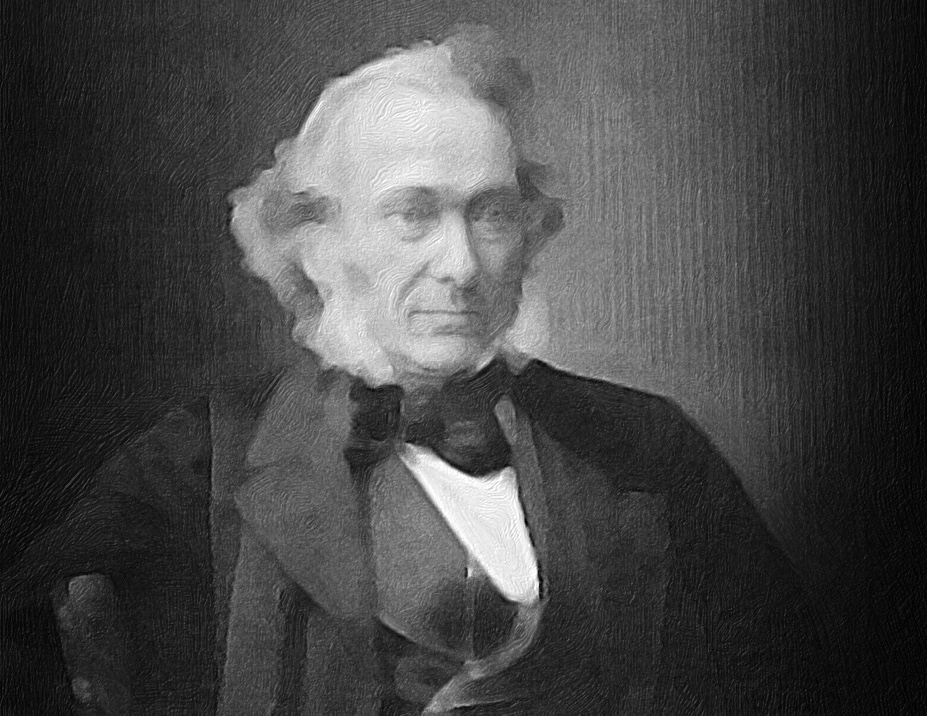
Richard Cobden

How can protection, think you, add to the wealth of a country? Can you by legislation add one farthing to the wealth of the country? You may, by legislation, in one evening, destroy the fruits and accumulation of a century of labour; but I defy you to show me how, by the legislation of this House, you can add one farthing to the wealth of the country. That springs from the industry and intelligence; you cannot do better than leave it to its own instincts. If you attempt by legislation to give any direction to trade or industry, it is a thousand to one that you are doing wrong; and if you happen to be right, it is work of supererogation, for the parties for whom you legislate would go right without you, and better than with you.

Categories
folly ideological culture media and media people national politics & policies

Farce and Fury

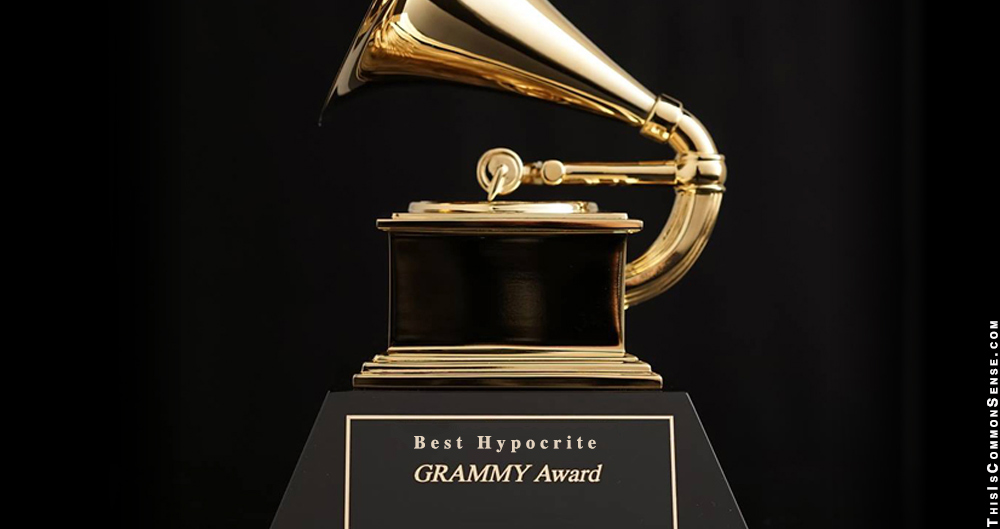
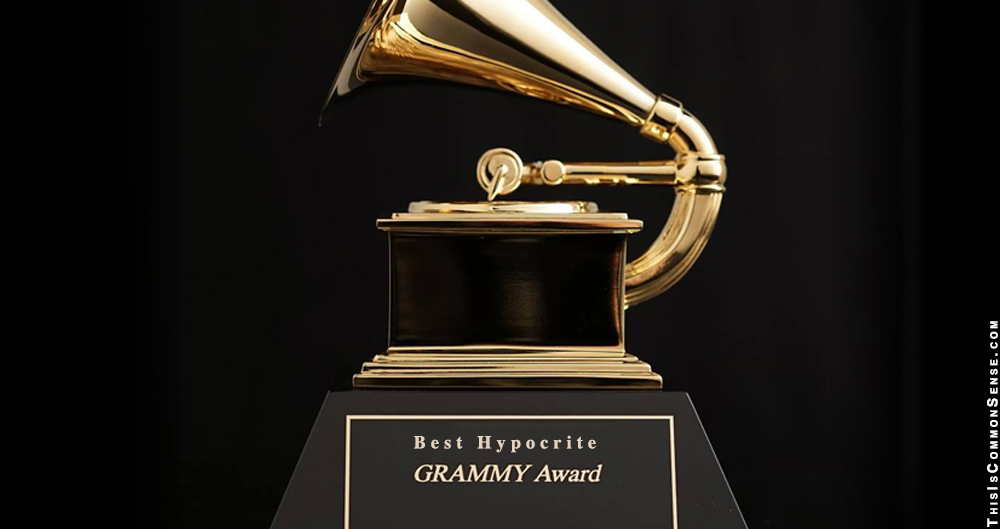
NBC’s Today covered Sunday night’s Grammy Awards — the music industry’s shindig that I mark my calendar each year to be sure to miss — under the labels “The Grammys Get Political” and “Music & #MeToo Movement Take Center Stage.”

Reuters declared that “the surprise star of the night was former Democratic presidential candidate Hillary Clinton reading from Michael Wolff’s controversial book Fire and Fury.”

That the music industry wraps their product in partisan politics? Their business. And to be fair, Hillary’s part of the skit was actually kinda funny.

What’s not so funny? Mrs. Clinton and Mr. Wolff lionized as exemplary #MeTooers . . . while being the opposite.

First, were Grammy organizers oblivious to the breaking story that Hillary Clinton overruled her 2008 campaign manager to keep, rather than fire, a male employee accused of sexual harassment, ultimately reassigning the female victim, instead? To make matters worse, in tweets Mrs. Clinton seemed to take great credit for the young woman being “heard.”

Liberal Washington Post columnist Ruth Marcus called Hillary’s response “head-exploding stuff.”

Second, CNN reports that the author of Fire and Fury, Michael Wolff, “has been spreading a rumor that the President of the United States is having an affair, and in a coyly worded exchange on Real Time With Bill Maher implied that it was with [U.N. Ambassador Nikki] Haley.” Wolff told Maher that he was “absolutely sure” of it . . . but not quite certain enough to put it in the book.

Haley, the former South Carolina Governor, called the rumor “false” and “disgusting,” noting it is an age-old, sexist slap against women.

So, why were Mrs. Clinton and Mr. Wolff celebrated on this stage?

And not Nikki Haley?

Makes no sense. I’m Paul Jacob.


PDF for printing


Categories
Thought

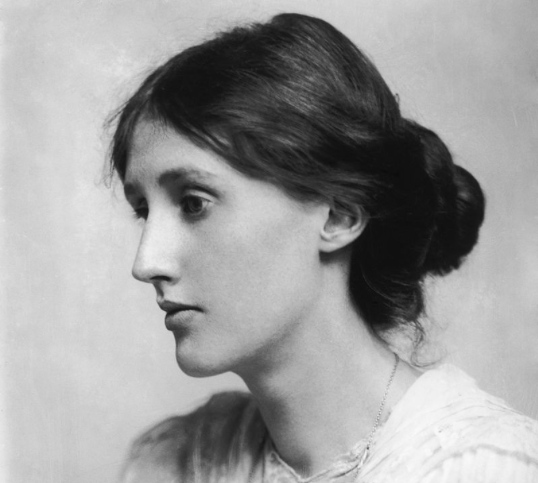
Virginia Woolf

Rigid, the skeleton of habit alone upholds the human frame.

Categories
Today

Non-Violence … and Violent Reaction

On Jan. 30, 1948, Indian leader Mohandas K. Gandhi, known for his non-violent, non-cooperation struggle for freedom and national independence, was assassinated by a Hindu extremist.

On Jan. 30, 1956, Martin Luther King, Jr.’s home was bombed in retaliation for his work on the Montgomery Bus Boycott.

On Jan. 30, 1972, British soldiers killed fourteen unarmed civil rights marchers in Northern Ireland in what came to be known as “Bloody Sunday.” Soldiers shot 26 unarmed protesters and bystanders – 13 males, seven of whom were teenagers, died immediately, while another man died of his injuries nearly five months later. In the immediate aftermath, an investigation by the British Government largely cleared the soldiers and British authorities of blame. A second investigation begun in 1998, released a report in 2010 declaring that all of those shot were unarmed, and that the killings were both “unjustified and unjustifiable.”


Not quite fitting today’s “non-violence elicits violence” theme, on January 30, 1835, Richard Lawrence attempted to shoot former military leader and then-President Andrew Jackson, but failed. He was subdued by a crowd, including several congressmen. That marked the first attempt on the life of a sitting U.S. president.

Categories
Accountability crime and punishment folly general freedom local leaders moral hazard nannyism national politics & policies Popular privacy Regulating Protest too much government

The Last Straw

How much should we fine waiters who destroy our planet?

For how long should they go to jail?

I don’t know where you would hold such an evildoer after the earth has been destroyed. Or where he’d go when released. But we’re speaking hypothetically. Assume that planet-destroyers can be imprisoned on the moon, which let’s just say still orbits the earth’s decimated remains. Or assume that after being destroyed, the planet can be reconstructed. After serving his sentence, then, the waiter would be released to a reconstructed earth.

In that case, a maximum $1,000 fine as suggested by Ian Calderon, Democratic majority leader of the California State Assembly, seems only fair. However, a maximum of six months in jail is excessive. In my opinion, planet-destroying waiters should suffer no more than 100 days in jail.

Calderon has proposed a bill, AB-1884, to fine and/or imprison waiters who offer unsolicited plastic straws to restaurant patrons. In response to criticism of his silly and vicious bill, Calderon says hey, it’s “NOT a ban” on straws! Oh, okay. Anyway, “Penalties are based on the code section the bill is currently in, which it will be amended out of,” which sounds like Calderon was prior to the uproar . . . what, joking?

As long as we’re amending, let me amend my own implication that people who offer, use, make or sell plastic straws* are in fact helping destroy earth. Just kidding!

The earth will survive plastic straws. Will it survive the Calderons of the world?

Open question.

This is Common Sense. I’m Paul Jacob.


* Not that I’m confirming or denying ever using one myself.


PDF for printing


Categories
Today

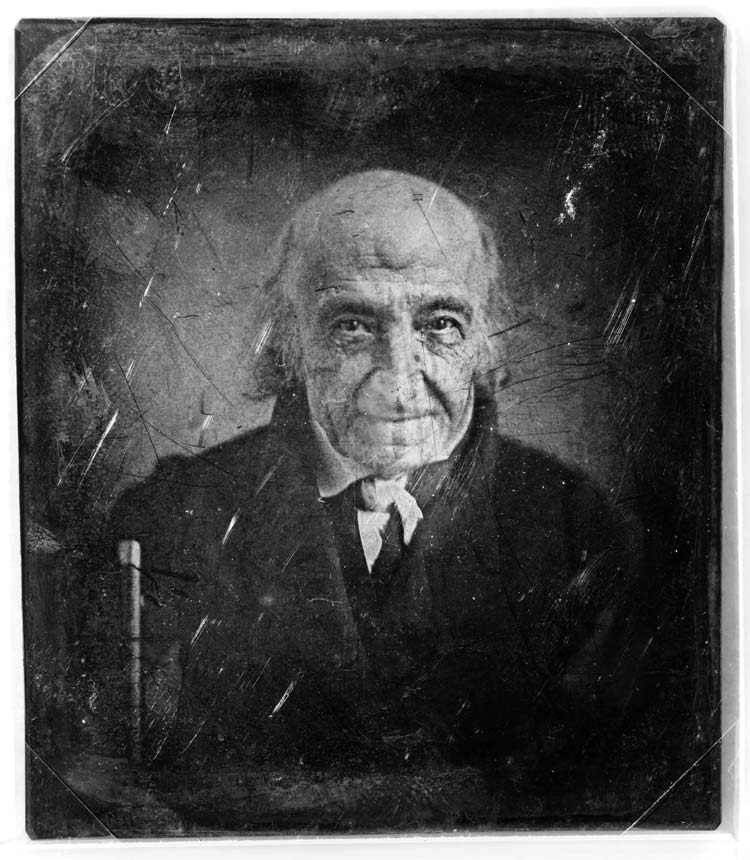
Gallatin

On January 29, 1761, Albert Gallatin was born. Gallatin served as the fourth United States Secretary of the Treasury — a post in which he served longer than any other in American history — advanced the anthropological and linguistic study of native Americans, and became the subject of a biography by Henry Adams. Called the “father of American ethnology,” he has been honored with a 1967 U.S. stamp as well as many place names, including the Gallatin National Forest in Montana.

Categories
Thought

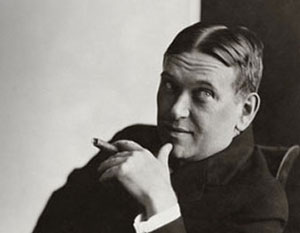
H. L. Mencken

My own belief, more than once set afloat from this spot, is that it will take us, soon or late, into the stormy waters of Fascism. To be sure, that Fascism is not likely to be identical with the kinds on tap in Germany, Italy and Russia; indeed, it is very apt to come in under the name of anti-Fascism. And its first Duce, whether the Hon. Mr. Roosevelt or another, will not call himself a dictator, but a scotcher of dictators.

H. L. Mencken, “Of The People, By The People,” The Baltimore Sun, November 6, 1938. Mencken was born on September 12, 1880, and died on January 29, 1956.
Categories
links

Townhall: Can’t We All Just Get Along?

The eternal question, with a partial answer over at Townhall.com.


Categories
Thought

Virginia Woolf

Life is not a series of gig lamps symmetrically arranged; life is a luminous halo, a semi-transparent envelope surrounding us from the beginning of consciousness to the end.