Categories
Thought

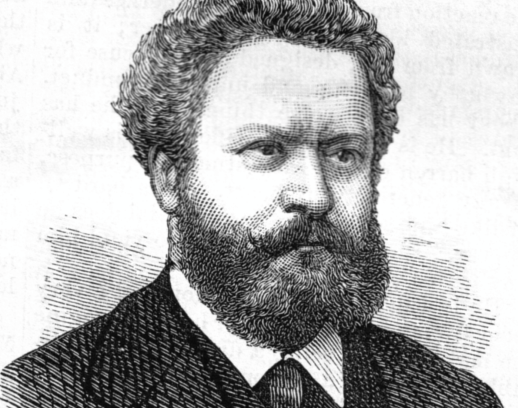
Denis Diderot

Beware of the man who wants to set things in order. Setting things in order always involves acquiring mastery over others — by tying them hand and foot.

Denis Diderot, as translated by Derek Coleman, in Diderot’s Selected Writings (1966).
Categories
Accountability general freedom government transparency initiative, referendum, and recall local leaders national politics & policies political challengers term limits

The Other Maine Thing

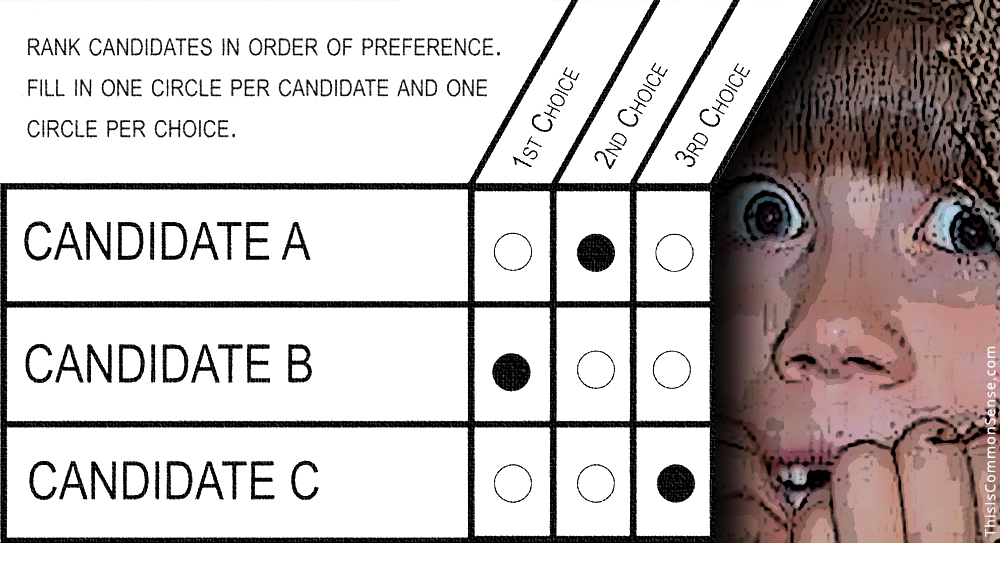
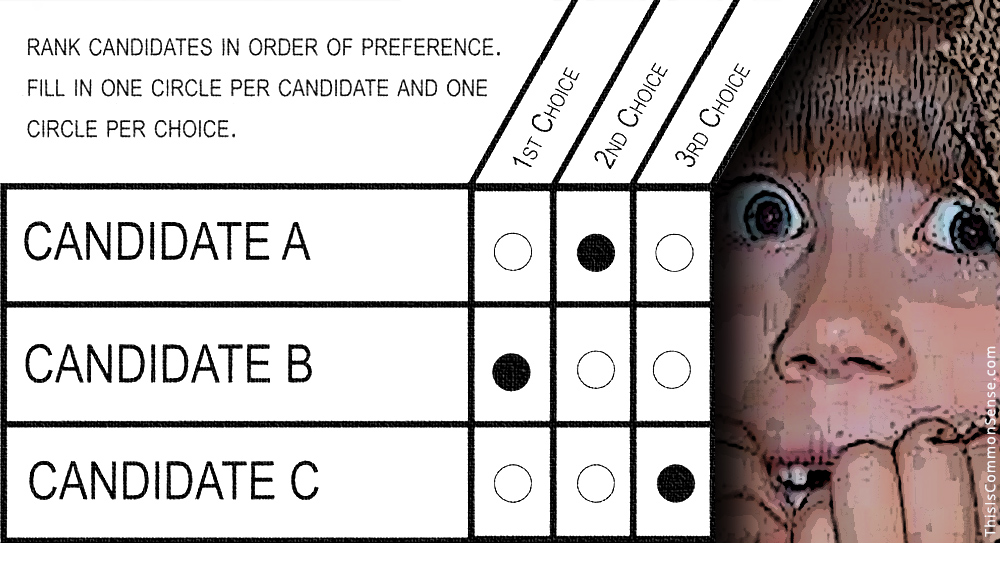
Tuesday’s biggest election news was the victory for Ranked Choice Voting (RCV) in Maine. This is the second statewide vote for this reform, which allows voters to rank the candidates by first choice, second choice and so on.*

Voters first passed it in 2016, but the next year the voters’ “representatives” in the legislature repealed the law, overturning their vote.

Undeterred, RCV supporters filed a referendum and again went out and gathered enough petition signatures to refer the legislature’s repeal to a vote of the people. On Tuesday, Maine’s voters vetoed the legislature, keeping Ranked Choice Voting.

Initiative and referendum sure are helpful.

RCV is not partisan; it requires the winner to have some level of support from a majority of voters and fixes the wasted vote problem. In Maine, however, the Republican Party opposed. On election day, Republican Gov. Paul LePage even threatened not to do his duty and certify the results.

“Paul Jacobs (Vice chair of the [FairVote] Board) whom I once knew and thought was a good American,” a Republican friend posted on my Facebook page, “has helped unleash the hounds of Hell” . . . adding that “now the voters are so confused by the terrible procedure that voting will be a nightmare this Tuesday!”

Yet voters used the new voting system for the first time Tuesday in candidate primaries before deciding Question 1 on their ballot — about keeping RCV. As one Portland voter put it, “It’s pretty easy to do, despite the negative publicity.”

We need more control over government with our vote. And when voters speak, politicians should listen.

It wouldn’t hurt political activists to listen, too.

This is Common Sense. I’m Paul Jacob.


* I’ve discussed the idea in this space many times — there’s more information on how it works here.

PDF for printing


Categories
Thought

Sarah M. Grimké

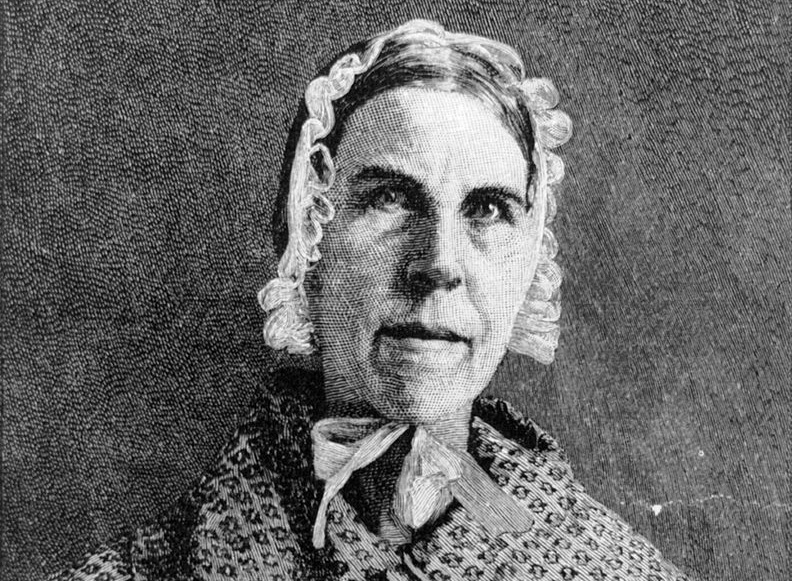
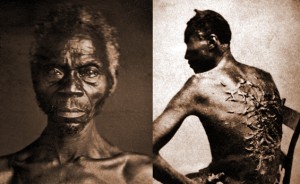
The system of slavery is necessarily cruel. The lust of dominion inevitably produces hardness of heart, because the state of mind which craves unlimited power, such as slavery confers, involves a desire to use that power, and although I know there are exceptions to the exercise of barbarity on the bodies of slaves, I maintain that there can be no exceptions to the exercise of the most soul-withering cruelty on the minds of the enslaved. All around is the mighty ruin of intellect, the appalling spectacle of the down-trodden image of God.


Sarah M. Grimké, from An Epistle to the Clergy of the Southern States, New-York, 12th Mo. 1836.

Categories
Today

Stars and Stripes

On June 14, 1777, U.S. Congress adopted the Stars and Stripes as the United States Flag.

Categories
Accountability education and schooling folly general freedom ideological culture local leaders media and media people moral hazard nannyism national politics & policies responsibility too much government

Demeritocracy

New York Mayor Bill de Blasio has a beef with Stuyvesant High School.

It’s about race, of course.

Stuy (as it is affectionately known) is a tuition-free accelerated academic/college prep program open to all city residents based on how well they perform on a specific test.

Unsurprisingly, Asians make up the bulk of the student body.

And de Blasio finds this horrific, a “monumental injustice” — there should be more Hispanic and black students, he says.

In front of black parishioners.

Demagoguery aside, the New York Mayor’s attack is really against the very idea of a meritocracy. The old Progressive vision was to pull from every ethnic group, economic strata, and community the best and brightest, allowing people to advance by study and hard work. Progressives called this “equality of opportunity”; most everybody else, “the American Dream.”

It was the Progressives’ pride and joy.

And today’s progressives are hell bent on destroying it.

They demand “diversity” instead — by which folks like de Blasio mean participation based not on talent and studiousness and sheer academic drive (which some cultures push more than others), but, instead, on today’s primary progressive obsession: skin color.

“My limited tolerance for affirmative action,” writes Richard Cohen in the Washington Post, addressing de Blasio’s excess, “possibly permissible when the poor are advantaged at the expense of the rich — hits a wall in this case.”

My tolerance for “affirmative action” hits the wall earlier: Help the poor afford to go where they can academically earn a spot. (Helping privately would be best.) But do not let race or any other demographic factor put a finger on the merit scale.

This is Common Sense. I’m Paul Jacob.


PDF for printing
 

Categories
Thought

Edmond About

Each of us enters at birth into the heritage of a sovereignty which renders his person inviolable. In principle, if not in fact, we are all equal, because we all share the same august character. We are all free-born in this sense, that no one has a title to subject another to his will by force.


Edmond About, Handbook of Social Economy; or, The Worker’s A B C, (New York: D. Appleton & Co., translated from the final French edition, 1873), p. 3.

Categories
Today

Anti-slavery

On June 13, 1774, Rhode Island became the first British colony in the Americas to prohibit the importation of slaves.

Categories
Accountability general freedom ideological culture insider corruption media and media people property rights Regulating Protest

Ortega’s Got to Go

Sometimes “if it bleeds, it leads” fails us. Only a few news outlets have given much attention to Nicaragua’s ongoing atrocities.

Weeks ago, mothers of some of the 76 people, mainly students, already killed protesting despot Daniel Ortega, were leading a march demanding justice . . . “when gunmen opened fire on the crowd.” The Washington Post report continued, “Witnesses have accused police and their civilian allies of initiating the violence that left as many as 18 people dead and more than 200 wounded.”

The June 2 headline summed up the last seven weeks: “At least 100 killed in Nicaragua as political violence intensifies.”

But time and tyranny march on. “Every day they’re killing more people,” an attorney with the Nicaraguan Center for Human Rights told the Post. Friday, the group updated the death toll to 137.

Then on Saturday, the English-language Today Nicaragua informed that a 60-year-old man was cut down by a government sniper in Masaya, the former Sandinista stronghold, which is “now under almost total rebel control.”

What can we do?

We can educate ourselves on what’s happening — and pester more news organizations to cover Nicaragua.

We can learn from the experiences in Cuba, in Venezuela, and now in Nicaragua, that leaders seeking awesome powers to remake society to supposedly benefit the poor are ultimately batting zero in helping the poor. Instead, they’re busy at the plate for themselves.

And we can add our voices to Amnesty International’s condemnation of what it calls “the systematic ‘shoot-to-kill’ policy of President Ortega’s government.”

When governments open fire on peaceful protesters, it is past time for those governments to go.

This is Common Sense. I’m Paul Jacob.


PDF for printing

 

Categories
Thought

Denis Diderot

No man has received from nature the right to give orders to others. Freedom is a gift from heaven, and every individual of the same species has the right to enjoy it as soon as he is in enjoyment of his reason.


Denis Diderot, Article on Political Authority, Vol. 1, (1751) as quoted in Selected Writings (1966) edited by Lester G. Crocker.

Categories
Today

Rights

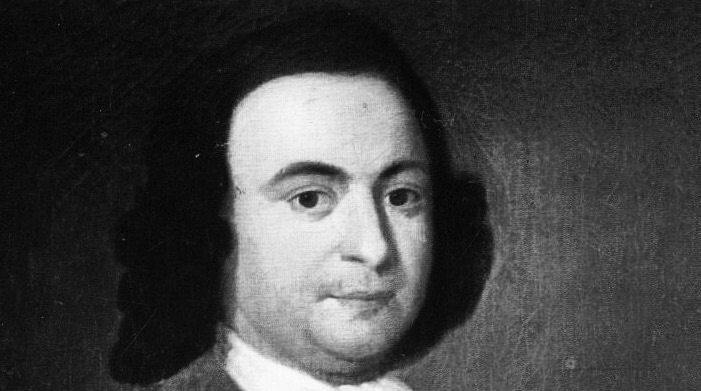
In 1776, on June 12, the Fifth Virginia Convention at Williamsburg, Virginia, unanimously adopted a Declaration of Rights, several weeks prior to the adoption of the state’s constitution. George Mason (pictured above), who drafted the document, stated clearly in the preamble that rights must be “the basis and foundation of Government.”

The first four planks run as follows:

I. That all men are by nature equally free and independent, and have certain inherent rights, of which, when they enter into a state of society, they cannot, by any compact, deprive or divest their posterity; namely, the enjoyment of life and liberty, with the means of acquiring and possessing property, and pursuing and obtaining happiness and safety.

II. That all power is vested in, and consequently derived from, the people; that magistrates are their trustees and servants, and at all times amenable to them.

III. That government is, or ought to be, instituted for the common benefit, protection, and security of the people, nation or community; of all the various modes and forms of government that is best, which is capable of producing the greatest degree of happiness and safety and is most effectually secured against the danger of maladministration; and that, whenever any government shall be found inadequate or contrary to these purposes, a majority of the community hath an indubitable, unalienable, and indefeasible right to reform, alter or abolish it, in such manner as shall be judged most conducive to the public weal.

IV. That no man, or set of men, are entitled to exclusive or separate emoluments or privileges from the community, but in consideration of public services; which, not being descendible, neither ought the offices of magistrate, legislator, or judge be hereditary.