Categories
Today

Bryan’s “Cross of gold”

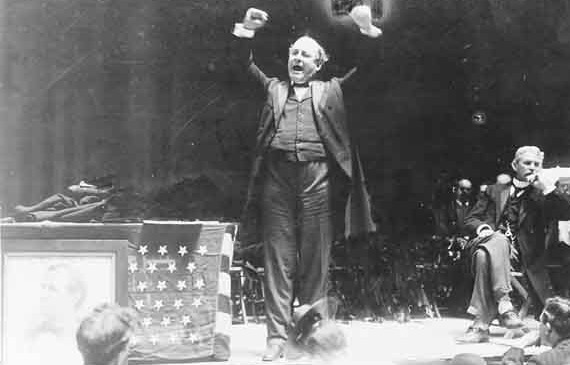
On July 9, 1896, William Jennings Bryan delivered his “Cross of Gold” speech advocating bi-metallist inflationism at the 1896 Democratic National Convention in Chicago, Illinois, a triumph of rhetoric over reason that solidified the takeover of the Democratic Party by reformers utterly ignorant of basic economics.

Categories
links

Townhall: Weaponizing Freedom

This weekend’s Townhall foray is, yes, an expansion of Tuesday’s Common Sense, “Freedom Weaponized,” but is perhaps more shareable, because it gets a bit deeper. Check it out. Share it. Then come back here for the R&D:

This column will appear on this site on Tuesday.

Categories
Thought

George Mason

There is a Passion natural to the Mind of man, especially a free Man, which renders him impatient of Restraint.

Categories
Today

Luther Martin

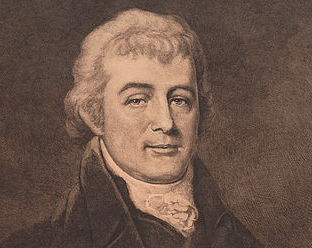
On July 8, 1839, American industrialist John D. Rockefeller was born. On this same date in 1907, businessman and politician George W. Romney was born. Died on this date, American founding politician, Luther Martin [pictured], in 1826. Martin is famed among founding fathers for refusing to sign the U.S. Constitution, seeing the new compact as unduly centralizing and nationalistic.

Categories
video

Bernie Sanders Is Not a Socialist (He’s an Idiot)

Unfortunately, socialists do exist:

https://youtu.be/gl-j163g-KY

But for a different perspective, you might also be interested in some related past work of ours on this site:

Categories
Thought

Michel Foucault

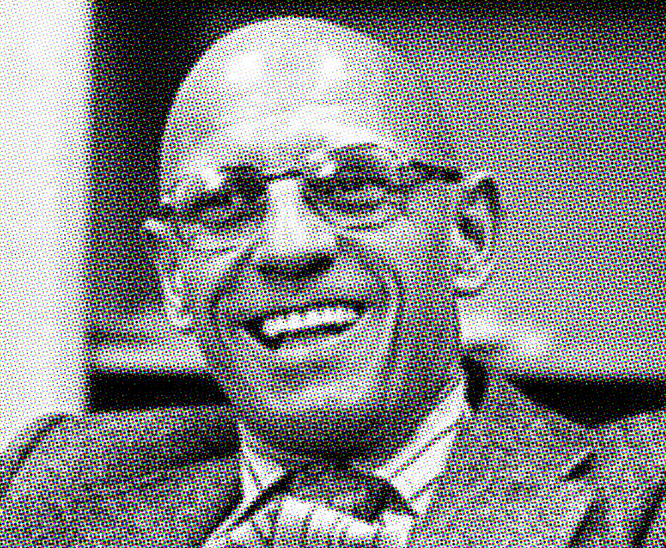
Sometimes, because my position has not been made clear enough, people think I’m a sort of radical anarchist who has an absolute hatred of power. No! What I am trying to do is to approach this extremely important and tangled phenomenon in our society, the exercise of power, with the most reflective, and I would say prudent attitude. Prudent in my analysis, in the moral and theoretical postulates I use: I try to figure out what’s at stake. But to question the relations of power in the most scrupulous and attentive manner possible, looking into all the domains of its exercise, that’s not the same thing as constructing a mythology of power as the beast of the apocalypse.

Categories
Today

Solomon Islands Independence

July 7 is Independence Day in the Solomon Islands, commemorating the island nation’s political separation in 1978.

The “separation” may be over-stated, however: though self-government was achieved in 1976, and political independence for the islands obtained two years later, Solomon Islands remains a constitutional monarchy with the Queen of Solomon Islands, currently Great Britain’s Queen Elizabeth II, as its head of state. Rick Houenipwela is the current Prime Minister of Solomon Islands.

Categories
Accountability crime and punishment folly free trade & free markets general freedom judiciary local leaders moral hazard nannyism Second Amendment rights too much government U.S. Constitution

Ought Implies Cantifornia

“Strip away the absurdity,” writes Scott Shackford at Reason, “and it’s essentially a very technical ruling.”

Shackford is explaining a bizarre recent judgment of the California Supreme Court.

Politicians in Sacramento had, years ago, passed a gun control measure requiring gun manufacturers to “implement microstamping technology that would imprint identifying information on bullets as they were shot from semi-automatic weapons.” In 2014, Smith & Wesson announced that it would pull some guns from the California market rather than comply. Why? The technology just wasn’t ready yet.*

Since California’s Civil Code contains a section reiterating an old commonsense principle to the effect that the “law never requires impossibilities,” the National Shooting Sports Foundation sued to block the law.

But the group just lost.

The Court did say it could protect citizens from punishment, but it refused to nullify the legislation on constitutional grounds.

Unanimously.

Why do this? Apparently to protect California politicians in their ongoing social engineering schemes.

The dollar costs of trying to comply with impossible demands are huge, of course. But the biggest costs may be more subtle.

In moral philosophy, it is a truism to say that “ought implies can.” In natural law as understood long ago, an impossible law was thought not a law at all, justifiably ignored by anyone and everyone.

In a just state, flouting of maddening regulations like California’s would lead not merely to the defense of the absurdly put-upon citizen — as this court ruling still allows — but also to the nixing of the “impossible” law.

This is Common Sense. I’m Paul Jacob.


* Shackford notes that “a cynic might theorize that this is the law’s actual intent.” I wouldn’t limit that suspicion to folks given to cynicism. Pragmatists and political scientists and almost anyone else would be placing bets on that, too.

PDF for printing

 

Categories
Thought

Georg Simmel

Nobody would work for starvation wages if he were not in a situation in which he preferred such wages to not working at all.

Categories
Today

Tyranny?

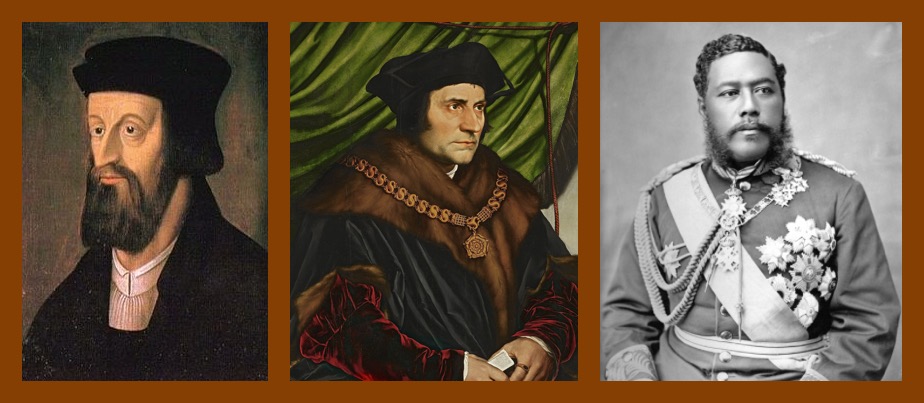
July 6 serves better as a “Today in Tyranny” marker than anything positive, at least when you consider these events:

  • 1415 – Jan Hus was burned at the stake.
  • 1535 – Sir Thomas More was executed for treason against King Henry VIII of England.
  • 1887 – David Kalakaua, monarch of the Kingdom of Hawaii, was forced at gunpoint by Americans to sign the Bayonet Constitution giving Americans more power in Hawaii while stripping Hawaiian citizens of their rights.
  • 1939 – The Nazi “Third Reich” closed the last remaining Jewish enterprises in Germany.