Categories
Today

Atahualpa

On July 26, 1533, Francisco Pizarro’s Spanish conquistadors strangled to death Atahualpa, the 13th and last emperor of the Incas, thereby ending 300 years of Inca civilization. The conquistadors were greedy and murderous, but the Inca civilization, arguably, was worse: totalitarian and radically inegalitarian. But they made great high-mountain roads. (Arguments about infrastructure promoted by Big Government continue to this very day.)

On this day in 1948, U.S. President Harry S. Truman signed Executive Order 9981 desegregating the U.S. military.

Categories
Accountability folly free trade & free markets general freedom moral hazard property rights responsibility too much government

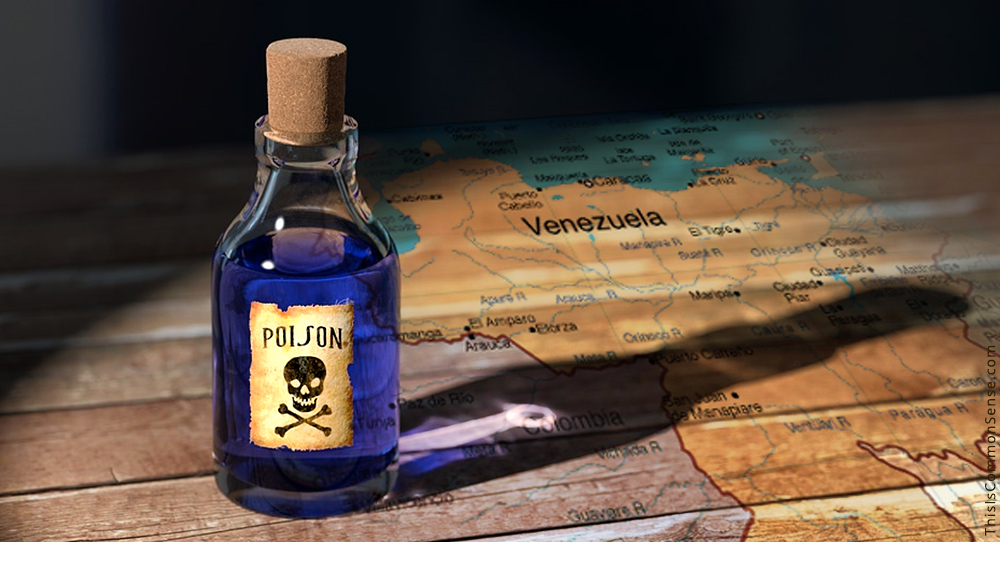
Poison Is Poisonous

Venezuela’s socialist economy has been collapsing.

No big mystery. If, out of hostility to capitalism, a society keeps destroying everything that production, trade, and prosperity depend upon, the economy suffers. The benefits of markets don’t flow no matter what.

One assault has taken the form of hyperinflation — runaway printing of currency, done in part to dissolve government debt. Many Venezuelans are resorting to barter. It’s easy to understand why.

Or is it? A Reuters reporter says that economists say that “the central bank [of Venezuela] has not printed bills fast enough to keep up with inflation, which . . . reached an annual rate of almost 25,000 percent in May.”

So go faster!?

Dude. Dude. The massive expansion of Venezuela’s money supply is what’s causing massive jumps in prices. Just like any other economic good, the medium of exchange is subject to the laws of supply and demand.

Other things being equal, enormously increasing a supply of a good will enormously lower its market value or price. Money, too, has a price — in terms of the non-monetary goods being bought. If the pre-hyperinflation price of a dollar in terms of bread is one loaf and the post-hyperinflation price is one bread crumb, you won’t reverse the decline by printing even more dollars or bolívars even faster.

If you’re ingesting poison, you can’t fight the effects by being poisoned more and harder. The very first thing to do is stop ingesting the poison.

This is Common Sense. I’m Paul Jacob.


PDF for printing


Categories
Today

A Fine Point of the War

On July 25, 1861, the U.S. Congress passed the Crittenden-Johnson Resolution, stating that the war with the seceded states of the Confederacy was being fought to preserve the Union, not to end slavery.

Categories
Thought

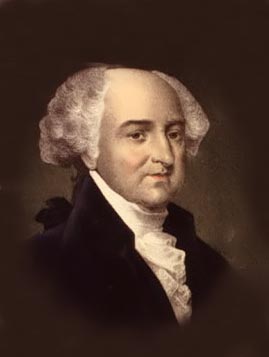
John Adams

Old minds are like old horses; you must exercise them if you wish to keep them in working order.

Categories
Accountability crime and punishment folly free trade & free markets general freedom local leaders nannyism national politics & policies responsibility too much government

Kick the Addiction, Save Money

The political case for the War on Drugs has always been intuitive. “Drugs are bad” has trumped practical concerns. But the actual, responsible case for the political crusade has depended upon some concept of “social cost.”

Now that marijuana is being legalized state by state, the case against the greater War on Drugs is being taken seriously — enough to rethink all varieties of costs. Indeed, many now see the opioid epidemic as being driven, in part, by the War on Drugs, and not just as an excuse for a stronger crackdown.

Nevertheless, coming to some accounting — especially “social cost” accounting — remains difficult. This is especially true so long as its effects on freedom and the rule of law do not get figured in.

Somewhat surprisingly, even the budgetary effects of legalization have proven a bit tricky.

So it is welcome to read Harvard economist Jeffrey Miron’s study of marijuana legalization as it has occurred in the states of Washington, Oregon, and Colorado. He compares results of legalization with the predictions he had made eight years ago, in a previous Cato Institute study. It turns out that while tax revenues are far greater than expected, law enforcement costs have not gone down.

“Early experience suggests that governments will reallocate rather than reduce those expenditures,” Miron writes. “That reallocation may be beneficial, but it does not have a direct effect on the budget deficit.”

On a federal level, though, we might expect greater savings. How? We could shut down whole bureaus.

Yet, achieving such savings would require progress on Washington’s biggest addiction:  spending.

This is Common Sense. I’m Paul Jacob.


Studies cited:

Jeffrey Miron, “The Budgetary Effects of Ending Drug Prohibition,” Cato Tax & Budget Bulletin, Number 83, July 23, 2018.

Jeffrey A. Miron and Katherine Waldock, “The Budgetary Impact of Ending Drug Prohibition,” Cato Institute white paper, September 27, 2010.

PDF for printing


Categories
Thought

Albert Camus

The purpose of a writer is to keep civilization from destroying itself.

Categories
Today

Nixon Tapes

On July 24, 1487, citizens in Leeuwarden, Netherlands, went on strike against a ban on foreign beer.

On the same day of 1823’s calendar, slavery was abolished in Chile.

On this day in 1974, the U.S. Supreme Court told President Richard Nixon that he lacked constitutional authority to withhold the infamous “Nixon Tapes” from Congress.

July 24 serves as Pioneer Day in Utah and as Simón Bolívar Day in Bolivia, Ecuador, Colombia, and Venezuela.

Categories
Accountability crime and punishment folly free trade & free markets general freedom moral hazard nannyism responsibility too much government

Taking a (Lemonade) Stand

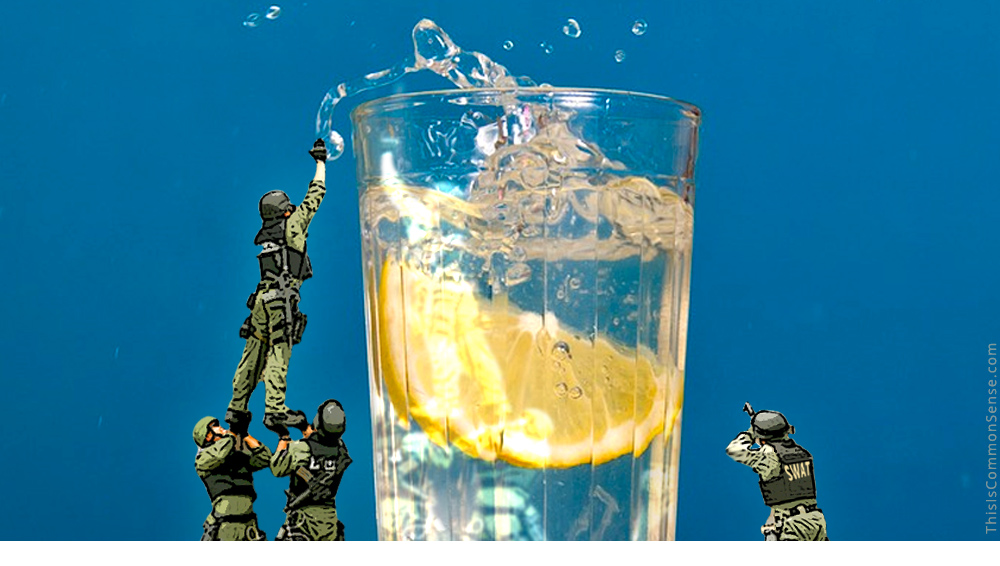
When life hands you lemons. . . .

Once upon a time, putting up a summertime lemonade stand was the American way for kids to learn about hard work, good will, and entrepreneurship. Almost every kid had one, making some spendable profit selling the nectar.*

Some of the youngsters grew up to become Bill Gates and Steve Jobs and, well, lemonade’s one heck of a gateway drink.

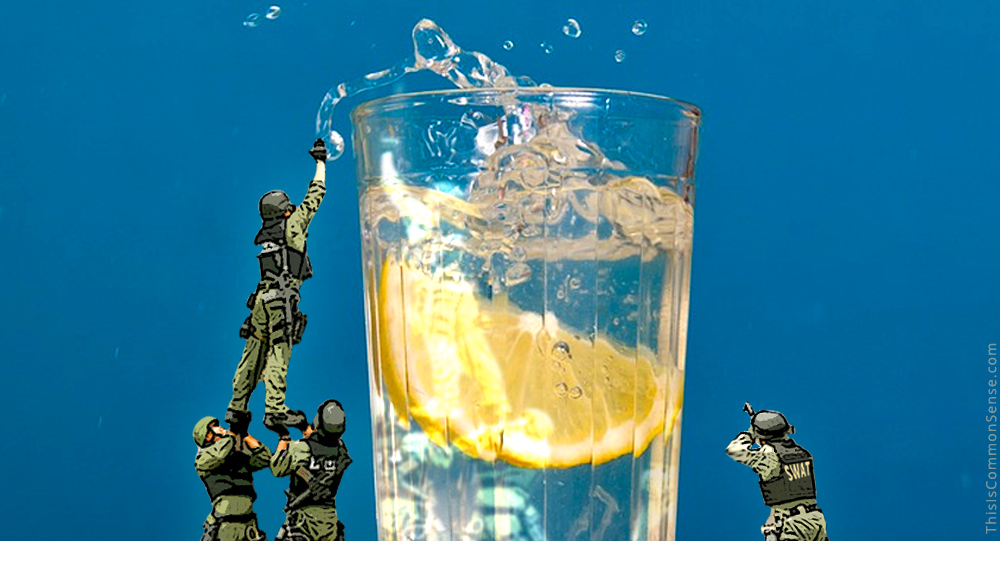
But then, along came “progress” — that is, mandates and regulations slapped upon businesses. And the hordes of regulators required to enforce the morass of rules — “swarms of Officers.”

Soon lemonade stands were vanquished from our neighborhoods.

And America was made safe (at long last!) for . . . inane bureaucracy.

“Reports of kids’ lemonade stands being shut down for breaking local health or permitting laws have long left grown-ups feeling sour,” today’s Wall Street Journal informs. But the story also details how “a growing movement of adults is fighting back.”

So, when government policies hand you lemons, what do you do?

Make a map of all the lemonade stand clampdowns.

“I think the Constitution covers [lemonade stands] as written,” Dave Roland told the Journal, explaining the map he and his wife Jenifer have produced. “But if there’s any doubt about that, let’s get it fixed.” The Rolands run the Freedom Center in Missouri, but theirs is a regrettably national map.

Last month, the popular lemonade maker Country Time started “Legal-Ade,”  pledging to come to the defense of any kid “busted” for trafficking in lemonade.

Seriously.

“When life gives you arcane laws,” the company’s video says, “make lemonade.”

Taste the Common Sense. I’m Paul Jacob.


* The profit was made possible largely by pushing their costs off onto their parents. But isn’t that sorta what parents are for? And good lessons were still learned.

PDF for printing
 

Categories
Today

Typewriter

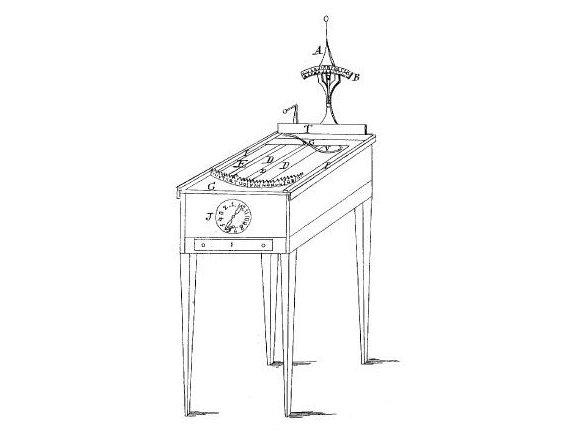
On this day in 1829, American William Austin Burt patents the “typographer” — a precursor to the typewriter.

Categories
Thought

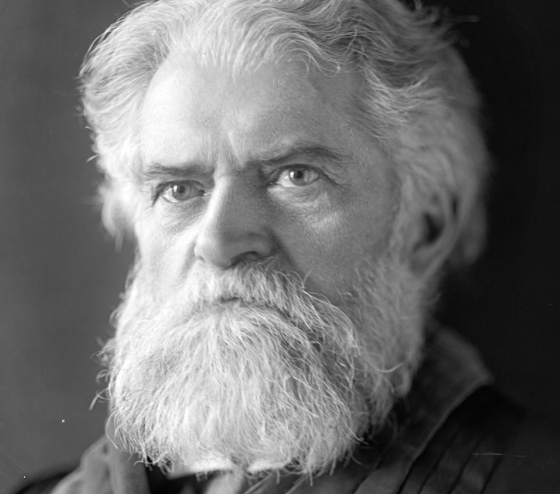
Simon Newcomb

“Scientific method consists in applying to those subjects which lie without the range of our immediate experience those same common-sense methods of reasoning which successful men of the world apply in judging of matters which concern their own interests.”


Simon Newcomb, Principles of Political Economy, 1886, chapter III, “Of Scientific Method”