Categories
Today

Tocqueville

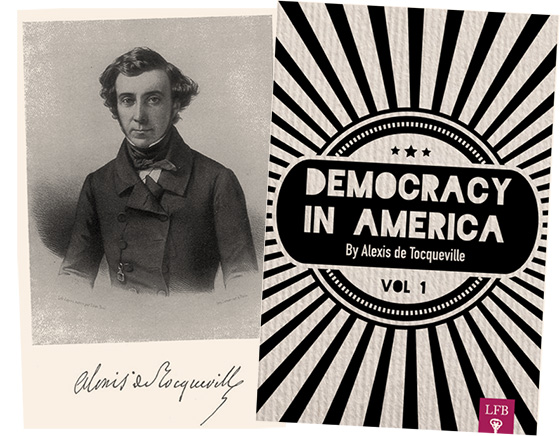
On July 29, 1805, Alexis de Tocqueville was born. His most famous book, Democracy in America (two volumes: 1835, 1840), quickly became a classic of social and political research and analysis, and remains the most important early book about the United States of America. He is often referred to as a founder of sociology as well as a major figure in the development of classical liberalism.

Categories
Thought

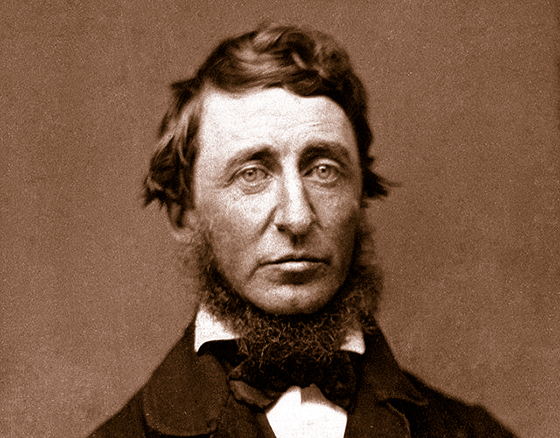
Henry David Thoreau

Where there is a lull of truth, an institution springs up. But the truth blows right on over it, nevertheless, and at length blows it down.

Categories
video

Mystery Tape — “Why did it take somebody so long to explain that?”

“Anderson Cooper and CNN,” Scott Adams tells us, “seem genuinely puzzled about why would the President lie wbout an extramarital affair. But that is not the only mystery they are working on.” Adams jests about other enigmas:

  • Why do hungry people eat?
  • Why do sleepy people take naps?
  • Why do dead people never dance?

Seriously, Adams solves the mystery of the “cash” problem in the Cohen tapes:

https://youtu.be/tPTn4GSL5S0

Categories
Thought

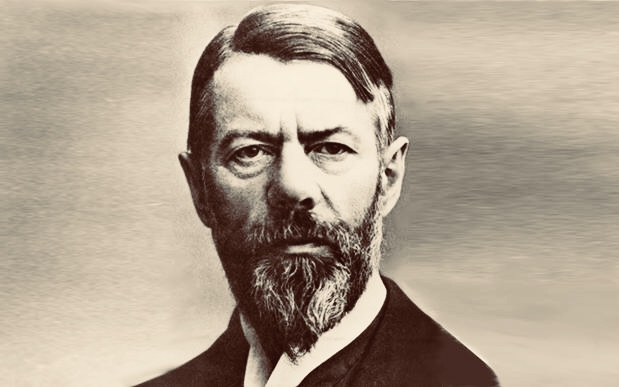
Max Weber

The fate of our times is characterized by rationalization and intellectualization and, above all, by the disenchantment of the world. Precisely the ultimate and most sublime values have retreated from public life either into the transcendental realm of mystic life or into the brotherliness of direct and personal human relations. It is not accidental that our greatest art is intimate and not monumental.

Categories
Today

The Fourteenth

July 28, 1868, is the official date for the certification of the 14th Amendment to the Constitution of the United States.

Categories
Accountability general freedom ideological culture porkbarrel politics responsibility too much government

Ask the Next Question

Republicans are very reliable. When given our system’s “Mandate of Heaven” — majorities in both houses of Congress and the Presidency — they can be relied upon to do one thing: add debt by piling up huge deficits.

It happened under George W. Bush, and it is happening under Donald J. Trump: “The Trump administration expects annual budget deficits to rise nearly $100 billion more than previously forecast in each of the next three years,” the Wall Street Journal tells us, “pushing the federal deficit above $1 trillion starting next year.”

Republicans should ask themselves why. And while they ask themselves that, everyone else should ask the next question: why do politicians who say they want one thing so often deliver its opposite?

This is not a mere “right-wing” phenomenon. Leftists say they want “democratic socialism,” but, as Irving Kristol noted, at some point not far down their road to Utopia, “democratic socialists” must choose between democracy and socialism.* By promising everybody everything, too quickly everybody gets shanghaied into service to produce that “everything,” finding themselves conscripts in socialism’s army.

The equation of socialism with regimentation and general un-freedom has been clear for over a century, explained carefully by sociologists, economists and even politicians.* And yet, increasingly, today’s Democrats are embracing a philosophy with proven anti-democratic features.

Could some deep principle be at play?

Probably. It is built into the very nature of state governance, of politics itself. It may be why republics metamorphose into empires, conservatives go radical and liberals become serviles.

Which is why effective democracy requires limited government. To minimize that boomerang effect.

We might start by limiting spending.

This is Common Sense. I’m Paul Jacob.


* Herbert Spencer’s writings on socialism include The Man versus the State (1884) and Industrial Institutions (1896, Principles of Sociology, Vol. III, Part VIII); German politician Eugene Richter’s satire Pictures of the Socialist Future (1896) is well worth reading; and economist Yves Guyot preceded Ludwig von Mises’ classic Die Gemeinwirtschaft (1922, translated as Socialism: An Economic and Sociological Analysis, 1950) with several books, including The Tyranny of Socialism (1893) and Socialistic Fallacies (1910).

PDF for printing
 

Categories
Today

B of E

July 27 births include that of Samuel Smith (1872; pictured), an American who served as a captain, major, and lieutenant colonel in the Continental Army, and later as a politician in several capacities in the state of Maryland; Hillaire Belloc (1870), author of a classic analysis of modern political governance, The Servile State; and American singer and songwriter Bobbie Gentry (1944).

On July 27, 1694, the Bank of England received a royal charter, beginning a long history of central banking in England. Subsequent inflationary booms and deflationary busts are usually considered “mysterious” by people connected with the bank.

Categories
Thought

Irving Kristol

Democratic socialism turns out to be an inherently unstable compound, a contradiction in terms. Every social-democratic party, once in power, soon finds itself choosing, at one point after another, between the socialist society it aspires to and the liberal society that lathered it.

Irving Kristol, as quoted in “Capitalism, Socialism, and Democracy: A Symposium,” edited by William Barrett, Commentary (1978).
Categories
free trade & free markets national politics & policies responsibility too much government

Trump’s Biggest Secret?

“This trade war is cutting the legs out from under farmers,” says Senator Ben Sasse (R-Neb.), “and White House’s ‘plan’ is to spend $12 billion on gold crutches.”

Referring to Donald Trump’s tariff brinksmanship with China, Sasse is decrying Trump’s request to Congress for compensatory farm subsidies. Sasse insists that “America’s farmers don’t want to be paid to lose” — but regardless of what farmers want, we should want free trade.

Tariffs are taxes. Consumers ultimately pay for them all.

Trump’s requested “crutches” is just another example of a bad government program leading to another, “compensatory” bad government program.

Old story. Too familiar.

The senator is right to be alarmed by the Trump “administration’s tariffs and bailouts,” for the president is playing a most dangerous game. Trade wars are not mutually beneficial. Trade is.  

Of course, if the ultimate result is an end to all trade barriers — as Trump himself demanded regarding the EU — then . . . could it be worth it?

One thing’s for certain: the history of protectionist brinksmanship is not pretty. Sasse himself predicts that Trump’s tariff hikes “aren’t going to make America great again, they’re just going to make it 1929 again.”

Sasse is referring to the passing of the Smoot-Hawley Tariff Act of 1929, which led not only to a spooked Wall Street, but to bank failures and retaliatory protectionism from other countries. 

And a worldwide depression. And world war.

But is Trump really a secret free trader,* using tariffs in a game of chicken with trading partners?

This just in, from The Guardian: “Trump and EU officials agree to work toward ‘zero tariff’ deal.”

Stay tuned.

This is Common Sense. I’m Paul Jacob.


* We could be forgiven for thinking him an old-fashioned protectionist, considering his repeated insistence that “Tariffs are the greatest!” But with Trump, maybe we should never take him literally.

PDF for printing


Photo by Carlos Martinez


Categories
Thought

George Bernard Shaw

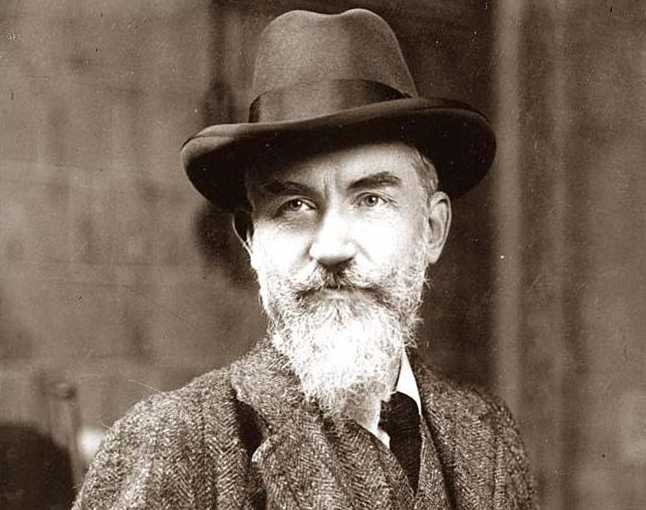
A government which robs Peter to pay Paul, can always count on the support of Paul.