Categories
insider corruption political challengers

Straw Candidacy

“No Corporate PACs,” says a Facebook ad by the Sara Gideon for U.S. Senate campaign, “Just You.”

“Gideon is running to unseat Republican Sen. Susan Collins in 2020,” the Portland Press Herald reports, noting that “fighting corporate money in politics” has been a prime “focus of her campaign.”

Yet, as Democratic Speaker of the Maine House, the challenger ran something called the Gideon Leadership PAC that raked in a majority of its funds from corporations such as Aetna, American Express, AT&T, Comcast, Eli Lilly, Time Warner, Verizon, Visa, and Walmart. The Maine Examiner informs that “records from the Maine Ethics Commission show she has built her career, and funded efforts to boost her statewide support, with contributions from large corporations.”

Last month, Gideon was slapped with a Federal Election Commission complaint for violating campaign finance law forbidding one person or entity from making contributions that are reimbursed by another. Gideon made numerous personal contributions to Democrats running for federal office only to turn around and have her leadership PAC reimburse her for the expense.

Her PAC being the true donor, Speaker Gideon is what’s known as a straw donor.

But it gets worse, explains Erin Chlopak, a former FEC official and currently with the Campaign Legal Center. “Corporations cannot make contributions to a federal campaign, and you can’t circumvent that ban by using a straw donor to funnel money originally from a company to a federal candidate.”

A spokesperson for Gideon’s campaign blamed “incorrect advice.” 

At her level of corporate involvement, I’d say the “incorrect advice” was to emphasize the anti-corporate money pledge.

This is Common Sense. I’m Paul Jacob.


PDF for printing

Sara Gideon, candidate, Portland,

See all recent commentary
(simplified and organized)
See recent popular posts

Categories
Thought

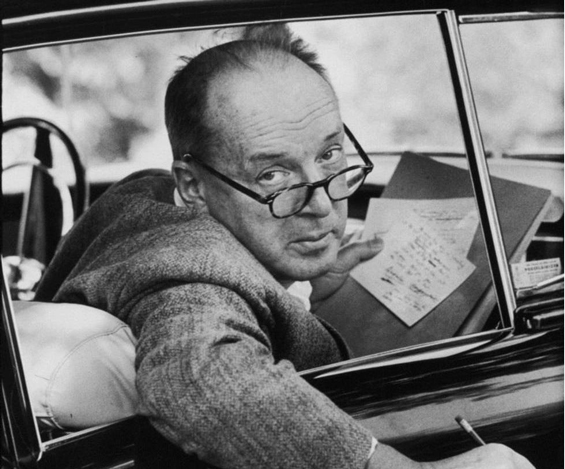
Vladimir Nabokov

Literature was not born the day when a boy crying ‘wolf, wolf’ came running out of the Neanderthal valley with a big gray wolf at his heels; literature was born on the day when a boy came crying ‘wolf, wolf’ and there was no wolf behind him.

Categories
Today

Rin Tin Tin

September 10, 1918, is the estimated date of birth for Rin Tin Tin, one of a litter of shell-shocked puppies found by an American serviceman in a bombed-out kennel in Lorraine, less than two months before the end of World War I. The dog went on to become the lead actor in a number of very popular films, and one of the great celebrities of his age.

Categories
judiciary responsibility

Caveat Tempter

If, like me, you expect people to bear the bulk of the brunt of their own decisions, big ticket court rulings often strike you as bizarre.

Case in point? “Drugmaker Johnson & Johnson must pay $572m (£468m) for its part in fuelling Oklahoma’s opioid addiction crisis, a judge in the US state has ruled,” reads a BBC report.

“During Oklahoma’s seven-week non-jury trial,” the BBC informs, “lawyers for the state argued that Johnson & Johnson carried out a years-long marketing campaign that minimised the addictive painkillers’ risks and promoted their benefits.”

A certain credulity boundary has been stretched, here:

  1. Don’t all ads stress selling points over . . . non-selling points?
  2. Doesn’t everyone know this, and, therefore,
  3. Shouldn’t they be expected to adjust — caveat emptor-wise — accordingly?
  4. And doesn’t everyone know painkillers are dangerous, and opiates notoriously so?

“The state’s lawyers had called Johnson & Johnson an opioid ‘kingpin,’” the report continues, “and argued that its marketing efforts created a public nuisance as doctors over-prescribed the drugs, leading to a surge in overdose deaths in Oklahoma.”

The public nuisance biz is idiotic, of course. If the company had been slipping its drugs to kids on a playground, something like this would have some plausibility. But the actual situation? Nope.*

Shifting responsibility from self to others, especially deeply pocketed others, has many bad consequences . . . not least of which is deflection of our attention away from why opioid use is up. Which is something we should be looking into for our friends’, families’, and neighbors’ sakes.

Lawyers are our tempters, in such cases. 

And monetary awards can sure be addicting. 

This is Common Sense. I’m Paul Jacob.


* Johnson & Johnson is appealing the decision, of course.

PDF for printing

apple, temptation, rotten,

Photo by Max Pixel

See all recent commentary
(simplified and organized)
See recent popular posts

Categories
Today

Leo Tolstoy

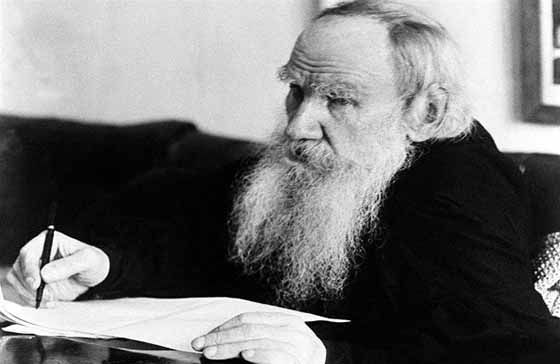
On September 9, 1828, Count Lev Nikolayevich Tolstoy was born. Known most commonly in the English-speaking world as Leo Tolstoy, he became the celebrated author of the novels Anna Karenina and War and Peace, as well as the novellas and short stories entitled “Family Happiness,” “The Death of Ivan Ilyich,” and “The Kreutzer Sonata.”

His political and religious ideas heavily influenced Gandhi and Martin Luther King, Jr.

Tolstoy died in 1910.

Categories
Thought

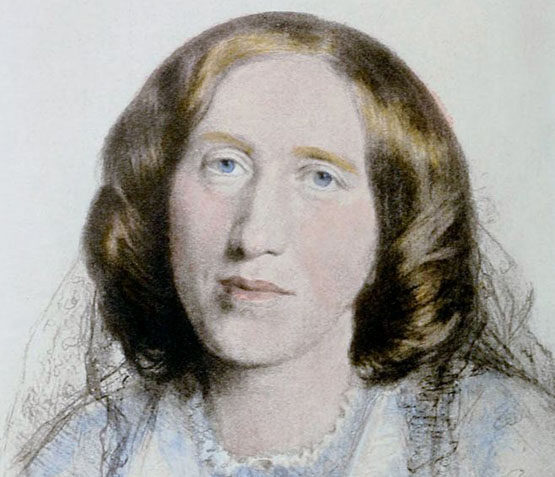
Mary Ann Evans

It’s but little good you’ll do a-watering the last year’s crop.

Mary Ann Evans (1819–1880), writing as George Eliot, Adam Bede (1859)
Categories
by Paul Jacob video

What the Media and Schools Won’t Defend

This Week in Common Sense, September 2 – 6, 2019: Part Two.
Categories
Today

Statute of Kalisz

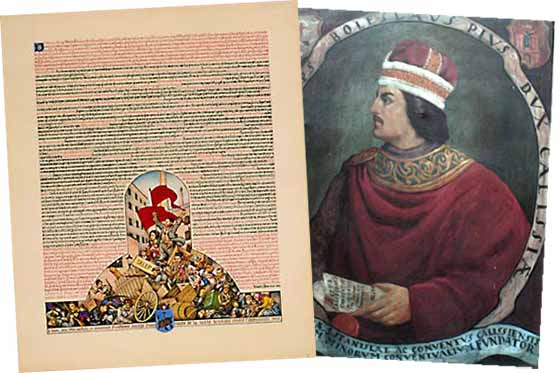
On September 8, 1264, Boleslaus the Pious, Duke of Greater Poland, promulgated the Statute of Kalisz, guaranteeing Jews safety and personal liberties and giving battei din jurisdiction over Jewish matters.

On the same date in 1883, former U.S. President Ulysses S. Grant drove in the final “golden spike” completing the Northern Pacific Railway in a ceremony at Gold Creek, Montana.

Categories
by Paul Jacob video

Dial 911 for Abuse

This Week in Common Sense, 9/1-7/2019, Part One.
Categories
Thought

Roger Scruton

The inescapable conclusion is that subjectivity, relativity and irrationalism are advocated [by Richard Rorty] not in order to let in all opinions, but precisely so as to exclude the opinions of people who believe in old authorities and objective truths. This is the short cut to [Antonio] Gramsci’s new cultural hegemony: not to vindicate the new culture against the old, but to show that there are no grounds for either, so that nothing remains save political commitment.

Thus, almost all those who espouse the relativistic ‘methods’ introduced into the humanities by Foucault, Derrida and Rorty are vehement adherents to a code of political correctness that condemns deviation in absolute and intransigent terms. The relativistic theory exists in order to support an absolutist doctrine. We should not be surprised therefore at the extreme disarray that entered the camp of deconstruction, when it was discovered that one of the leading ecclesiastics, Paul de Man, once had Nazi sympathies. It is manifestly absurd to suggest that a similar disarray would have attended the discovery that Paul de Man had once been a communist — even if he taken part in some of the great communist crimes. In such a case he would haved enjoyed the same compassionate endorsement as was afforded to [György] Lukács, [Maurice] Merleau-Ponty and Sartre.

Roger Scruton, Fools, Frauds and Firebrands: Thinkers of the New Left (2005), (pp. 236-237).