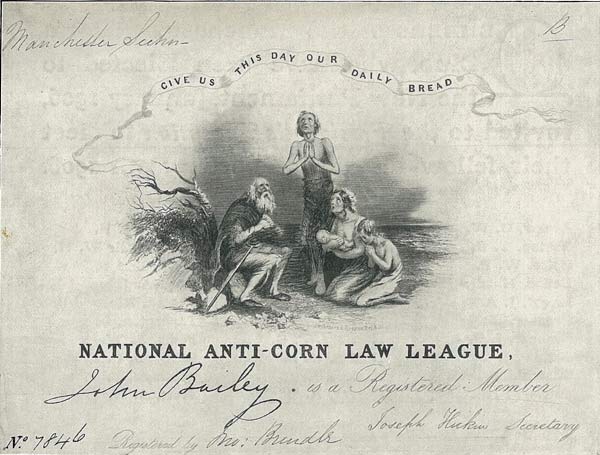
On January 31, 1849, the Corn Laws were abolished in the United Kingdom, one of the most impressive and far-reaching anti-protectionist moves of all time. “Corn” stood for all grains, including wheat, oats, barley, etc.; the free-trade agitation by John Bright and Richard Cobden was one of the main impetuses for the reform.
On Jan. 31, 1865, the United States Congress proposed the Thirteenth Amendment to the U.S. Constitution, submitting it to the states for ratification. The Amendment’s main section reads: “Neither slavery nor involuntary servitude, except as a punishment for crime whereof the party shall have been duly convicted, shall exist within the United States, or any place subject to their jurisdiction.”
On Jan. 31, 1990, the first McDonald’s fast food restaurant opens in the Soviet Union. Having once traveled to Moscow, I’m exceedingly thankful for this.
Progressives who lean socialist used to hide their worst intentions. Now they are letting it all hang out.
There have always been overt socialists in the U.S., of course. They would sometimes protest the reluctance of fellow travelers to fully embrace socialism’s moniker. But the sentiment “Ah, screw it, let’s just admit we want to destroy everything currently in existence” seems on the ascendance. Even a few major Democratic candidates for president are on board.
Exhibit 112 is the new nationwide push to stomp the gig economy.
Especially freelancing.
This follows Exhibit 111, the recent and so far successful push to stop independent contractors from engaging in voluntary transactions in California. (Many lawsuits are underway.)
After scanning the coiled legalese of 111 — I mean AB5, California’s law — many companies decided that ending relationships with California-based freelancers was prudence with a capital P. And that rhymes with G, and that stands for Golden. Which the Golden State used to, uh, B.
Not every self-employed person has been thrown out onto the street. There are carve-outs. Actually, the only known victims are taxi drivers, cleaners, nurses, comedians, writers, editors, musicians, transcriptionists, citizen initiative petitioners, etc., etc.
The crackdown on non-9-to-5 work arrangements has also resulted in much gnashing of teeth by gig-seekers of all ideological stripes.
Obviously, then, such massive destruction of economic freedom must be inflicted on the federal level too. So House Democrats put AB5’s gig-killing provisions into Exhibit 112, that is, into HR2474, pending legislation.
Socialism is not in the least what it pretends to be. It is not the pioneer of a better and finer world, but the spoiler of what thousands of years of civilization have created. It does not build; it destroys. For destruction is the essence of it. It produces nothing, it only consumes what the social order based on private ownership in the means of production has created.
Ludwig von Mises, Socialism: An Economic and Sociological Analysis (1922), Part V.
On Jan. 30, 1948, Indian leader Mohandas K. Gandhi, known for his non-violent, non-cooperation struggle for freedom and national independence, was assassinated by a Hindu extremist.
On Jan. 30, 1956, Martin Luther King, Jr.’s home was bombed in retaliation for his work on the Montgomery Bus Boycott.
On Jan. 30, 1972, British soldiers killed fourteen unarmed civil rights marchers in Northern Ireland in what came to be known as “Bloody Sunday.” Soldiers shot 26 unarmed protesters and bystanders – 13 males, seven of whom were teenagers, died immediately, while another man died of his injuries nearly five months later. In the immediate aftermath, an investigation by the British Government largely cleared the soldiers and British authorities of blame. A second investigation begun in 1998, released a report in 2010 declaring that all of those shot were unarmed, and that the killings were both “unjustified and unjustifiable.”
Not quite fitting today’s “non-violence elicits violence” theme, on January 30, 1835, Richard Lawrence attempted to shoot former military leader and then-President Andrew Jackson, but failed. He was subdued by a crowd, including several congressmen. That marked the first attempt on the life of a sitting U.S. president.
It happened: “The measure asking all foreign troops to leave . . . passed.”
We are talking about Iraq . . . and the U.S. military.
So, not much else has happened.
After that parliamentary vote, Ron Paul explains, “when the Iraqi prime minister called up Secretary of State Mike Pompeo to request a timetable for a US withdrawal, Pompeo laughed in his face.”
I am with Dr. Paul on this one. The U.S. should take this opportunity to get out . . . “before more US troops die for nothing in Iraq.”
But is it for nothing?
Once upon a time, Americans were afraid of military “quagmires.” Now somehow we’ve come to accept permanent quagmire status in multiple theaters.
Could it be that when President George Herbert Walker Bush said, following the First Persian Gulf War, that “By God, we’ve kicked the Vietnam Syndrome once and for all,” he was speaking of its psy-op effect on the American electorate?
Pushing us into World War I, President Wilson claimed to be “making the world safe for democracy.” Perhaps Papa Bush made America safe for never-ending “regime-change wars.”
Before becoming vice president and then president, and going on to claim victory over “Vietnam Syndrome,” Bush headed the Central Intelligence Agency, the original regime modification professionals. And certainly endless, pointless foreign warfare has been the health of . . . the Deep State.
“The pressure for the U.S. to leave Iraq has been building within the country,” argues former Rep. Paul, “but the U.S. government and mainstream media is completely — and dangerously — ignoring this sentiment.”
Put American soldiers — not some secret or not-so-secret Deep State agenda — first. Bring them home.
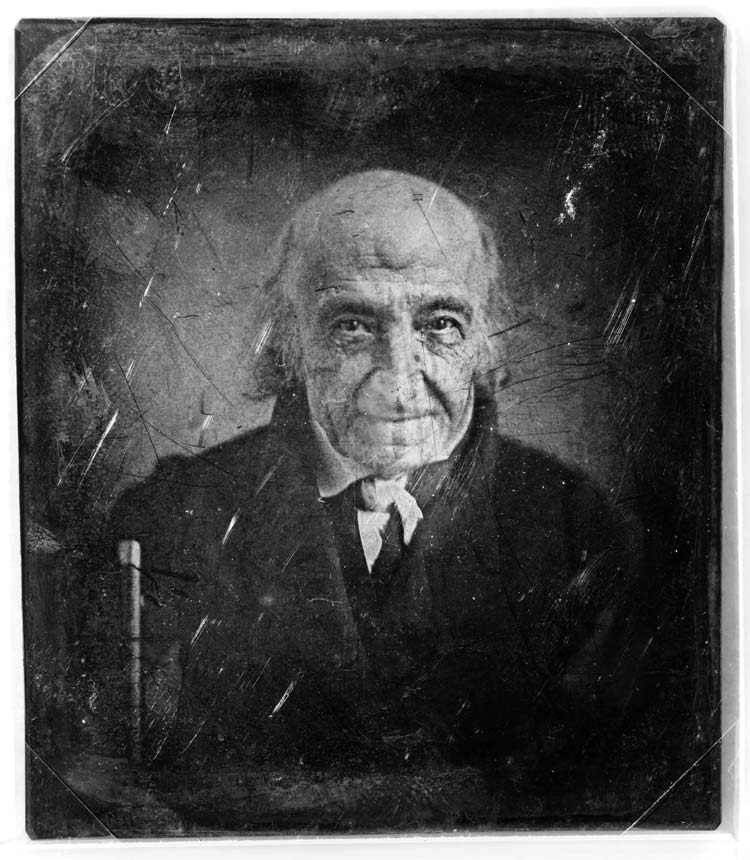
On January 29, 1761, Albert Gallatin was born. Gallatin served as the fourth United States Secretary of the Treasury — a post in which he served longer than any other in American history — advanced the anthropological and linguistic study of native Americans, and became the subject of a biography by Henry Adams. Called the “father of American ethnology,” he has been honored with a 1967 U.S. stamp as well as many place names, including the Gallatin National Forest in Montana.
Wartime brings the ideal of the State out into very clear relief, and reveals attitudes and tendencies that were hidden. In times of peace the sense of the State flags in a republic that is not militarized. For war is essentially the health of the State.
Challenged to a push-up contest at a town hall campaign meeting in New Hampshire, Representative Tulsi Gabbard (D-Hawaii) hit the floor and won.
The presidential candidate (polling at 5.4 percent in the Granite State) probably will not win the nomination, alas.
Or her lawsuit against Hillary Clinton.
Lawsuit?
Yes, a slander suit against the author of What Happened.
It is one thing to publicly call out Mrs. Clinton for her prevaricative snipes — but sue her?
Boldness, at the very least.
Would you dare to stand directly in Hillary’s way?
Not to give credence to old #ClintonBodyCount conjectures, which connected a number of strange deaths in close proximity to her and her husband’s transit through the firmament of power, including old and more recent “suicides” . . . but the hashtag #TulsiDidntKillHerself is now trending on Twitter.
The lawsuit — dubbed a publicity stunt by David Frum in The Atlantic — involves Hillary’s public speculations (or conspiracy theory, if you will) that Tulsi is a “Russian agent.”
“Tulsi Gabbard is running for President of the United States, a position Clinton has long coveted, but has not been able to attain,” explains the lawsuit, filed in the State of New York. “In October 2019 — whether out of personal animus, political enmity, or fear of real change within a political party Clinton and her allies have long dominated — Clinton lied about her perceived rival Tulsi Gabbard. She did so publicly, unambiguously, and with obvious malicious intent.”
I am not a lawyer, but . . . while Mrs. Clinton’s insinuations-and-worse were malicious and almost certainly untrue, perhaps even diabolical, in our politics lying is the norm and hardly legally actionable.
On January 28, 1912, Belgian economist Gustave de Molinari died. Molinari was one of the last major economists of the French Liberal School, heir to Frederic Bastiat, and a prominent advocate of free trade. His last book, The Society of To-morrow (the only one of his many books to be translated into English in his day) envisioned a future of extremely limited government, and argued against the growing tide of socialism and war that was becoming all too apparent as the future of Europe.
Indeed, the old liberal order of Europe ended with the beginning of the Great War, exactly two and one half years after Molinari’s demise.
On Jan. 28, 1981, President Ronald Reagan lifted the federal government’s remaining domestic petroleum price and allocation controls in the United States, helping to end the 1970s energy crisis and begin the 1980s’ oil glut.
The deregulatory move had been begun by Democrats in Congress, particularly Sen. Ted Kennedy, but had been placed on a gradual schedule, and the whole effort clouded with talk of “windfall profits” and a tax on those allegedly unfair returns on investment.
If a nation values anything more than freedom, it will lose its freedom; and the irony of it is that if it is comfort or money that it values more, it will lose that too.
W. Somerset Maugham, Strictly Personal, Chapter 31 (1941)