Price-regulation by State authority (through State purchase, like our Farm Board) was tried in China about 350 B.c. It did not work. It was tried again, with State distribution, in the first century A.D., and did not work. Private trading was suppressed in the second century B.C., and regional planning was tried a little later. They did not work; the costs were too high. In the eleventh century A.D., a plan like the R.F.C. was tried, but again cost too much. State monopolies are very old; there were two in China in the seventh century B.C. I suppose there is not a single item on the modern politician’s agenda that was not tried and found wanting ages ago
The European Union is an anti-democratic, quasi-tyrannical mess. And Great Britain, having Brexited over the weekend, has a chance at a clean-up job. But that doesn’t mean that Britain won’t go down a very dark path, creating an even bigger mess.
Freedom provides opportunities to fail as well as to succeed.
On page 17 of the latest issue of The Economist, we get a hint at what can go wrong.
In a word: too much government. Too much regulation, taxation, etc.
“No longer such a smooth ride” reads the headline, with a tag just below it: “A weakened Britain hopes to draw strength from its alliance with the United States. Good luck with that.”
Snark aside, there is a lot wrong here. Post-Brexit Britain is not obviously weaker — indeed, actually following through on the Brexit issue itself is a sign of strength. Admittedly, Theresa May was weak. And the nearly destroyed communists of the Labor Party are weaker yet.
But Britain has great opportunity to strengthen itself, now.
The first issue that The Economist notes throws cold water on Brexit ebullience is trade. “If the British government persists with plans for a digital-services tax that would hit tech giants, America has said it will retaliate with punitive tariffs on British car exports.” Well, yeah.
Britain would harm itself by not embracing a free trade agreement with the United States, post haste. The model should be the Cobden-Chevalier Treaty of 1860, which set Britain on a major upward course — and France, too. A similar treaty could be a bounty for both Britain and America.
But the usual ardor for taxes, regulation, and intrusive government could transform Brexit from boon to bust.
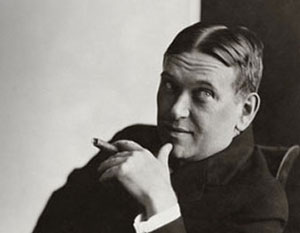
On February 3, 1931, the legislature of the State of Arkansas passes a motion to pray for the soul of journalist H. L. Mencken, after he calls the state the “apex of moronia.”
On March 3, 1924, the 407-year-old Islamic caliphate was abolished, when Caliph Abdülmecid II of the Ottoman Caliphate was deposed. The last remnant of the old regime gives way to the reformed Turkey of Kemal Atatürk. On the same day, the Free State of Fiume was annexed by the Kingdom of Italy.
On March 3, 1931, the United States adopted The Star-Spangled Banner as its national anthem.
Eight years later, in Bombay, Mohandas Gandhi began a hunger strike in protest at the autocratic rule in British India.
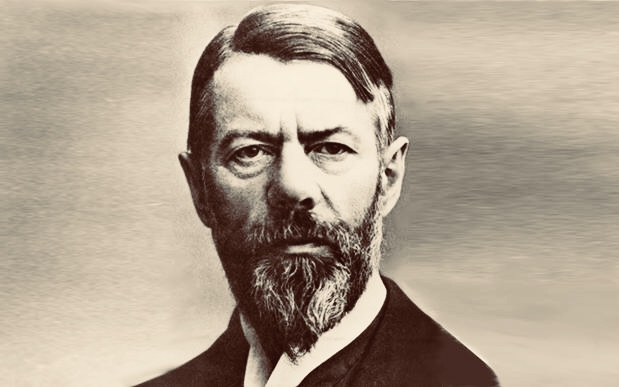
Belgian economist Gustave de Molinari (pictured) was born on March 3, 1819. Associated with French laissez-faire economists Frédéric Bastiat and Yves Guyot, he was the longest-serving editor of Guillamin’s Journal des économistes. Today chiefly known in the English-speaking world for his authorship of one article, “The Production of Security” (1849), he was, as Ludwig von Mises described, the most productive economist in his school. Despite this, and his worldwide recognition, only one of his many books was translated from the French into English during his lifetime, The Society of To-morrow (1904), his final book. Molinari died on January 28, 1912.
Man is an organism composed of vital, physical, intellectual, and moral forces. This matter and these forces, which form the individual and the species, can only be preserved and developed by the assimilation, or, to use the economic term, the consumption of materials and forces of like nature. Failing this consumption, their vitality wastes and is finally extinguished. But waste and extinction of vitality cause pain and suffering, and it is the stimulus of pain and suffering which impels man to acquire the materials necessary for the development and preservation of his life. All these materials are present in his environment, air, &c.; and nature gives him a small number free of cost. But with the exception of this minority they must be discovered, acquired, and adapted to the purposes of consumption. Man must be a producer.
Opening paragraph, The Society of To-morrow (1904).
In this final book, Molinari offered a political program he called the “free constitution of nationality.”
If Punxsutawney Phil peaks out and sees his shadow, are we doomed to another six weeks of political pall?
And speaking of palls, Senator Elizabeth Warren, slipping in the polls, has unveiled YET ANOTHER PLAN.
Contemplate that very fact for a moment. The Distinguished Pocahontas Professor of Planning proposes to “combat disinformation by holding big tech companies like Facebook, Twitter and Google,” Sunny Kim regales us from CNBC, “responsible for spreading misinformation designed to suppress voters from turning out.”
Warren vows to “push for new laws that impose tough civil and criminal penalties for knowingly disseminating this kind of information, which has the explicit purpose of undermining the basic right to vote.”
Notice her flip of America’s script?
Swapping free speech for policed speech doesn’t upgrade politicians, regulators and judges to philosopher king status, able or justified to distinguish true information from mis– or dis-.
And is our basic right to vote really being undermined by “memes”?
Give me a break.
Confusing rights with influence, or some virginal lack thereof, is pure political poison.
Or it would be if anyone took Warren seriously anymore.
Meanwhile, PETA is horning in on Punxsutawney’s celebrated Groundhog Day.
“People for the Ethical Treatment of Animals is calling on the keepers of the weather-forecasting groundhog to let him retire,” CNN tells us, “and to be replaced by an animatronic groundhog.”
PETA got what reads like a Babylon Bee article into the news. “By creating an AI Phil,” the group’s letter to the Pennsylvania operation runs, “you could keep Punxsutawney at the center of Groundhog Day but in a much more progressive way.”
Is Elizabeth Warren’s notion also ‘progressive’?
Seems the opposite. But animatronics might be involved.