On March 10, 1922, Mohandas Karamchand Gandhi (1869-1948), Indian activist and theorist of non-violent revolution, was arrested in India, tried for sedition, and sentenced to six years in prison, only to be released nearly two years later for an appendicitis operation.
In The Graduate (1967), the young man played by Dustin Hoffman gets advice from an elder. “Just one word: plastics.” “Exactly how do you mean, sir?” “There’s a great future in plastics.”
When the world bans all plastic in 2021, that will be the end of that market opportunity. Other components of civilization will be discontinued in 2022.
Maybe I’m being too pessimistic. After all, there’s always the black market.
A plastic-bag ban is underway in New York City. Four states and five territories have already banned disposable plastic bags, as have countries around the world. New Yorkers are reportedly two-to-one in favor. A friend who lives there confirms this widespread resignation.
“I’m not happy about what it [plastic] does to the environment,” says one New Yorker. “But . . . what it does to my environment if I don’t have them is a nightmare.”
“This is a good thing because it’s helping the environment,” says another.
The problem of trash disposal has been solved. We use garbage cans, pickups, landfills. It’s a problem that must be continuously re-solved. Like many other problems . . . such as how to carry groceries.
We adopted plastic bags because they are much more convenient than paper. Convenience, efficiency, effectiveness: many man-made components of civilization serve these goals.
Reduction to absurdity can persuade only if the listener rejects the absurd. In 1967, the idea of banning plastic bags and plastic straws seemed, to most, absurd. Today, maybe two thirds of New Yorkers lament the inconvenience but add whaddyagonnado . . . when you gotta protect the environment?
That this measure will not protect much of anything, but merely allow activists to think well of themselves is, itself, absurd.
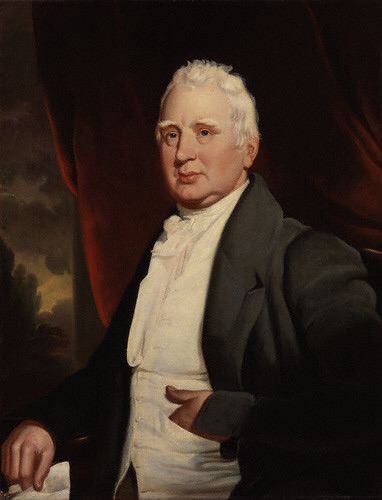
March 9 marks the 1763 birthday of British pamphleteer and activist William Cobbett. Cobbett was known for his lifelong opposition to authority, and his later-in-life “radicalism,” which included his opposition to Britain’s protectionist Corn Laws as well as his support for Catholic Emancipation. Cobbett died in 1835.
In 1776 on this date, Scottish philosopher Adam Smith first published An Inquiry into the Nature and Causes of the Wealth of Nations, which became the first widely accepted landmark work in the field of economics. It was not the first general treatise on the subject, however; that designation almost certainly belongs to banker Richard Cantillon’s Essai sur la Nature du Commerce en Général, cited by Smith in his more famous book. It is also worth noting that Étienne Bonnot de Condillac’s systematic treatise, Le Commerce et le Gouvernement, also saw publication in 1776.
On March 9, 1862, the USS Monitor and CSS Virginia fought to a draw in the Battle of Hampton Roads, the first battle between two ironclad warships. The Virginia was built on the remains of the USS Merrimack, and the battle is often referred to as between “the Monitor and the Merrimack.”
They are not skilful considerers of human things, who imagine to remove sin by removing the matter of sin. . . . Though ye take from a covetous man all his treasure, he has yet one jewel left, ye cannot bereave him of his covetousness. Banish all objects of lust, shut up all youth into the severest discipline that can be exercised in any hermitage, ye cannot make them chaste, that came not hither so; such great care and wisdom is required to the right managing of this point. Suppose we could expel sin by this means; look how much we thus expel of sin, so much we expel of virtue: for the matter of them both is the same; remove that, and ye remove them both alike.
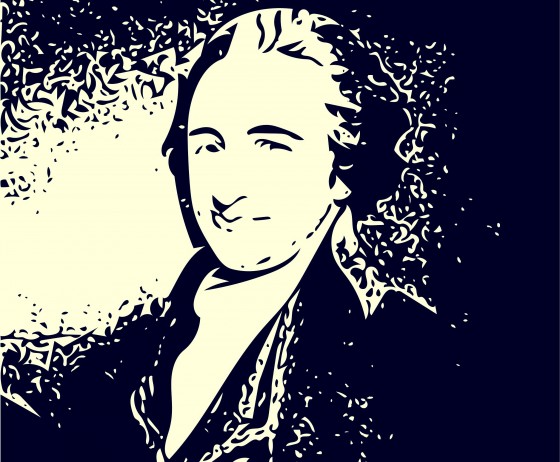
On March 8, 1775, “African Slavery In America,” the first known essay advocating the abolition of slavery in America, was published anonymously in the Pennsylvania Journal and the Weekly Advertiser. Thomas Paine (pictured) is believed to be the essay’s author.
The first anti-slavery society was formed in Philadelphia weeks after publication, and Paine was a founding member.
Exactly 120 years earlier, a court in Northampton County of the Virginia Colony ruled that John Casor, then working as an indentured servant to Robert Palmer, must be returned to Anthony Johnson as Johnson’s “lawful” slave for life. Ironically, Johnson was one of the original indentured servants brought to Jamestown, had completed his indenture to become a “free Negro” and the first African landowner in the colony. The case marked the first person of African descent to be legally-recognized as a lifelong slave in England‘s North American colonies. The first official chattel slave in English-speaking North America was of African descent, and was owned by a man also of African descent.
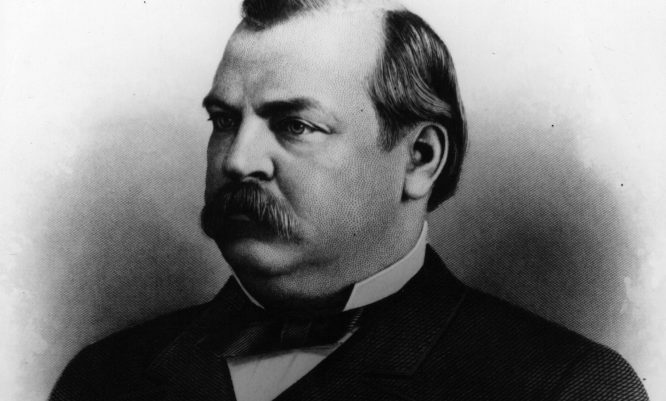
When more of the people’s sustenance is exacted through the form of taxation than is necessary to meet the just obligations of government and expenses of its economical administration, such exaction becomes ruthless extortion and a violation of the fundamental principles of free government.