On May 2, 1989, Hungary began dismantling its border fence with Austria, allowing a number of East Germans to defect.
Categories
Run for the Border
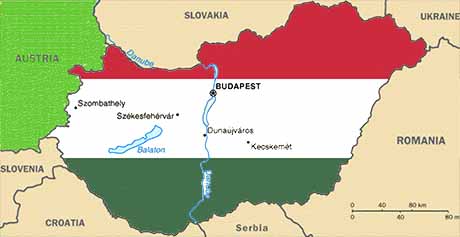
On May 2, 1989, Hungary began dismantling its border fence with Austria, allowing a number of East Germans to defect.

New York City Mayor Bill de Blasio seemed proud of his new initiative. To fight coronavirus, he thinks — and he is joined by a whole lot of other people — that everyone should stay at home indoors. And wear masks, gloves, etc., when going out for essentials only.
But since not everyone will cooperate, what to do? Apply social pressure, such as eye-rolls and a few tsk-tsks?
Well, not this Big Apple mayor.
Better get the police power involved!
De Blasio’s notion has been called a “snitch hotline.” In the spirit of “see-something/say-something,” he asked New Yorkers to snap photos of the scofflaws:
Text the photo to 311-692
and action will ensue.
And boy, did he get responses!
Immediately.
The U.K.’s Daily Mail explains that “the service was inundated with prank calls, pictures of genitalia and memes likening de Blasio to Adolf Hitler.”
My favorite “meme” sports a photo of the Führer captioned “TO THOSE TURNING IN THEIR NEIGHBORS AND LOCAL BUSINESSES / YOU DID THE REICH THING.”
And while Stalin analogies might be more apt for the quasi-commie mayor, Hitler references sting more.
John Nolte at Breitbart, referencing George Orwell’s 1984, called the responses “glorious” and “freakin’ awesome.”
The city closed down the hotline for a while to set up a filtering service before sending out leads to the police departments.
In New York City, as in most places in America, if you attempt to establish a Big Brotherish snitch-line, you will get a free-wheeling re-action.
Is this a great country or what?
This is Common Sense. I’m Paul Jacob.
See all recent commentary
(simplified and organized)
See recent popular posts
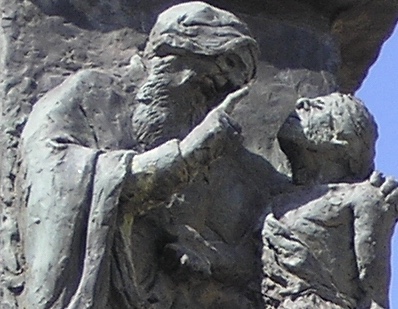
That which is hateful to you, do not do to your neighbor. That is the whole Torah; the rest is the explanation. Go and study it.
Hillel the Elder (c. 110 BC–10 AD), Babylonian Talmud, tractate Shabbat 31a
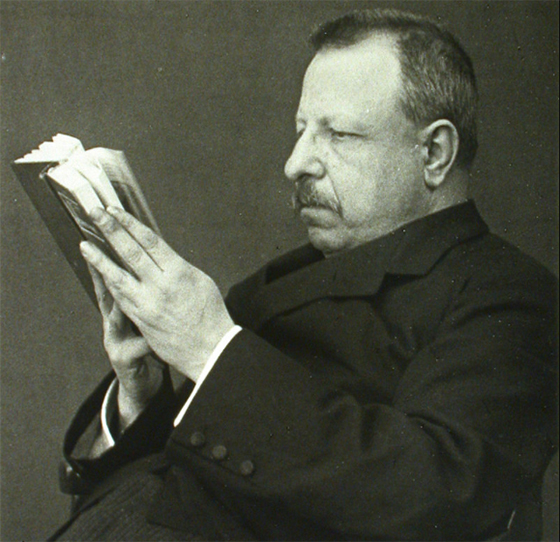
The Manifesto of the Anti-Fascist Intellectuals, written by philosopher Benedetto Croce [pictured, above] in response to the Manifesto of the Fascist Intellectuals by Giovanni Gentile, sanctioned the unreconcilable split between the philosopher and the Fascist government of Benito Mussolini, to which he had previously given a vote of confidence on October 31, 1922.
The manifesto was published by Il Mondo on May 1, 1925, which was Workers’ Day, symbolically responding to the publication of the Fascist manifesto on the Natale di Roma, the founding of Rome (celebrated on April 21). The Fascist press claimed that the Crocian manifesto was “more authoritarian” than its Fascist counterpart — a typical leftist dismissal of what used to be called “liberalism” — in Italian, liberismo — but which Croce dubbed liberism, to distinguish it from the dirigiste quasi-socialisms of self-described “liberals” of the time.
“I think it’s a shame,” HBO comedian Bill Maher told Dr. David Katz, “that people like you who sound reasonable — maybe it’s not the exact one true opinion you hear somewhere else — has to go on Fox News to say it.”
For years, I have told liberal friends that they miss important stories by not paying attention to Fox, because most other TV media eschew non-progressive perspectives they oppose (but perhaps fear we might support).
Last month, Katz wrote a New York Times op-ed, entitled, “Is Our Fight Against Coronavirus Worse Than the Disease?” Rather than the current lockdown strategy, the physician advocates “a middle path” where “high-risk people are protected from exposure” and “low-risk people go out in the world.”
Once upon a time, social media promised regular folks a chance to communicate and even organize without government interference or media filters.
Not so much these days.
Last week, I decried Facebook removing posts informing people about planned anti-lockdown protests, reportedly “on the instruction of governments” in California, New Jersey, and Nebraska because those protests might violate “stay-at-home orders.”
This week, YouTube removed a video that you and I must not see, with California Drs. Dan Erickson and Artin Massihi explaining why they think the lockdowns are bad policy.*
“Anything that would go against World Health Organization recommendations,” clarified YouTube CEO Susan Wojcicki, “would be a violation of our policy” — and will be blocked.
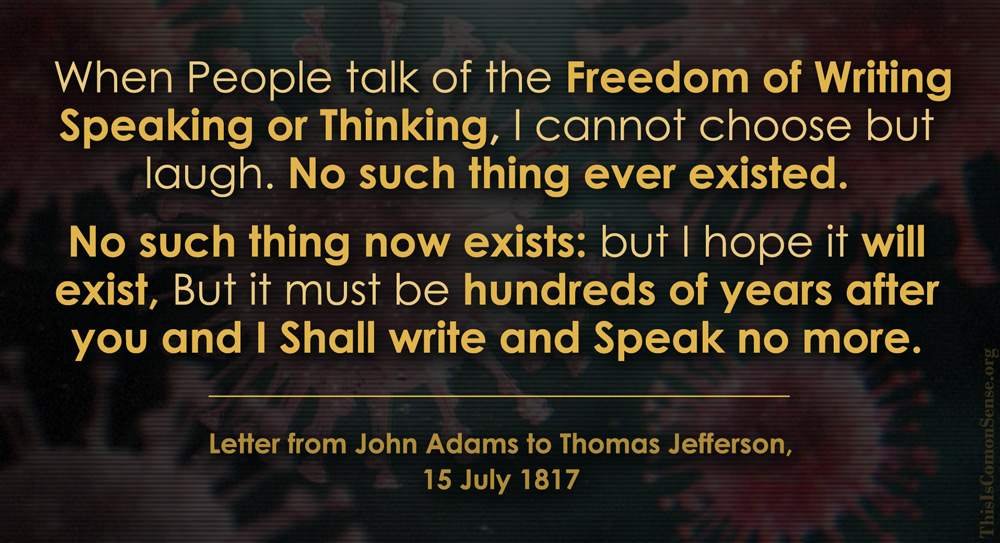
Our society’s first principle is freedom of expression.
The idea? Unfettered information will best lead us to the truth.
Increasingly, our social media and news outfits no longer trust us with information not heavily controlled by them.
Which means we cannot trust them.
This is Common Sense. I’m Paul Jacob.
* The doctors also confirm, as I suggested might happen, that medical personnel are being pressured to “add COVID” to death reports.
See all recent commentary
(simplified and organized)
See recent popular posts

Philosophy is a battle against the bewitchment of our intelligence by means of our language.
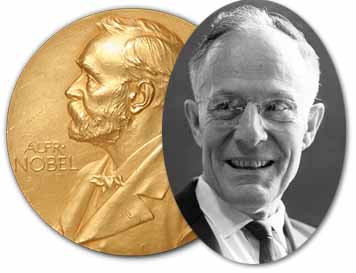
On April 30, 1902, economist Theodore W. Schultz was born. His work studying the quick post-war recovery in Germany and Japan led to his development of “human capital theory,” explicated in many books, including Investing in People (1981). He was co-winner (with William Arthur Lewis) of the 1979 Alfred Nobel Memorial Prize in Economic Sciences. Schultz died in 1998.
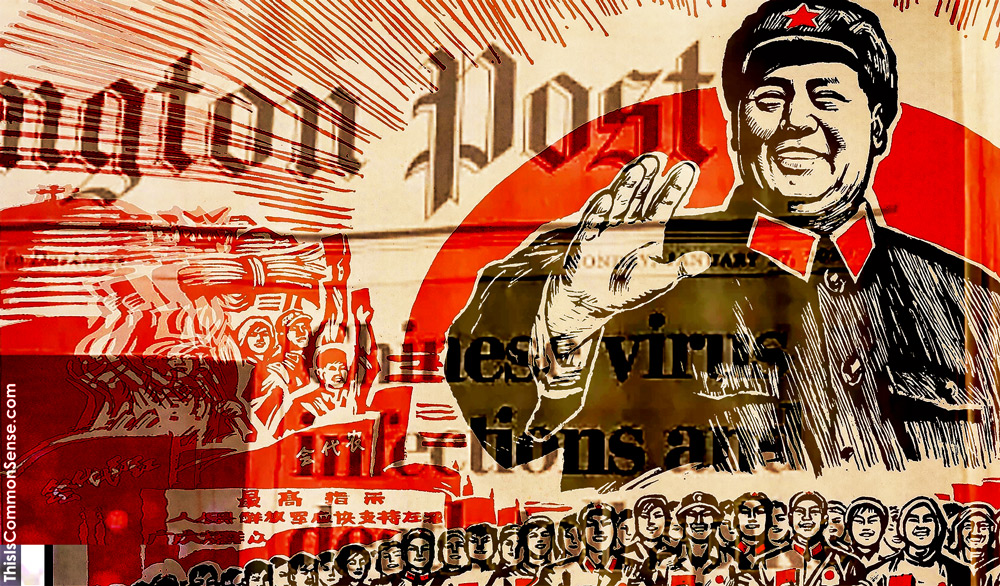
Last Saturday’s Washington Post editorial blasted both President Donald Trump and his presumptive Democratic challenger Joe Biden for a “sleazy stratagem” — namely, “accusing the other of being a stooge for Communist China.”
At issue are dueling advertisements from each campaign and a pair of SuperPACs.
The Trump ad features Fox Business’s Stuart Varney declaring that “Biden’s son inked a billion-dollar deal with a subsidiary of the Bank of China,” followed by Biden telling an audience that the Butchers of Beijing “aren’t bad folks, folks.”
“For 40 years, Joe Biden has been wrong about China,” warns the America First Actiom PAC spot. “I believed in 1979 and I believe now,” offers Biden, “that a rising China is a positive development.”
Biden’s campaign responded with an ad charging that “Trump rolled over for the Chinese” — uttering their praises “as the coronavirus spread across the world.”
“Trump trusted China,” claims an American Bridge PAC spot, noting that “everyone knew they lied about the virus.”
While acknowledging “that China’s government contributed to the global spread of the coronavirus by covering up initial reports” and “has tried to use the pandemic to advance its authoritarian political model globally at the expense of democracy,” The Post nonetheless bemoaned the “irresponsible” “rhetoric” that “could complicate cooperation with China.”
What the Post’s editors did not make clear — while explaining that China should be “pushed for greater transparency” and “its propaganda . . . rejected” — was the inconvenient fact that the paper has for a decade published reams of Chinese government propaganda.
For an undisclosed sum, likely in the millions, as I wrote last week.
So let the campaign heat up. Americans are far less interested in cooperating with totalitarian China than is our nation’s compromised newspaper of record.
This is Common Sense. I’m Paul Jacob.
See all recent commentary
(simplified and organized)
See recent popular posts
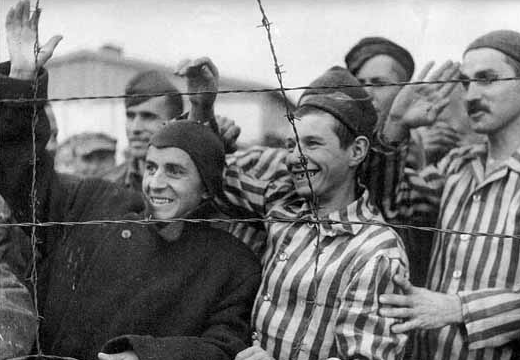
On April 29, 1945, U.S. troops of the Seventh Army liberated the Dachau concentration camp.

What is essential to the idea of a slave? We primarily think of him as one who is owned by another. To be more than nominal, however, the ownership must be shown by control of the slave’s actions — a control which is habitually for the benefit of the controller. That which fundamentally distinguishes the slave is that he labours under coercion to satisfy another’s desires. The relation admits of sundry gradations. Remembering that originally the slave is a prisoner whose life is at the mercy of his captor, it suffices here to note that there is a harsh form of slavery in which, treated as an animal, he has to expend his entire effort for his owner’s advantage. Under a system less harsh, though occupied chiefly in working for his owner, he is allowed a short time in which to work for himself, and some ground on which to grow extra food. A further amelioration gives him power to sell the produce of his plot and keep the proceeds. Then we come to the still more moderated form which commonly arises where, having been a free man working on his own land, conquest turns him into what we distinguish as a serf; and he has to give to his owner each year a fixed amount of labour or produce, or both: retaining the rest himself. Finally, in some cases, as in Russia before serfdom was abolished, he is allowed to leave his owner’s estate and work or trade for himself elsewhere, under the condition that he shall pay an annual sum. What is it which, in these cases, leads us to qualify our conception of the slavery as more or less severe? Evidently the greater or smaller extent to which effort is compulsorily expended for the benefit of another instead of for self-benefit. If all the slave’s labour is for his owner the slavery is heavy, and if but little it is light. Take now a further step. Suppose an owner dies, and his estate with its slaves comes into the hands of trustees; or suppose the estate and everything on it to be bought by a company; is the condition of the slave any the better if the amount of his compulsory labour remains the same? Suppose that for a company we substitute the community; does it make any difference to the slave if the time he has to work for others is as great, and the time left for himself is as small, as before? The essential question is — How much is he compelled to labour for other benefit than his own, and how much can he labour for his own benefit? The degree of his slavery varies according to the ratio between that which he is forced to yield up and that which he is allowed to retain; and it matters not whether his master is a single person or a society. If, without option, he has to labour for the society, and receives from the general stock such portion as the society awards him, he becomes a slave to the society.
Herbert Spencer, “The Coming Slavery,” The Contemporary Review (April 1884), p. 474. See also The Man versus the State (1884).