Categories
Today

Freedom of Religion

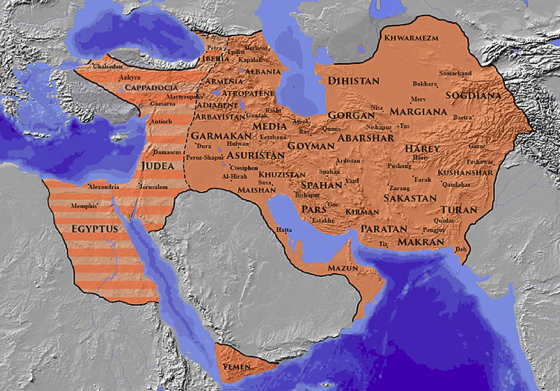
On May 26, 451, the Sassanid Empire defeated the Armenians at the battle of Battle of Avarayr but guaranteed them the freedom to openly practice Christianity.

On May 26, 1328, scholastic philosopher and Franciscan friar William of Ockham and other Franciscan leaders secretly exited Avignon, fearing a death sentence from Pope John XXII. On the same day in 1538, the city of Geneva expelled John Calvin and his followers, who headed to exile in Strasbourg.

Categories
Accountability general freedom The Draft

Of Honor and Horror

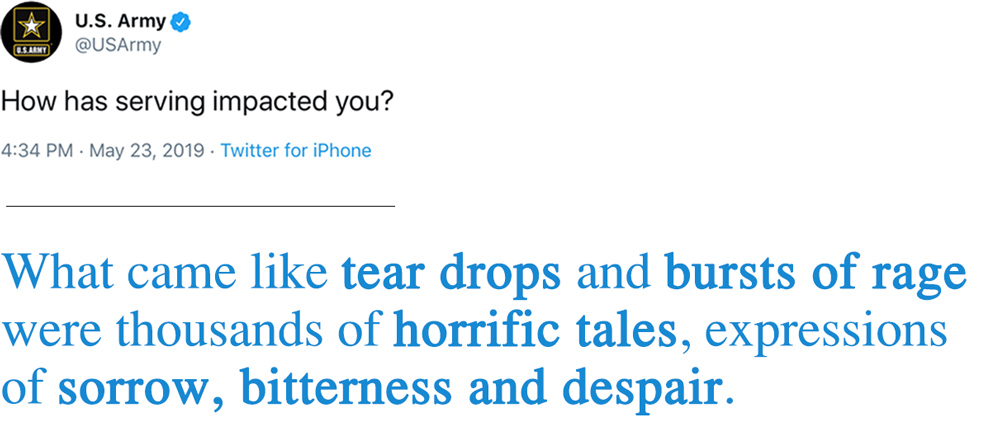
Last year, when the public relations wing of the U.S. Army asked, on Twitter, “How has serving impacted you?” the bulk of the responses were not what was hoped for. 

What came like tear drops and bursts of rage were thousands of horrific tales, expressions of sorrow, bitterness and despair.

No doubt the intention was to elicit, if not patriotic uplift, at least stories of learning, moral growth, centeredness, and personal victory out of sacrifice and suffering. Almost certainly the Army wanted what the promoters of “national service” now want.

The outcome was far messier.

Now, the Army handled the Twitterflak very well, with a tweet thanking people for their expressions. But a response by Mike Schmidt (@MikeSchmidt69) was probably as upbeat as could be expected, given the ‘writing on the wall’— er, Twitterfeed: “Some say this thread back-fired but this is just the thread that is needed each [M]emorial [D]ay so we remember the sacrifices military members and their families make and how we as a country need to understand the true cost of service and improve our support.”

Most of the tweets I read were decidedly not upbeat. The anger and pain over battle deaths, wounds, PTSD, mental illness, suicides, and so much indifference to it — it was deep and wide . . . and heartbreaking.

And needs to change NOW.

‘War is hell.’ In the defense of freedom, in self-defense, the brave soldier and general are honorable. But that honor is informed by the reticence that comes from actual knowledge of war’s true costs.

Maybe this Memorial Day President Trump and the Congress can also agree to review the use of military manpower around the world, looking to need to memorialize as few Americans as possible in the future. 

In fact, that sort of public policy debate is for all of us holding the hot dogs.

This is Common Sense. I’m Paul Jacob.


PDF for printing

See all recent commentary
(simplified and organized)
See recent popular posts
Categories
Today

Jacob Burckhardt

May 25, 1818, the Swiss historian and academic Jacob Burckhardt was born. Burckhardt’s best-known work is The Civilization of the Renaissance in Italy (1860), but is remembered here as the author of Reflections on History (1905).

Burckhardt died on August 8, 1897.

Categories
Thought

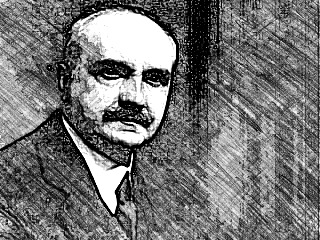
George Santayana

Liberty may be maimed, but not killed; reason may be bent, but not broken.

George Santayana, Egotism in German Philosophy, 1915.

Categories
by Paul Jacob video

Watch: Money Grows on… Cash Machines?

Paul Jacob covers the big stories of the week, in the vlog version of the podcast:

This Week in Common Sense, May 18 – 22, 2020.
Categories
Thought

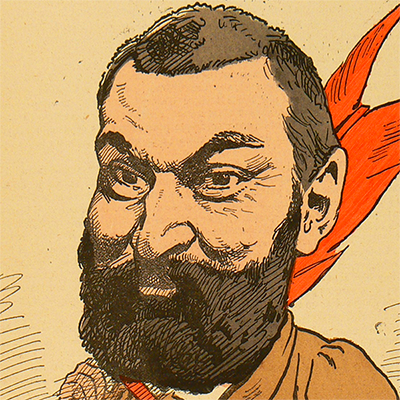
Yves Guyot

I have heard a socialist ask, “Will collectivism change the soil and the sunshine of Medoc?” No, but wine does not come into existence of its own accord, the vine-stocks and the conditions of soil and of climate do not produce fine harvests spontaneously, but need to be properly utilised, and require an annual expenditure upon the cost of cultivation; and subordinate officials without a direct interest are not the men to apply the required attention to this kind of production.

Yves Guyot, Socialistic Fallacies (1910), Book VII, “Collectivist Organization.”
Categories
Today

John Hancock

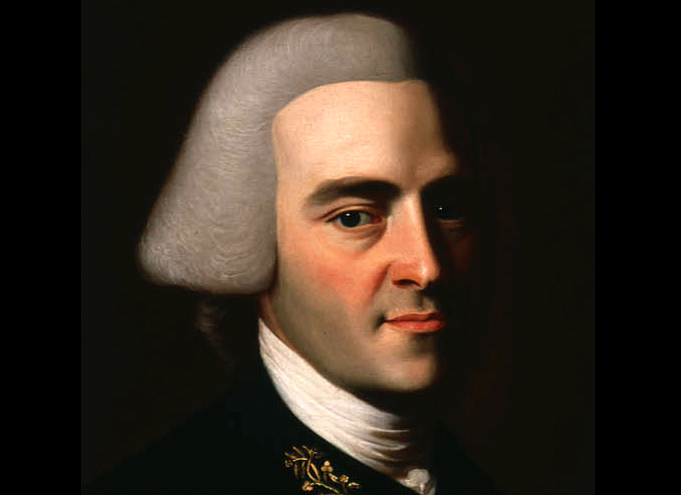
On May 24, 1775, John Hancock was elected president of the Second Continental Congress.

Hancock’s involvement with Samuel Adams and his radical group, the Sons of Liberty, won the wealthy merchant the dubious distinction of being one of only two Patriots (the other being Sam Adams) that the Redcoats marching to Lexington in April 1775 to confiscate Patriots’ arms were ordered to arrest. When British General Thomas Gage offered amnesty to the colonists holding Boston under siege, he excluded those same two men from his offer.

Categories
audio podcast

Listen: Cash Machines in the Breeze?

This weekend’s podcast goes further in depth than we could during the week. You get something more for listening.

This Week in Common Sense, May 18 – 22, 2020.

Please share with friends. Or subscribe on Stitcher or Apple podcasts. On SoundCloud (above) you can comment on specific moments in the track.

Categories
Today

The Liberator

On May 23, 1788, South Carolina became the 8th state to ratify the U.S. Constitution.

Other May 23 events include:

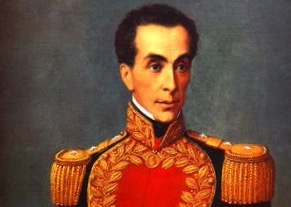
* 1813: South American independence leader Simón Bolívar entered Mérida, where he was proclaimed El Libertador (“The Liberator”), leading the invasion of Venezuela.

* 1900: Sergeant William Harvey Carney became the first African American to be awarded the Medal of Honor, for his heroism in a Civil War battle fought 37 years prior, in 1863.

* 1958: Birthday of American comedian and game show host Drew Carey.

Categories
general freedom ideological culture national politics & policies

Masks Work

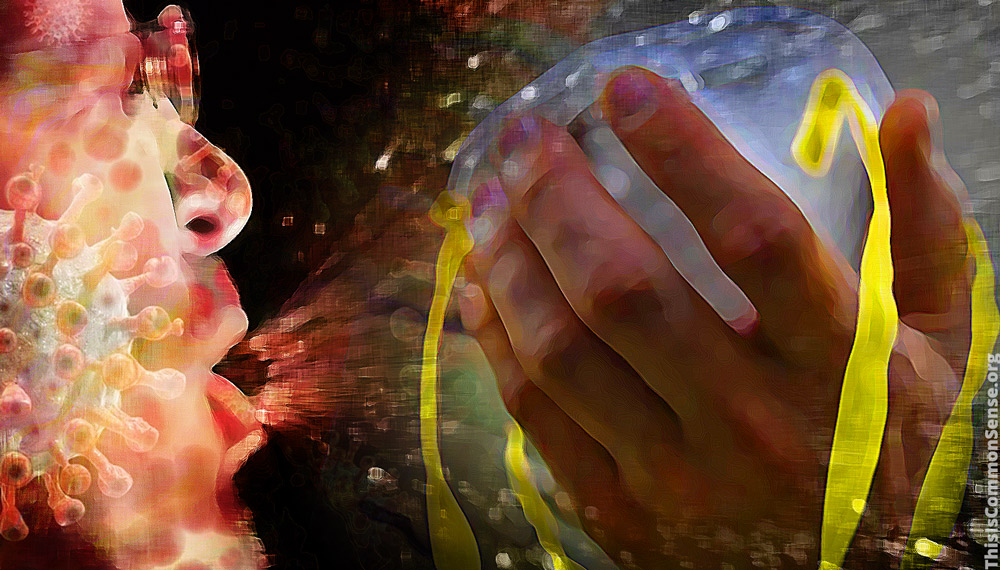
Early in this pandemic, experts — including CDC officials — told us that if you aren’t a medical worker dealing with infected patients, wearing a mask is ineffective in protecting yourself and others.

Many reversed themselves, though without honestly explaining why they had ever downplayed the value of masks to begin with. Masks are even now mandatory some places.

But we still hear naysayers who declare masks to be pointless.

One blithely declares: “The main transmission path is long-residence-time aerosol particles (< 2.5 μm), which are too fine to be blocked.” That’s less than 2.5 micrometers. A micrometer is one millionth of a meter. Yes, small.

But “too fine to be blocked”?

A properly worn mask need not be 100% effective to block tiny particles. Viruses do not fly unerringly through holes and gaps in the mask. They have no guidance system and no little legs enabling them to scamper to a hole if it hits fabric. 

Nor is the virus invariably unattached to larger particles. 

Obviously, the better the filtering, the more effective the mask.

Suppose you go to a supermarket and 

  1. wear a mask, 
  2. try to keep your distance from others, 
  3. go when fewer people tend to be shopping, and 
  4. leave fast. 

All pointless?

Short of wearing a hazmat suit or never leaving a one-resident home, no protective measure will be 100 percent effective all the time, infallibly. This doesn’t mean that partly effective measures should be dismissed as entirely ineffective. 

A part of something is, well, not zero.

This is Common Sense. I’m Paul Jacob.


PDF for printing

mask, filter, coronavirus, Covid, pandemic, epidemic,

See all recent commentary
(simplified and organized)
See recent popular posts