Every cause produces more than one effect.
Categories
Herbert Spencer

Every cause produces more than one effect.
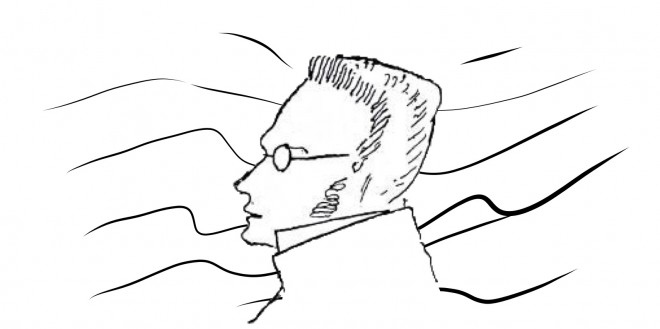
On October 25, 1806, the German philosopher Max Stirner was born. Stirner was known for his radical individualism, which under the name of “egoism” became culturally chic in the late 19th and early 20th centuries. In addition to Der Einzige und sein Eigentum, a major work that was famously attacked by Karl Marx, he translated into German Adam Smith’s Wealth of Nations from its original English and J.-B. Say’s A Treatise on Political Economy from its original French.
Paul Jacob re-caps the big stories of the week. But first? A bite to eat!

On October 24, 1648, the Peace of Westphalia was signed, marking the end of the Thirty Years’ War.
If one awakens in men the idea of freedom then the free men will incessantly go on to free themselves; if on the contrary, one only educates them, then they will at all times accommodate themselves to circumstance in the most highly educated and elegant manner and degenerate into subservient cringing souls.
Max Stirner, The False Principle of Our Education: or; Humanism and Realism (1842).
Most Americans appreciate the truth of Lord Acton’s venerable dictum: “Power tends to corrupt and absolutely un-term-limited power corrupts absolutely.”
I’ve slightly reworded it.
Sorry, Baron.
Anyway, instead of presuming, said John Emerich Edward Dalberg-Acton, 1st Baron Acton, that powerful men “like Pope and King” can do no wrong, we should presume the opposite. The more power a person can freely exercise, the more likely he will abuse it. “There is no worse heresy than that the office sanctifies the holder of it.”
Americans tend to agree. So we see the wisdom of regularly depriving incumbents of power that increases the longer they are in office, even as they become more inclined to abuse this power.
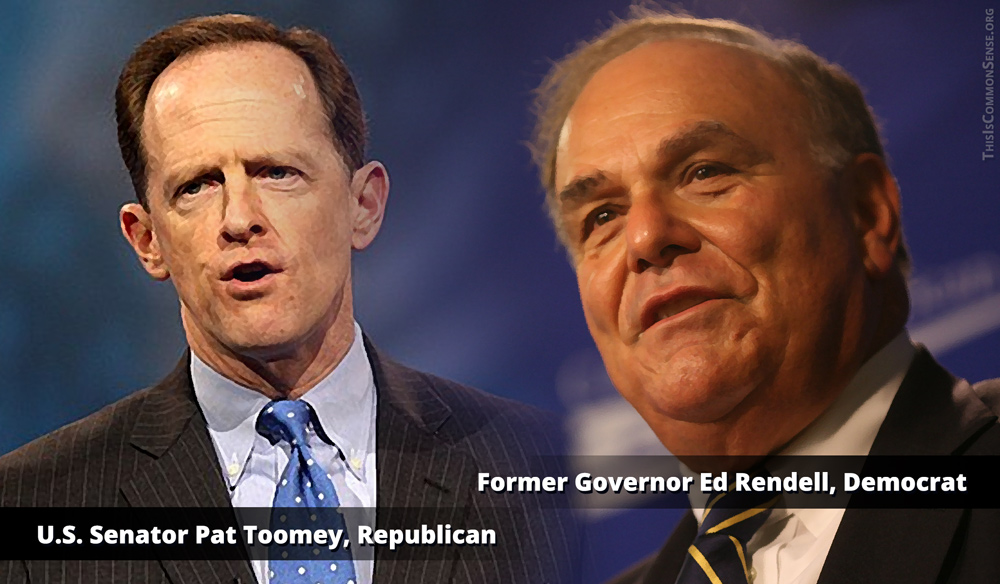
Most incumbents hate term limits. Yet we’ve also seen strong bipartisan support for the reform from many eminent politicians — for example, U.S. Senator Pat Toomey, Republican, and former Governor Ed Rendell, Democrat, both of Pennsylvania.
“Entrenched politicians have been steering the ship of state for decades and . . . we’re about to hit a $25 trillion national debt iceberg. It’s time for a new approach,” they say in a recent op-ed. “Our elected representatives seem afraid to do anything that would jeopardize their reelection. Term limits allow them to operate without that pressure, secure in the knowledge that they are not risking the position that could be a lifetime career.”
The two experienced elected officials, Rendell retired and Toomey retiring in 2022, also support a convention of states as the most practical constitutional method of term-limiting Congress.
Americans are coming together, right now, over term limits.
This is Common Sense. I’m Paul Jacob.
Photo of Governor Ed Rendell by Center for American Progress
See all recent commentary
(simplified and organized)
See recent popular posts
Unlike private enterprise which quickly modifies its actions to meet emergencies — unlike the shopkeeper who promptly finds the wherewith to satisfy a sudden demand — unlike the railway company which doubles its trains to carry a special influx of passengers; the law-made instrumentality lumbers on under all varieties of circumstances at its habitual rate. By its very nature it is fitted only for average requirements, and inevitably fails under unusual requirements.
Herbert Spencer, Essays: Scientific, Political, and Speculative (1891), Vol. 3, Ch. VII, “Over-Legislation.” See also Spencer’s essay “Specialized Administration.”

On October 23, 1850, the first National Women’s Rights Convention began in Worcester, Massachusetts.
On the same October date 106 years later, thousands of Hungarians rose up against Soviet rule.

Science writer Ronald Bailey argues that the best path to “a New Normal” can be found by rolling out home COVID-19 tests. But notes they are illegal.
Bailey’s November piece in Reason magazine informs us that “biotech startup E25Bio, diagnostics maker OraSure, and the 3M Co., are working on and could quickly deploy rapid at-home COVID-19 diagnostic tests.”
These tests work, he says, “by detecting, within minutes, the presence of coronavirus proteins using specific antibodies embedded on a paper test strip coated with nasal swab samples or saliva. Somewhat like at-home pregnancy tests, the antigen tests change color or reveal lines if COVID-19 proteins are recognized.”
So why not go ahead with these antigen tests? Well, the Food and Drug Administration doesn’t allow it. Bailey quotes a Harvard epidemiologist: “Until the regulatory landscape changes, those companies have no reason to bring a product to market.”
Regulatory blocking and kludge are just one reason this is not possible.
But if you — or for that matter, Mr. Bailey — think that this problem can just be solved with a Trumpian executive order or a quick legislative fix, there are reasons for doubt.
Our whole system is government-rigged. And, as Ludwig von Mises made clear in Bureaucracy, clunky slowness is not just a bug of such systems. It’s the feature.
And it’s a bad feature.
It’s why many of us oppose regulation by bureaucracy and prefer a rule of law and competition within markets to supply the regulation that businesses need.
Which suggests to me that the best way back to normalcy is not through a quick government fix but by nixing government fixes more broadly.
This is Common Sense. I’m Paul Jacob.
Photo by Marco Verch
See all recent commentary
(simplified and organized)
See recent popular posts
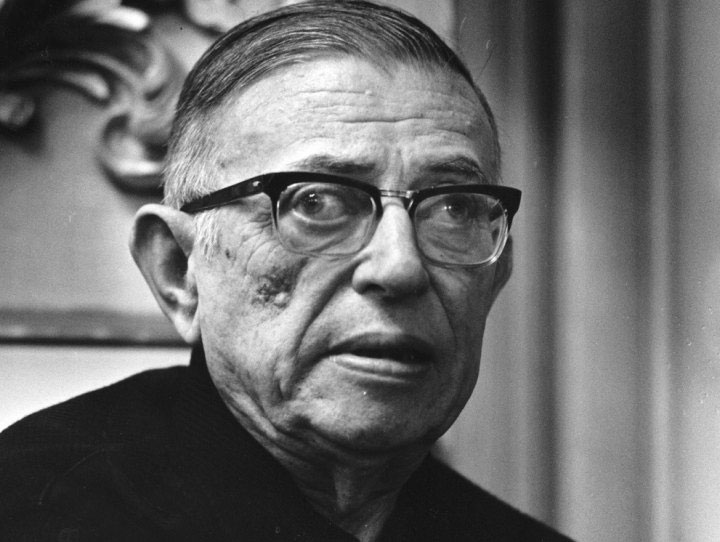
On October 22, 1964, philosopher and novelist Jean-Paul Sartre (1905 – 1980) was awarded the Nobel Prize for Literature, but turned down the honor — establishing a precedent that should have been followed by numerous Peace Prize winners, including Barack Obama and the European Union.
Only one other recipient of the award has turned it down voluntarily, namely Henry Kissinger’s co-winner in 1973, Le Duc Tho. Four other recipients were coerced by their governments from accepting the prize’s monetary award: Richard Kuhn, Adolf Butenandt and Gerhard Domagk, by the Nazi government, and Boris Pasternak, by the Soviet Union.