On October 28, 1886, in New York Harbor, the Statue of Liberty was dedicated by President Grover Cleveland, despite the fact that the monument was not a federally funded project.
Categories
Statue of Liberty

On October 28, 1886, in New York Harbor, the Statue of Liberty was dedicated by President Grover Cleveland, despite the fact that the monument was not a federally funded project.
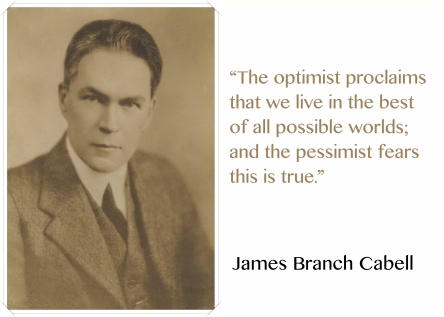
The optimist proclaims that we live in the best of all possible worlds; and the pessimist fears this is true.
The character “Coth of the Rocks,” in James Branch Cabell, The Silver Stallion: A Comedy of Redemption (1926).
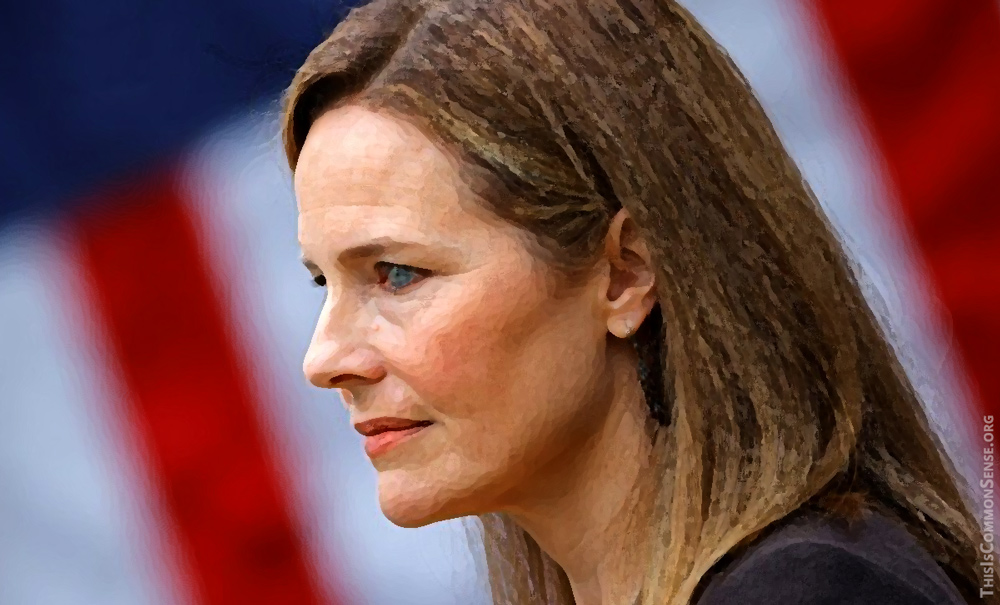
On the 73rd anniversary of the birth of Hillary Clinton, the United States Senate confirmed Amy Coney Barrett to the Supreme Court.
Mrs. Clinton, the former Democratic presidential candidate, looms in the background of the issue as a sort of éminence grise, a specter of the politics of the left. Had she won in 2016, late luminary RBG would have been replaced by a progressive woman. Not ACB.
For what would have been Hillary’s, count ’em, third nomination.
Not a specter, or grisey eminence, is Senator Kamala Harris (D-Calif.), Joe Biden’s partner in procuring 2020’s big prize.
“I’m on my way to the Senate floor to vote no on Judge Amy Coney Barrett’s nomination to the Supreme Court,” Harris tweeted, yesterday. “Health coverage for millions of people hinges on who fills this seat. It’s clear that this nominee has the potential to do great harm to the American people.”
Note that this complaint has nothing to do with actual judicial qualifications. It has to do with a policy that Democrats insist upon: socialized medical billing. But as ACB made clear in the hearings, her judicial mindset is about legal process, as it should be, not government policy.
An hour later, candidate Harris asserted that Senate Republicans had “denied the will of the American people by confirming a Supreme Court justice through an illegitimate process.”
Illegitimate?
Well, you see, “more than 62 million people have already voted.” That is it. Harris pretends that since there is an election next week, and some people have already voted, the normal, constitutional business of Congress should not go on.
Anything to rescue their broken policy, Obamacare.
Next week’s election sure will have consequences, but ACB’s stint on the Court resulted from Hillary’s quite legitimate loss.
This is Common Sense. I’m Paul Jacob.
See all recent commentary
(simplified and organized)
See recent popular posts
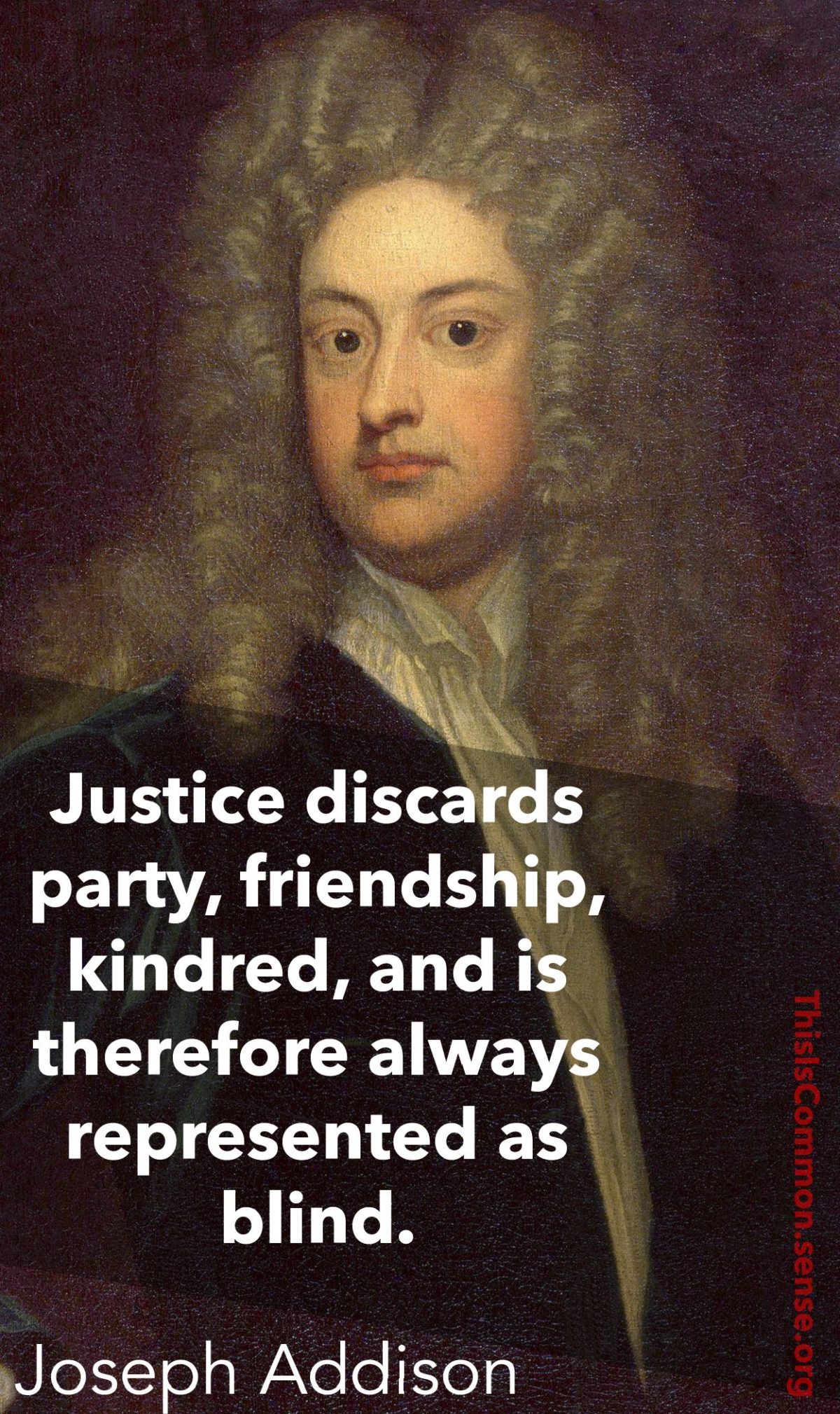
Justice discards party, friendship, kindred, and is therefore always represented as blind.
Joseph Addison, The Guardian (1713), no. 99.
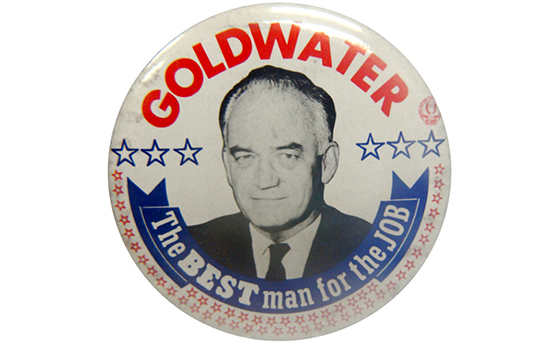
On October 27, 1964, Ronald Reagan delivered a speech on behalf of Republican candidate for president, Barry Goldwater, thereby launching Reagan’s political career. The speech came to be known as “A Time for Choosing.”
On October 27, 1964, Ronald Reagan delivered a speech on behalf of Republican candidate for the United States Presidency, Barry Goldwater, thereby launching Reagan’s political career. The speech came to be known as “A Time for Choosing.”
Two years earlier, Vasili Arkhipov, a flotilla commander present on the Soviet Foxtrot-class submarine B-59 in the Caribbean sea, defied the sub’s captain, Valentin Savitsky, to launch a nuclear device. The captain had come to the conclusion that war had started while the submarine had been submerged. He had inferred this from the depth charges that American ships had deployed in order to force the submarine to the surface during the Cuban Missile Crisis. Captain Savitsky, seeking the necessary approval of two others on board, political officer Ivan Masslenikov and the flotilla commander Vasili Arkhipov, to launch a nuclear torpedo.
Masslenikov agreed. Arkhipov refused.
The date was October 27, 1962, and World War III was prevented by this one man, Arkhipov, who held his ground while facing the increasing anger of the submarine commander, refusing to approve a nuclear torpedo launch that would most almost certainly have triggered a conflict that would have doomed civilization, perhaps most or all of humanity.
That, we can now agree, was a “time for choosing” when the correct choice was made.

“I’m appalled by the choice that we have been delivered,” political humorist P.J. O’Rourke told Reason TV last week, referring to the two major-party presidential nominees.
“Biden’s campaign platform is 564 pages long. It promises everything to everybody,” bemoans the 72-year-old author of a new book of essays, A Cry from the Far Middle: Dispatches from a Divided Land. “It’s full of unicorns and flying ponies and candy-flavored rainbows and pixie dust.”
As for President Trump, “I think we’re done with this experiment of having the inmates run the asylum,” O’Rourke jabs, calling Trump a “dangerous and unpredictable man” and “rude.”
“It isn’t so much exactly what Trump has done,” admits the comedic writer, who while panning Trump’s immigration policies, lauded his lowering of corporate tax rates and his raising of “awareness that China is not our friend.”
Instead, O’Rourke argues “it’s a matter of what [Trump] can do” in a second term, calling him “a toddler at the top of the stairs.”
Speaking of . . . P.J. turned back to the Democratic ticket: “They seem to be wrong, all wrong, quite wrong, about everything.”
He’s not wrong.
“But” of Biden and Harris, O’Rourke contends they are “wrong between normal parameters of wrong.” Adding that, “There’s wrong and there’s damn wrong.” Meaning Trump is “damn wrong.”
But not wrong on taxes, right P.J.? Or China. Or picking Supreme Court justices — Trump has the best batting average for nominating to the High Court of any president in the last five decades.
And Mr. Trump is the first president in two decades not to drag the U.S. into a regime change war.
“Wrong on everything” or “a toddler at the top of the stairs”?
This P.J. thinks the better choice is Common Sense.
See all recent commentary
(simplified and organized)
See recent popular posts
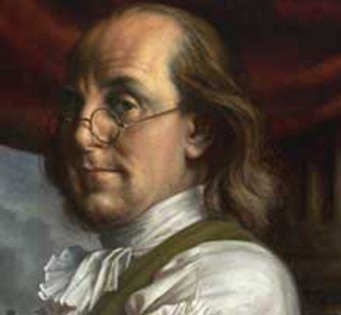
On October 26, 1774, the first Continental Congress adjourned in Philadelphia, Pennsylvania. Exactly one year later, King George III of Great Britain went before Parliament to declare the American colonies in rebellion. And one year later yet, to the day, in 1776, septuagenerian Benjamin Franklin (pictured, above) departed from America for France, seeking financial support for the American Revolution.
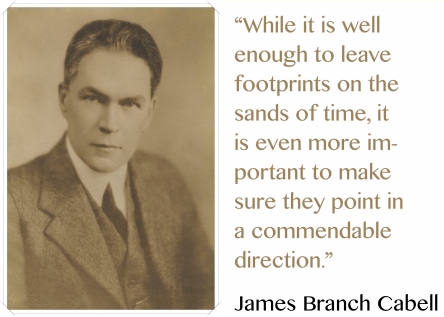
While it is well enough to leave footprints on the sands of time, it is even more important to make sure they point in a commendable direction.
James Branch Cabell, Beyond Life (1919).

Paul Jacob has diet advice for the short time before Election Day: