On April 6, 1930, Mohandas K. Gandhi raised a lump of mud and salt, declaring, “With this, I am shaking the foundations of the British Empire.”
Thus began the Salt Satyagraha.

On April 6, 1930, Mohandas K. Gandhi raised a lump of mud and salt, declaring, “With this, I am shaking the foundations of the British Empire.”
Thus began the Salt Satyagraha.

“We can do $10 trillion,” declared Rep. Alexandria Ocasio-Cortez (D-NY) last week.
“I know that may be an eye-popping figure for some people,” explained the photogenic pop-eyed pol, “but we need to understand that we are in a devastating economic moment, millions of people in the Unites States are unemployed, we have a truly crippled health-care system and a planetary crisis on our hands, and we’re the wealthiest nation in the history of the world.”
In other words, the sky is falling . . . and we still have checks.
The Bronx congresswoman, described as “one of the most influential members” by MSNBC’s Rachel Maddow, trumpeted that tidy sum in response to last week’s “go big” proposal by President Joe Biden to spend a special new $2.2 trillion under the loose label of infrastructure, which AOC argued “is not nearly enough.”
This new two-tril spending bill is “a follow-up to the $1.9 trillion stimulus approved in March.” And just Part 1 of a two-package infrastructure and other stuff Biden plan.
“The White House is reportedly willing to spend $4 trillion across the two packages,” Business Insider reports, “a sum that would bring recovery spending under his term to nearly $6 trillion.”
Biden’s term has been only 76 days.
A couple trillion here, a couple trillion there and pretty soon you’re talking real money . . . except under Modern Monetary Theory, which Ocasio-Cortez embraces. The idea being: government can print as much money as politicians want to spend.
While this road to bankruptcy has been paved with the partisan political intentions of big spending politicians of both major parties, right now it is the Democrats hitting the gas.
This is Common Sense. I’m Paul Jacob.
See all recent commentary
(simplified and organized)
See recent popular posts
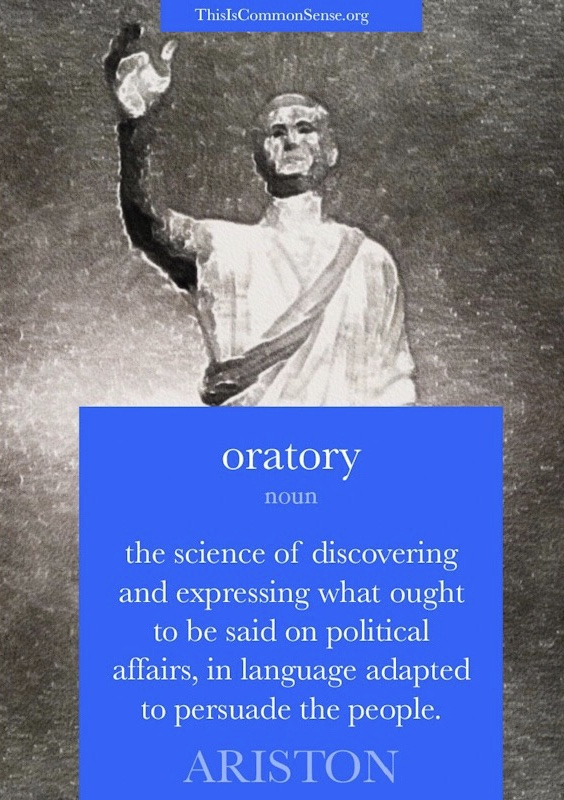
oratory
noun : the science of discovering and expressing what ought to be said on political affairs, in language adapted to persuade the people.
Definition of Ariston, disciple of Critolaus, as quoted in Quintilian, The Institutes of Oratory (Rev. John Selby Watson, translator, London: Bell & Daldy, 1873), p. 143.
On April 5, 1792, George Washington exercised the first presidential veto of a congressional bill, a new plan for dividing seats in the House of Representatives, which would have increased the number of seats for northern states. Washington vetoed only one other bill during his two terms in office, an act that would have reduced the number of cavalry units in the army.
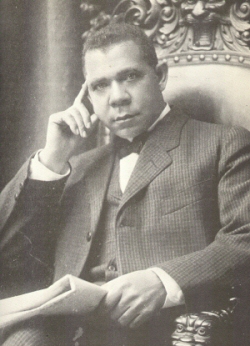
On April 5, 1856, Booker T. Washington, American educator, first leader of the Tuskegee Institute in Alabama, author of 14 books, including his autobiography, “Up From Slavery,” was born a slave in southwestern Virginia. Though Washington faced criticism from leaders of the new NAACP, especially W. E. B. Du Bois, for not protesting the lack of civil rights more strongly, he secretly funded litigation for civil rights cases, such as challenges to southern constitutions and laws that disfranchised blacks.


Man comes into the world naked and unarmed, as if nature had destined him for a social creature, and ordained him to live under equitable laws and in peace; as if she had desired that he should be guided by reason rather than be driven by force; therefore did she endow him with understanding, and furnish him with hands, that he might himself contrive what was necessary to his clothing and protection. To those animals to which nature has given vast strength, she has also presented weapons in harmony with their powers; to those that are not thus vigorous, she has given ingenuity, cunning, and singular dexterity in avoiding injury.
William Harvey, De Generatione Animalium (1651).
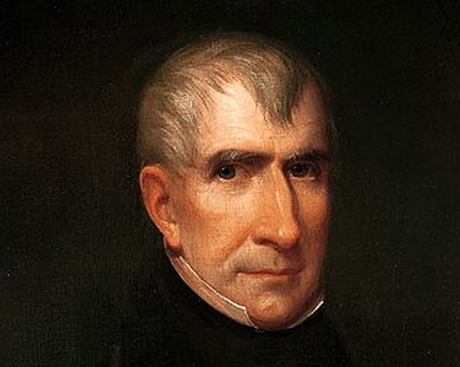
On April 4, 1841, William Henry Harrison died of pneumonia, becoming the first President of the United States to die in office and the one with the shortest term served (he died on his 32nd day as president). A renowned Indian killer (having risen to fame for his part in 1811’s Battle of Tippecanoe), a proponent of the expansion of slavery into Northwest Territories, and a Whig, Harrison won the presidency in part by turning the Democrats’ “log cabin and hard cider” aspersions on his character as the basic symbols of the campaign.
Though hardly a “limited government man,” some limited government history buffs proclaim him the Greatest President, on the ostensibly droll and possibly cynical grounds that he spent so little time in office.
On a much sadder note, Martin Luther King, Jr., was assassinated on this day in 1968.

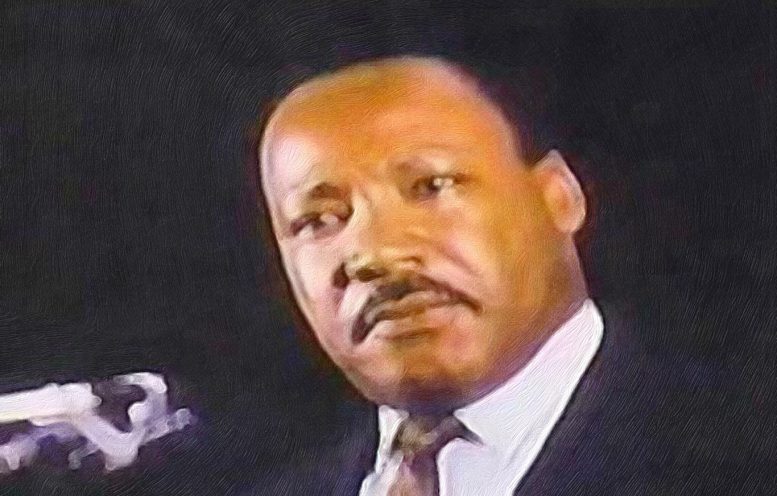
“Well, I don’t know what will happen now. We’ve got some difficult days ahead. But it doesn’t really matter with me now. Because I’ve been to the mountaintop. I don’t mind. Like anybody, I would like to live a long life; longevity has its place. But I’m not concerned about that now. I just want to do God’s will. And He’s allowed me to go up to the mountain. And I’ve looked over. And I’ve seen the Promised Land. I may not get there with you. But I want you to know tonight, that we, as a people, will get to the Promised Land. So I’m happy, tonight. I’m not worried about anything. I’m not fearing any man. Mine eyes have seen the glory of the coming of the Lord.”
Martin Luther King, Jr., the conclusion of his “Mountaintop” speech (April 3, 1968).
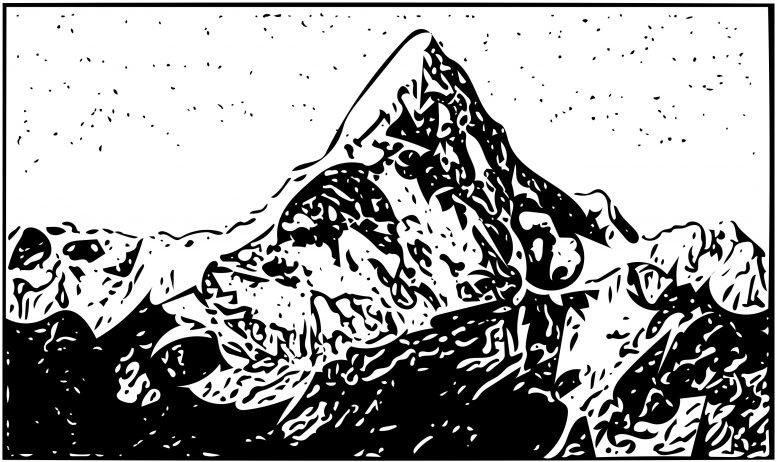
On April 3, 1968, Martin Luther King, Jr., delivered his “I’ve Been to the Mountaintop” speech.