Categories
Today

F-Word Defined

Nowadays, all sorts of people call their political opponents “fascist,” often on the shakiest of rationales. Well, The Manifesto of Fascist Intellectuals was first published in Il Mondo, then by most Italian newspapers on April 21, 1925 — the national, anniversary-day celebration of the Founding of Rome (ca.  April 21, 753 BC).

It might be a good idea to consult this original document, for a good idea what politics’ “f-word” originally meant:

Fascism was . . . a political and moral movement at its origins. It understood and championed politics as a training ground for self-denial and self-sacrifice in the name of an idea, one which would provide the individual with his reason for being, his freedom, and all his rights. The idea in question is that of the fatherland. It is an ideal that is a continuous and inexhaustible process of historical actualization. It represents a distinct and singular embodiment of a civilization’s traditions which, far from withering as a dead memory of the past, assumes the form of a personality focussed on the end towards which it strives. The fatherland is, thus, a mission.

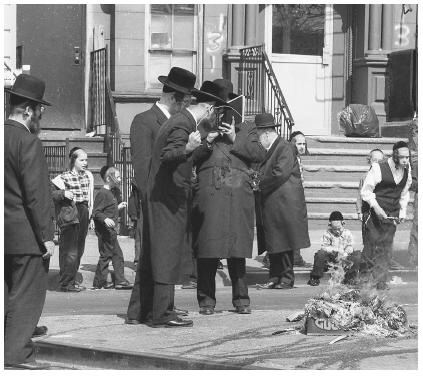
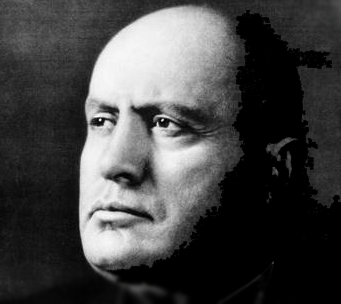
The manifesto was written by Giovanni Gentile, in support of the regime of Benito Mussolini (pictured above).

Less than two weeks later, on May 1, 1925, Il Mondo published philosopher Benedetto Croce’s The Manifesto of the Anti-Fascist Intellectuals.
Categories
media and media people

Media Corrections

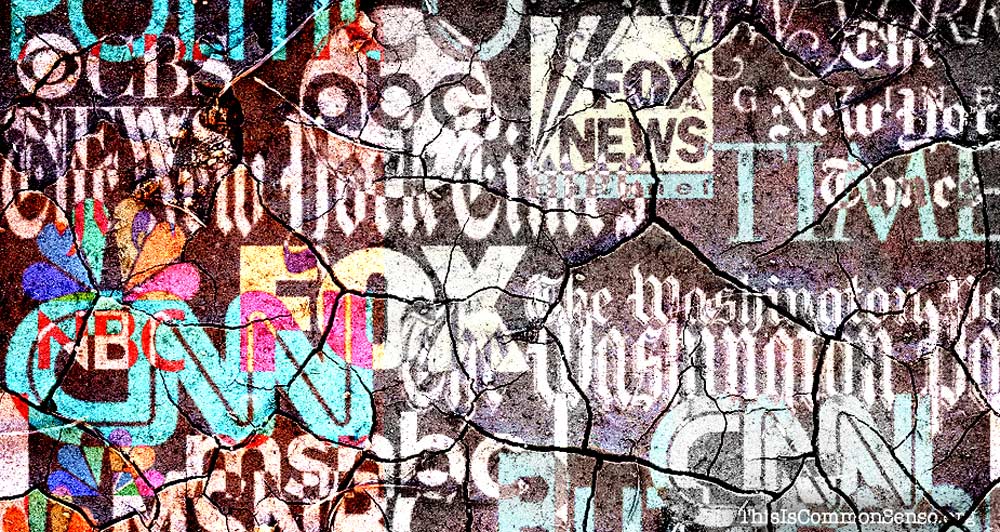
“Our focus was to get Trump out of office,” explains CNN Technical Director Charlie Chester in video surreptitiously recorded and recently released by the gotcha video journalists of Project Veritas. 

The group had reached higher at the cable network, last December, unveiling comments made by CNN Worldwide President Jeff Zucker and Political Director David Chalian during an internal conference call to spike coverage of the Hunter Biden laptop story . . . with plenty of obvious political prejudice. 

Last summer, as the presidential campaign settled into a two-man race pitting Republican Donald Trump against Democrat Joe Biden, The New York Times reported that, “Russia Secretly Offered Afghan Militants Bounties to Kill U.S. Troops, Intelligence Says,” adding, “The Trump administration has been deliberating for months about what to do about a stunning intelligence assessment.”

“There may not have been Russian bounties on US troops in Afghanistan after all,” reads the Military Times’ headline, after the Biden Administration acknowledged “low to moderate confidence” in the intel that previously seemed gospel-true.

Calling it “one of the most-discussed and consequential news stories of 2020,” Glenn Greenwald notes, “It was also, as it turns out, one of the most baseless.”

Yet another big narrative has unraveled with the Washington, D.C., medical examiner concluding that Capitol Police officer Brian Sicknick “suffered two strokes and died of natural causes.”

“So The New York Times on January 8 published an emotionally gut-wrenching but complete fiction that never had any evidence — that Officer Sicknick’s skull was savagely bashed in with a fire extinguisher by a pro-Trump mob until he died,” Greenwald summarizes at Substack, “and, just like the now-discredited Russian bounty story also unveiled by that same paper, cable outlets and other media platforms repeated this lie over and over in the most emotionally manipulative way possible.”

That’s “the news”?

This is Common Sense. I’m Paul Jacob.


PDF for printing

See all recent commentary
(simplified and organized)
See recent popular posts

Categories
Thought

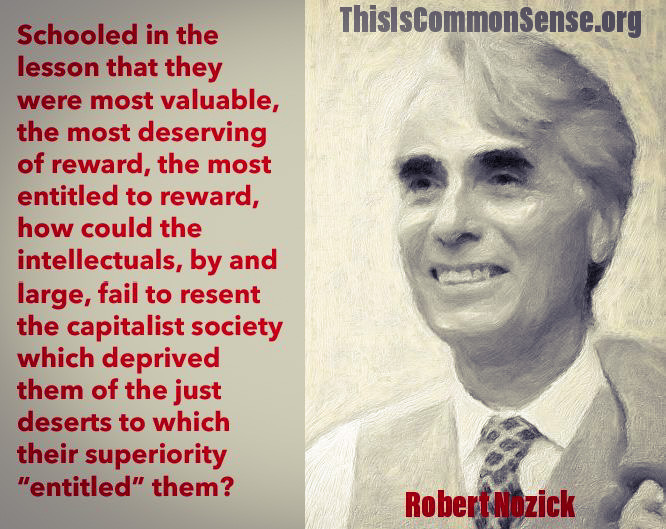
Robert Nozick

Though not part of the official curricula, in the schools the intellectuals learned the lessons of their own greater value in comparison with the others, and of how this greater value entitled them to greater rewards.

The wider market society, however, taught a different lesson. There the greatest rewards did not go to the verbally brightest. There the intellectual skills were not most highly valued. Schooled in the lesson that they were most valuable, the most deserving of reward, the most entitled to reward, how could the intellectuals, by and large, fail to resent the capitalist society which deprived them of the just deserts to which their superiority “entitled” them? Is it surprising that what the schooled intellectuals felt for capitalist society was a deep and sullen animus that, although clothed with various publicly appropriate reasons, continued even when those particular reasons were shown to be inadequate?

Robert Nozick, “Why Do Intellectuals Oppose Capitalism?” Cato Policy Report January/February 1998
Categories
Today

New Amsterdam

On April 20, 1657, freedom of religion was granted to the Jews of New Amsterdam (which was later renamed New York City).

Categories
international affairs

Afghan Angst

Declaring a coming end to “the forever war,” President Joe Biden announced last week that U.S. military forces will be leaving Afghanistan by September 11th* — a four-month-and-ten-day delay from the May 1 deadline that was set for troop withdrawal by the Trump Administration last year.

“Apparently, we’re to help our adversaries ring in the anniversary of the 9-11 attacks, by gift-wrapping the country and handing it right back to them,” chided Minority Leader Mitch McConnell from the Senate floor.

But wait a second . . . McConnell knows that negotiating for the enemy Taliban, the horrific human rights violator and sponsor of terrorism, to put down arms and join the government to share power has been the U.S. policy objective from the Obama Administration’s embrace in 2013 to the Trump Administration actually inking the agreement. 

Dealing the Taliban back into the political mix, after having gone to war to dislodge them, never made sense. But neither does an ad infinitum military occupation seem rational . . . chewing up generations of soldiers until Afghanistan miraculously metamorphoses into a sustainable democracy. Two decades of U.S. nation-building offer no serious promise that the mission could be accomplished in another decade. 

Or two. 

Or ever.

Plus, plugging the problem in Afghanistan has not worked more broadly. “The terrorist threat has changed dramatically since we went to war in Afghanistan 20 years ago,” National Security Advisor Jake Sullivan explained. “Al-Qaeda is in Yemen and Syria and Somalia. ISIS is across that border region in Iraq and Syria and in multiple countries in Africa.”

Policy futility is a bad thing. Recognizing it is good. 

This is Common Sense. I’m Paul Jacob.


PDF for printing

See all recent commentary
(simplified and organized)
See recent popular posts

Categories
Thought

Richard Dolan

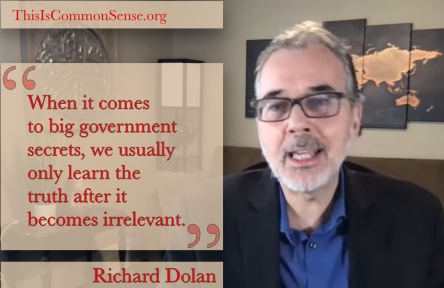
When it comes to big government secrets, we usually only learn the truth after it becomes irrelevant.

Richard M. Dolan, on his YouTube channel.
Categories
Today

The Revolution Begins

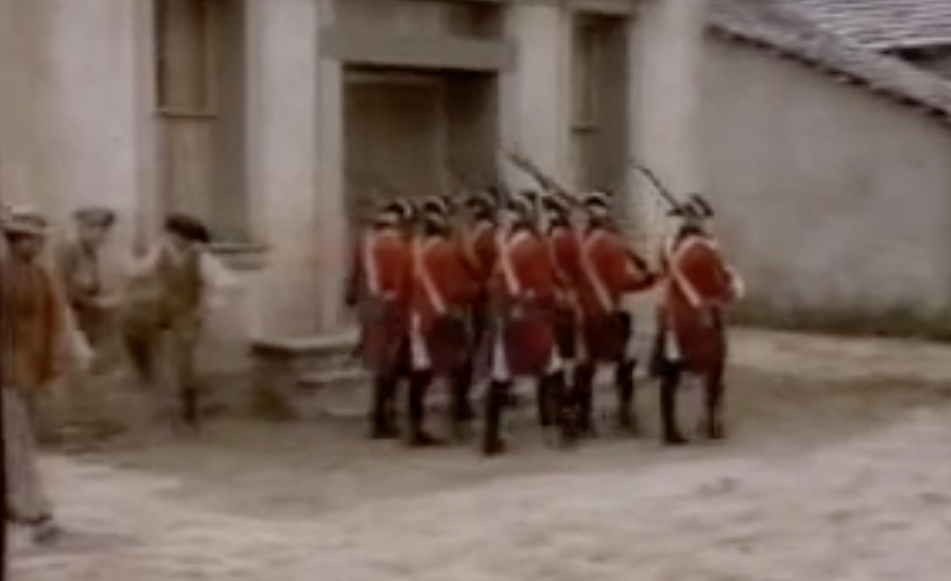
On April 19, 1775, the American Revolution began when the “shot heard around the world” was fired between the 700 British troops on a mission to capture Patriot leaders Sam Adams and John Hancock and to seize a Patriot arsenal and the 77 armed minutemen under Captain John Parker waiting for them on the Lexington town green. The Battle of Lexington ended with eight Americans killed and ten wounded, along with one wounded British soldier.

In Concord, a couple of hours later, British troops were encircled by hundreds of armed Patriots. The British commander ordered his men to return to Boston without directly engaging the Americans, but on the 16-mile journey they were constantly attacked by Patriot marksmen firing at them Indian-style from behind trees, rocks, and stone walls. By the time the British reached the safety of Boston, nearly 300 soldiers had been killed, wounded, or were missing in action. The Patriots suffered fewer than 100 casualties.

On April 19, 1782, John Adams secured the Dutch Republic’s recognition of the United States as an independent government.

Categories
by Paul Jacob video

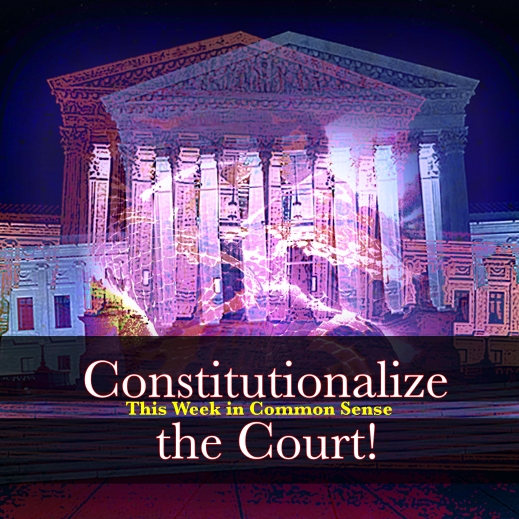
Watch: Specific Court Reforms

This Week in Common Sense for the 2nd week of April 2021.
Categories
Thought

Isaiah Berlin

If, as I believe, the ends of men are many, and not all of them are in principle compatible with each other, then the possibility of conflict — and of tragedy — can never wholly be eliminated from human life, either personal or social. The necessity of choosing between absolute claims is then an inescapable characteristic of the human condition. This gives its value to freedom as Acton conceived of it — as an end in itself, and not as a temporary need, arising out of our confused notions and irrational and disordered lives, a predicament which a panacea could one day put right.

Categories
Today

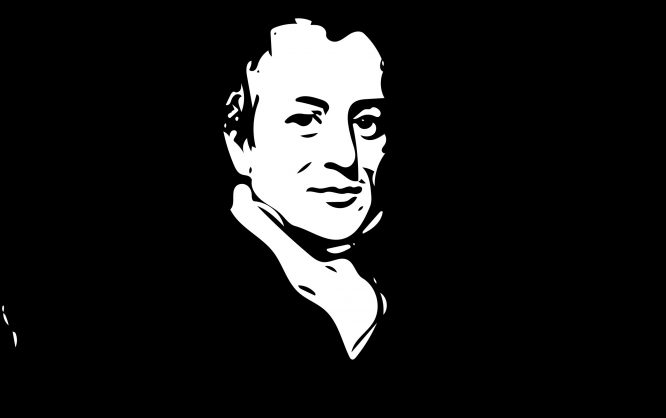
David Ricardo

April 18 marks the 1772 birthday of David Ricardo, English political economist and one of the most influential thinkers in economic theory. An advocate for free trade and the abolition of slavery, Ricardo’s most famous work is his Principles of Political Economy and Taxation (1817).