Categories
Today

Founders

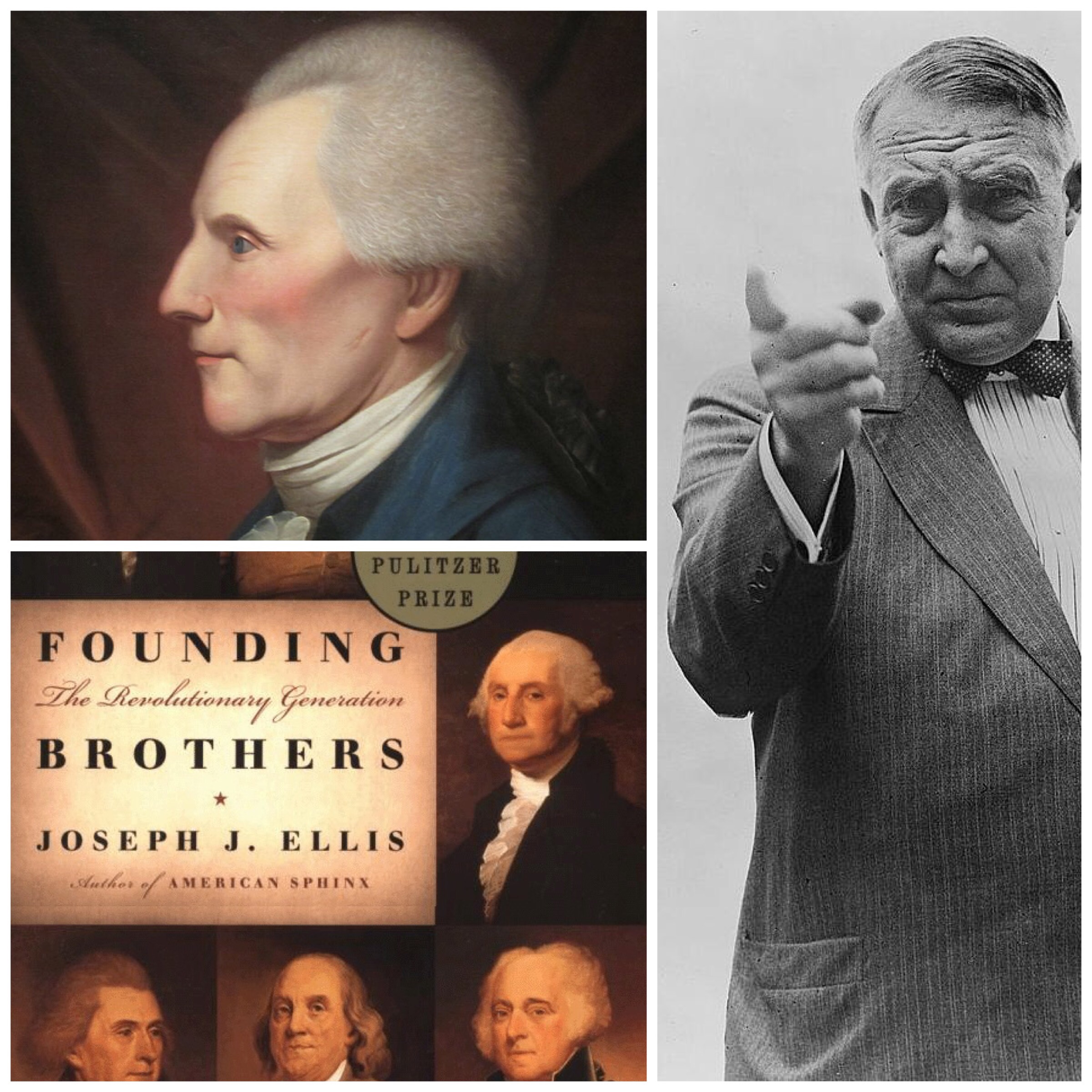
On June 7, 1776, Richard Henry Lee presented the “Lee Resolution” to the Continental Congress. The motion was seconded by John Adams, but was tabled for several weeks. The motion was finally passed on July 2, 1776.

During the 1916 Republican National Convention (June 7 – 10), Senator Warren G. Harding used the phrase “Founding Fathers” in his keynote address . . . and would go on using it in speeches thereafter. It caught on as a eulogistic way to refer to figures such as Thomas Jefferson and, yes, Richard Henry Lee, who orchestrated the American colonies’ break from England’s imperial monarchy.

Categories
Thought

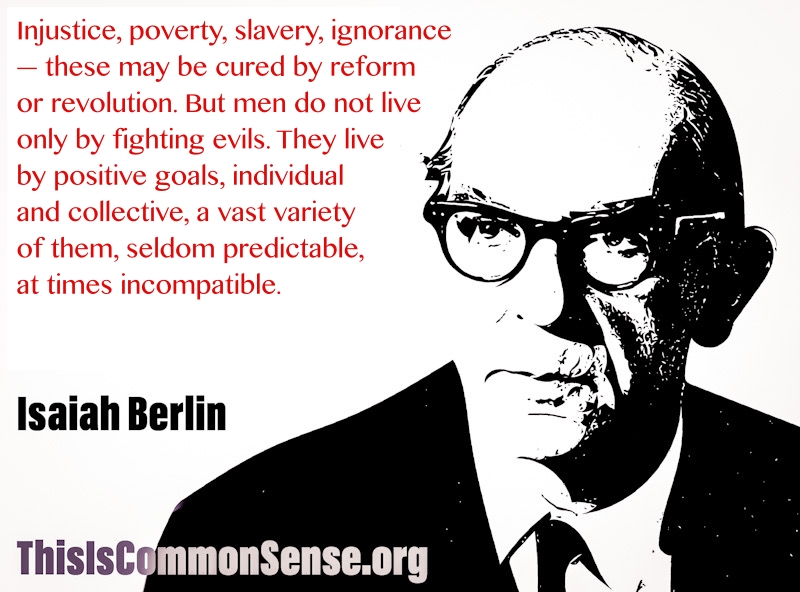
Isaiah Berlin

Injustice, poverty, slavery, ignorance — these may be cured by reform or revolution. But men do not live only by fighting evils. They live by positive goals, individual and collective, a vast variety of them, seldom predictable, at times incompatible.

Categories
by Paul Jacob video

Watch: . . . the Cost

Paul Jacob on Arkansas, China, and other beleaguered tyrannical places.

Categories
Today

Philosophers

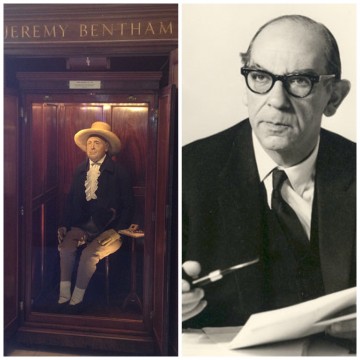
June 6 marks major life events of two eminent British philosophers, Jeremy Bentham’s death* (1832) and Isaiah Berlin’s birth (1909).

Bentham was known as a “philosophical radical” and a major influence on the British utilitarian tradition. He authored numerous books, including Defence of Usury (1787) and An Introduction to the Principles of Morals and Legislation (1789). Bentham started out advocating for laissez faire, became obsessed with his own specially designed prison design, the Panopticon, and argued for feminism and animal rights in public but kept his defense of homosexual rights private, to be published long after his death. His treatise on ethics, Deontology: Or, the Science of Morality, in Which the Harmony and Co-incidence of Duty and Self-Interest, Virtue and Felicity, Prudence and Benevolence, Are Explained and Exemplified, was published from his manuscripts two years after his death.

Berlin was best known for several dozen brilliant essays, including the famous, much-quoted “The Hedgehog and the Fox” (a study of Leo Tolstoy) and “Two Concepts of Liberty.”


* Pictured is his remains as housed in a special “closet” in the London Academy. Bentham specified this in his will, and he called this manner of posthumous presentation an “auto-icon.”

Categories
audio podcast

Listen: Remember

Paul Jacob covers the big stories of the week on This Week in Common Sense for the first week of June, 2021:

Categories
Today

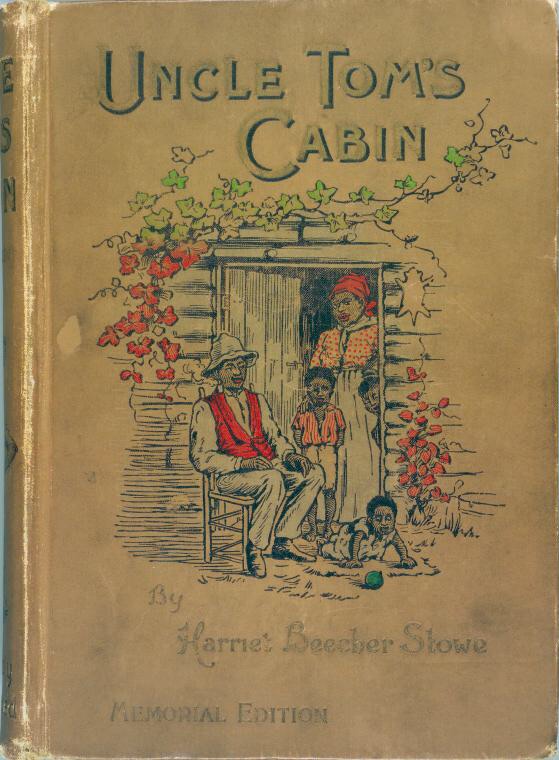
Uncle Tom’s Cabin

On June 5, 1851, Harriet Beecher Stowe’s anti-slavery serial, Uncle Tom’s Cabin, or Life Among the Lowly, started its ten-month run in the National Era abolitionist newspaper.

Categories
general freedom international affairs

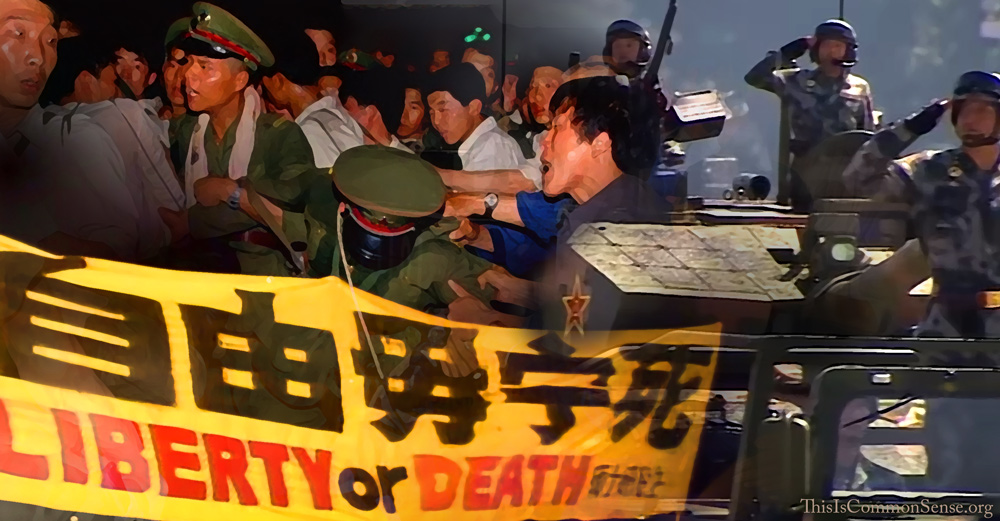
June 4: Tiananmen 32

Will truth ever be bought-off or beaten-down enough to satisfy Chinese President Xi Jinping and the Butchers of Beijing?

The ‘Butchers’ nickname came 32 years ago today — from the clearing of Tiananmen Square by soldiers and tanks in the early morning hours of June 4th, and in opening fire on and murdering thousands of Chinese citizens outside the square. 

Someone may object that Xi, the General Secretary of the Chinese Communist Party (CCP) since 2012, can’t be blamed. He wasn’t in charge back in 1989.

Xi didn’t give the order for troops to kill the unarmed students and workers who filled Tiananmen Square for weeks with as many as a million people protesting for freedom and democracy. Nor did he have thousands more arrested and imprisoned after the massacre. In fact, Xi’s father “condemned the use of force against protesters during the 1989 Tiananmen Square protests,” informs U.S. News. 

But Xi cannot escape the taint of Tiananmen. Not only does Human Rights Watch charge that government repression under his unlimited rule is “at its worst level since the Tiananmen Square massacre,” Xi and today’s CCP are on a mission to memory-hole Tiananmen. 

How? 

By massacring any public memorial of the massacre.

While the truth about Tiananmen has always been verboten in China, freer folks in Hong Kong held massive memorials each year. “Last year’s vigil was banned for the first time because of the coronavirus,” Yahoo News explains, “but thousands defied police and rallied anyway.”

This year, however, the new national security law threatens five years in prison for attending an unauthorized rally. Chanting “Democracy for China!” could land a Hongkonger in prison for life.*

Thankfully, in America today we have the freedom to condemn the Chinazis. 

And remember June 4. 

This is Common Sense. I’m Paul Jacob.


* And it has already begun: “Hong Kong cracks down on Tiananmen commemorations, arrests vigil organiser.”

PDF for printing

See all recent commentary
(simplified and organized)
See recent popular posts
Categories
Thought

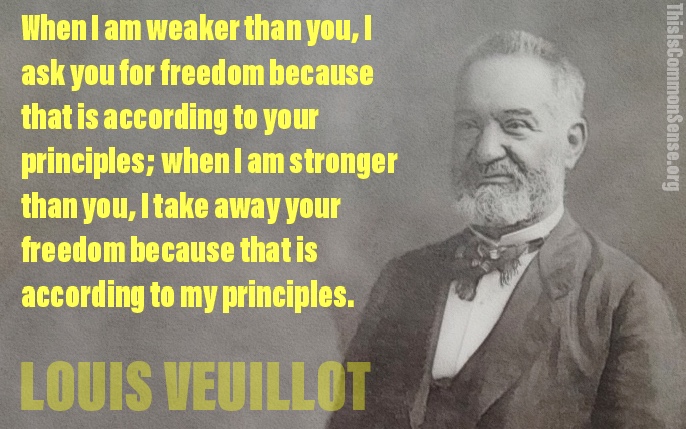
Veuillot’s Law

When I am weaker than you, I ask you for freedom because that is according to your principles; when I am stronger than you, I take away your freedom because that is according to my principles.

Louis Veuillot, as quoted by Frank Herbert, Children of Dune (1976).
Categories
Today

Tankman, Thanks

June 4 marks the 1989 Chinese government crackdown on peaceful protesters in Tiananmen Square, with tanks entering the square and soldiers, who opened fire on citizens outside the square, estimated to have killed thousands.

It also marks Tonga’s Emancipation [or Independence] Day, commemorating the abolition of serfdom in Tonga by King George Tupou in 1862, and the independence of Tonga from the British protectorate in 1970.

Categories
Accountability media and media people national politics & policies

The Worshipful and the Incurious

Did the recent pandemic begin as a leak from a lab in Wuhan, China?

Who knows?

But in these United States there suddenly appears serious — even bipartisan — interest in finding out.

I’ve been curious for some time, but why wasn’t more of the media interested from the beginning? Why were questions about the Wuhan Institute of Virology as well as the questioners often attacked?  

“[T]he newspapers I read and the TV shows I watched had assured me on many occasions that the lab-leak theory wasn’t true,” Thomas Frank, the progressive historian and author, explains in The Guardian, “that it was a racist conspiracy theory, that only deluded Trumpists believed it, that it got infinite pants-on-fire ratings from the fact-checkers,” adding that he “always trusted the mainstream news media.”

Thank goodness Senator Rand Paul confronted Dr. Fauci, again, leading to Fauci acknowledging the need for further investigation into the Wuhan lab that performed research on bat coronaviruses, arguably including gain-of-function research, with indirect U.S. funding. 

“Renewed focus on Wuhan lab scrambles the politics of the pandemic,” was one of several recent explanatory Washington Post articles.

Politics? 

You don’t say!

“The shifting terrain highlights how much of the early debate on the virus’s origins was colored by America’s tribal politics,” the paper reported, “as Trump and his supporters insisted on China’s responsibility and many Democrats dismissed the idea out of hand . . .”

The Post should include itself when referring to Trump-blaming “Democrats.” 

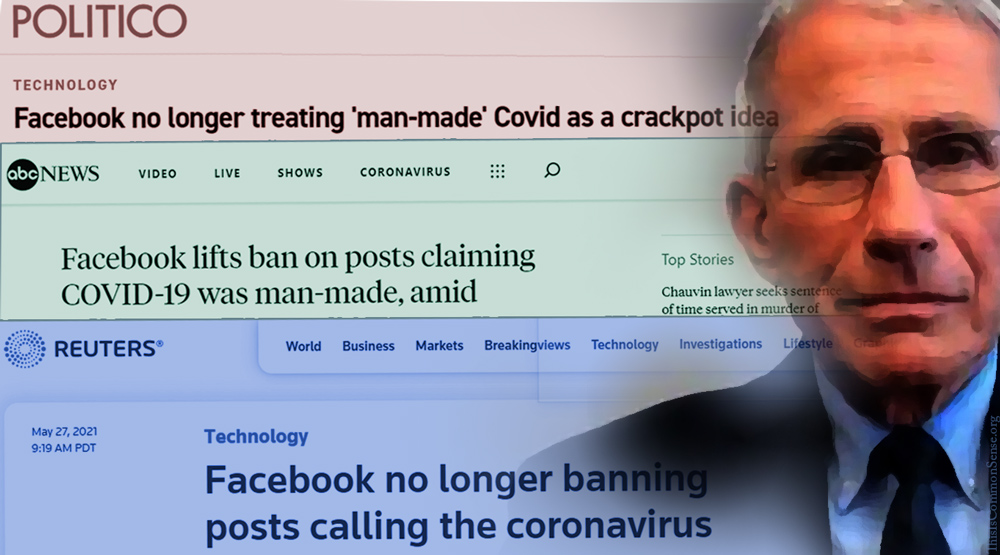
Another article The Post dangled before readers captures the moment — “Facebook: Posts saying virus man-made no longer banned.” 

In addition to the media and social media failure on this lab-leak story, let’s not forget the “expert fail.” Mr. Frank fears that if Big Science is found to be the cause of the pandemic, it “could obliterate the faith of millions” in “the expert-worshiping values of modern liberalism.”

We should be so lucky. 

What’s next: a release of Fauci’s emails?

This is Common Sense. I’m Paul Jacob.


PDF for printing

See all recent commentary
(simplified and organized)
See recent popular posts