Categories
national politics & policies social media

Electoral Fraud, Google-Style

“There exist many sneaky ways to get other people to do what you want, voluntarily — effectively blurring the line between legitimate persuasion and fraud.”

I wrote that in a Common Sense squib entitled “The Online Manipulation of Democracy,” in which I discussed the work of Robert Epstein, a senior research psychologist at the American Institute for Behavioral Research and Technology in California. That was over four years ago. Since then, his research has carried forward, focusing on how “the biggest tech companies influence human behavior, and conducting extensive monitoring projects of bias in these companies’ products, with a particular focus on Google.”

I’m quoting from an article by Masooma Haq and Jan Jekielek, from page A4 of the latest issue of The Epoch Times. In that article, and in an online interview published April 7, we are told how vast this power is — capable of flipping close elections around the world — and how difficult the influencing is to identify.

And that’s not just because Big Tech outfits like Google are sneaky. 

Ephemeral events on our screens, like “a flashing newsfeed, a search result, or a suggested video are the ideal form of manipulation,” Epstein argues, “because they aren’t recorded and are hard to document.”

He insists they “affect us, they disappear, they’re stored nowhere, and they’re gone.” 

Think about what that means: we don’t know we’re being manipulated, and “authorities can’t go back in time to see what people were being shown,” explains Epstein.

But it’s worse: Google, like many “free” online service companies, started out as a Deep State project.

We shouldn’t be shocked to find that sneaky, evasive, ephemeral manipulation techniques have been pioneered by . . . tax-funded spies.

This is Common Sense. I’m Paul Jacob.


PDF for printing

See all recent commentary
(simplified and organized)
See recent popular posts
Categories
Thought

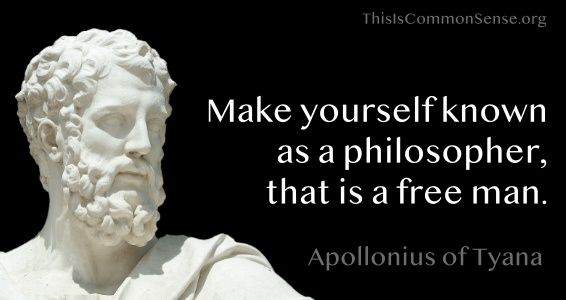
Apollonius of Tyana

Make yourself known as a philosopher, that is a free man.

Categories
Today

Freedom Day

April 25 is celebrated as Freedom Day in Portugal.

Categories
by Paul Jacob video

Watch: Khursid Be His Name?

A principal in New York was fired for (how shall we say?) a cavalier attitude towards actual teaching and learning. The point, as he saw it, was merely to pass students through — a scam to get tax money into his budget. He was fired, but given a golden parachute.

Cursèd be his name! (“Khursid” [xʊɾˈʃid] being the excuse for a pun.)

Paul Jacob covers this and other stories from the past week:

Categories
Thought

David Icke

If we are going to defend freedom, we have to have to defend ‘two and two equals four.’

David Icke on the Rich in Success podcast.
Categories
audio podcast

Listen: Cursèd Be His Name!

Paul Jacob discusses the big issues of the week, including the principal whose name is and should be cursed, as well as what has been on the Common Sense politics plate this past week:

This Week in Common Sense for April 18 – 22, 2022.
Categories
Thought

David Icke

You don’t comb the mirror, you comb your own hair and the mirror changes.

Categories
Today

A Protest in ’68

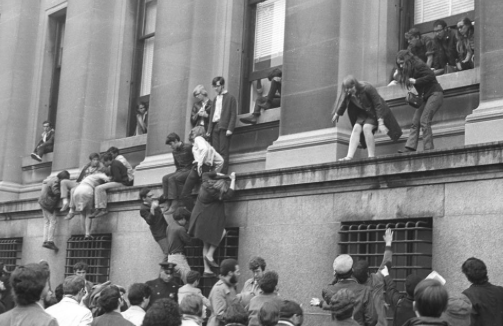
On April 23, 1968, students at New York City’s Columbia University held a demonstration to protest military research and the condemnation of part of the neighboring Morningside Heights section of Harlem to make way for a new student gymnasium. The protest escalated into a week-long occupation of five campus buildings before police moved in. Some 712 students were arrested, and over 100 injured during the forcible eviction. After the university-ordered police response, a student strike shut down the campus for the rest of the semester.

Categories
crime and punishment First Amendment rights too much government

Four of Five Doctors Disagree

“Thank goodness I don’t live in X,” we may say as we follow the news.

Billions live in Russia, Ukraine, China, Xinjiang, Tibet, Hong Kong, Cuba, New York, Chicago, Seattle, California, Canada, and other statist hellholes. The rest of us live elsewhere. Perhaps we congratulate ourselves on our wise choices of birth location and/or subsequent residencies.

But people are copycats.

As producers, we are often inspired by great achievements and seek to emulate them. The destroyers among us, somewhat similarly, are eager to adopt the latest in fashionable assault on what the producers are doing.

So we don’t necessarily escape if, say, California prohibits physicians from discussing things medical whenever their judgment conflicts with state-approved doctrine. Because next thing you know, lawmakers in Tennessee or Virginia will be saying, “Gee, that’s right, gag the doctors. Why didn’t I think of that?”

Legislative masterminds in California now want to harass doctors who recommend a non-government-approved treatment for COVID-19. If AB 2098 is passed, it would authorize California medical boards to discipline doctors for “dissemination of misinformation” related to COVID-19.

The bill implies that no doctor can legitimately disagree with another about a particular case. (Yeah? See the history of medicine.)

When I say that this legislation assaults truth and truth-seeking — which requires freedom of speech as a necessary corollary of freedom of thought in medicine or in any field — I speak for Californian doctors and California patients.

I speak also for us all.

This is Common Sense. I’m Paul Jacob.


PDF for printing

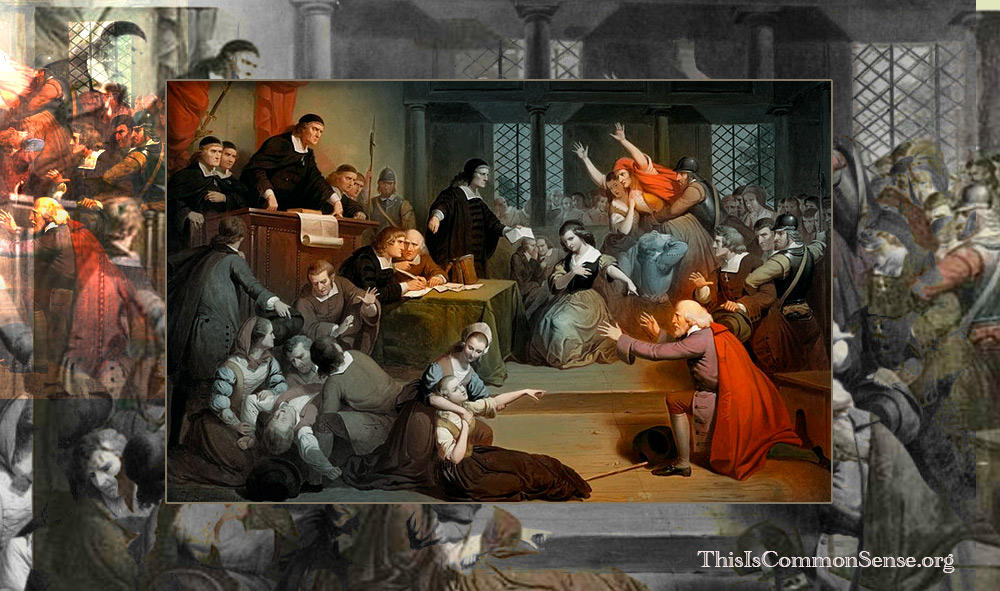
The Witch Trial of George Jacobs by Thompkins. H. Matteson

See all recent commentary
(simplified and organized)
See recent popular posts

Categories
Thought

Herbert Spencer

[I]f adaptation is everywhere and always going on, then adaptive modifications must be set up by every change of social conditions.

To which there comes the undeniable corollary that every law which serves to alter men’s modes of action — compelling, or restraining, or aiding, in new ways — so affects them as to cause, in course of time, fresh adjustments of their natures. Beyond any immediate effect wrought, there is the remote effect, wholly ignored by most — a re-moulding of the average character: a re-moulding which may be of a desirable kind or of an undesirable kind, but which in any case is the most important of the results to be considered.

Herbert Spencer, “The Sins of Legislators,” in The Man versus the State (1884).