The most incomprehensible thing about the world is that it is comprehensible.
Albert Einstein, as cited in Einstein: A Biography (1954), by Antonina Vallentin, p. 24.

The most incomprehensible thing about the world is that it is comprehensible.
Albert Einstein, as cited in Einstein: A Biography (1954), by Antonina Vallentin, p. 24.

On July 16, 1931, Ethiopia’s Emperor Haille Selassie I signed a new Constitution. Not exactly a model of limited government, the new document proved that the emperor was in keeping with the time, which was a period of weakening constitutional limits in America, Europe, and Britain. A flavor of the document can be gained by its most “rights-oriented” measures:
Art. 22. Within the limits laid down by the law, Ethiopian subjects have the right to pass freely from one place to the other.
Art. 23. No Ethiopian subject may be arrested, sentenced, or imprisoned except in pursuance of the law.
Art. 24. No Ethiopian subject may, against his will, be deprived of his right to be tried by a legally established court.
Art. 25. Except in cases provided for by law, no domiciliary searches may be made.
Art. 26. Except in cases provided by the law, no one shall have the right to violate the secrecy of the correspondence of Ethiopian subjects.
Art. 27. Except in cases of public necessity determined by the law, no one shall have the right to deprive an Ethiopian subject of any movable or landed property which he owns.
Art. 28. All Ethiopian subjects have the right to present to the Government petitions in legal form.
Art. 29. The provisions of the present chapter shall in no way limit the measures which the Emperor, by virtue of his supreme power, may take in the event of war or public misfortunes menacing the interests of the nation.
Unfortunately, most of these suits have been dismissed.
Journalist Alex Berenson did obtain some satisfaction after suing Twitter for suspending his account last year because he questioned the efficacy of COVID-19 vaccines.
The suit accused Twitter of acting “on behalf of the federal government in censoring and barring him.” Berenson’s account was finally reinstated as part of the settlement. But only Twitter was required to take any remedial action; the government was required to do nothing.
Still ongoing is a lawsuit launched by the attorney generals of Missouri and Louisiana against the Biden administration for urging social media giants to suppress speech about things like COVID-19 and elections “under the guise of combating ‘misinformation.’ ”
Now a judge has granted the states’ motion for discovery, enabling the attorneys general to make document requests and issue subpoenas to social media platforms. The AGs hope to learn which federal officials have been urging censorship and what exactly they said.
In a certain respect, these actions seem almost superfluous, since administration officials, including Biden, have repeatedly and publicly called on social media to censor harder.
But the more evidence we can get on how the federal government has been urging firms to censor on its behalf and in violation of the First Amendment, the better.
That brings us closer to getting it to stop.
This is Common Sense. I’m Paul Jacob.
See all recent commentary
(simplified and organized)
See recent popular posts
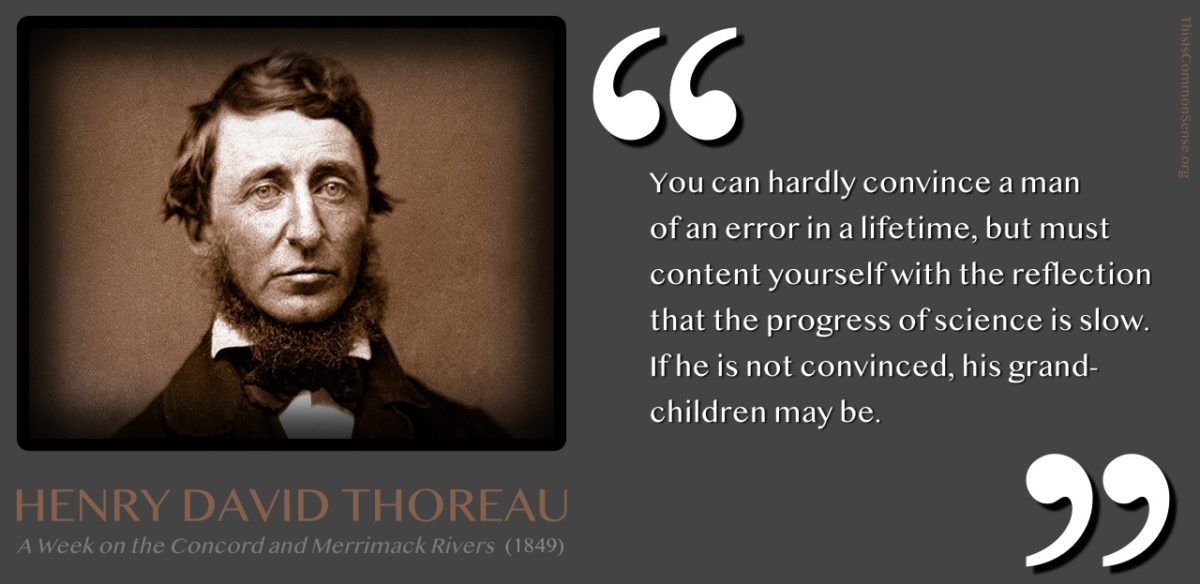
You can hardly convince a man of an error in a lifetime, but must content yourself with the reflection that the progress of science is slow. If he is not convinced, his grandchildren may be.
Henry David Thoreau, A Week on the Concord and Merrimack Rivers (1849).

On July 15, 1976, Jimmy Carter accepted the nomination of the Democratic Party to run for the presidency.
Three years later, as president, he gave his infamous “malaise” speech, in which he focused on energy but did not mention the one thing that actually helped turn the 1970s’ energy crisis around: the phased deregulation of oil prices that had started three months earlier, under his own directive. Instead of touting this deregulatory effort, Carter did the politic thing, promising a number of new government programs while extensively grinding a “crisis of confidence” message and vaguely speaking of a spiritual challenge.
The deregulation was startlingly effective, in the long run — though the immediate effect was a rocketing of prices. These high prices presented profit opportunities, and (lo and behold!) domestic production greatly increased, allowing for many, many years of lower prices. Those high prices would have worked better as market signals had not Carter and Congress also established “windfall profits” taxes, to take away those temporary gains to existing business.
Had Carter deregulated prices earlier, he would probably have been re-elected president. Had he emphasized deregulation, he probably would have beat back Ronald Reagan’s free market rhetoric — with actual action.
The price controls had been put in place earlier in the decade by the Republican president at the time, Richard M. Nixon, with the great help of his aides Dick Cheney and Donald Rumsfeld.
Philosopher Joel Feinberg argued that there’s always a presumptive case for freedom.*
This notion of a strong case for or against something prior to specific data can keep philosophers and economists and folks like you and me awake at night.
Here, I’m just going to bring it down to the politics.
Of inflation.
Why are prices — especially fuel prices — rising so?
The Biden Administration has been trying to argue that it’s caused by the war in Ukraine, and Americans’ need to sacrifice to defend that beleaguered country.
But, as with his talk of “food shortages,” the war is almost certainly an exacerbating, not the prime, factor. Both fuel price spikes and bare shelves demonstrated an alarming trend before Putin invaded Ukraine.
The cause seems obvious. Do we really need careful studies to show that both were caused by (a) COVID lockdowns and (b) a blizzard of lockdown bailout checks during Trump’s term in office and eagerly pushed also by the current president?
And Biden’s current kick, of demanding that gas stations (!) freeze or reduce prices to “match the cost of production,” has all the odor of cranky, old-fashioned soapbox socialism.
There is a presumptive case that inflation is caused by monetary policy, just as shortages are usually caused by regulations. Trump and Biden and Congress all contributed to over-spending, financialization, and regulatory hits.** But the stink of the growing mess must also affix especially to Biden. After all, one of his campaign promises was to cut production of oil on all government lands and offshore.
This is Common Sense. I’m Paul Jacob.
* Joel Feinberg, Social Philosophy (1972), pp. 20-22. Where Buckley discussed his presumptive case is your guess or mine. Probably a column back in the 1970s or ’80s.
** A few weeks ago an interesting exchange occurred in this website’s comments section, between two friends of this program.
h/t crAIyon
See all recent commentary
(simplified and organized)
See recent popular posts
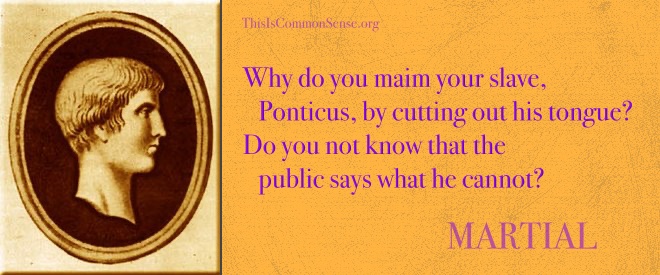
Why do you maim your slave, Ponticus, by cutting out his tongue? Do you not know that the public says what he cannot?
Marcus Valerius Martialis, Epigrammata (80–104 A.D.).
On July 14, 1789, Paris citizens stormed the Bastille.
On the same date nine years later, in America, the Sedition Act prohibited the writing, publishing, or speaking false or malicious statements about the United States government.
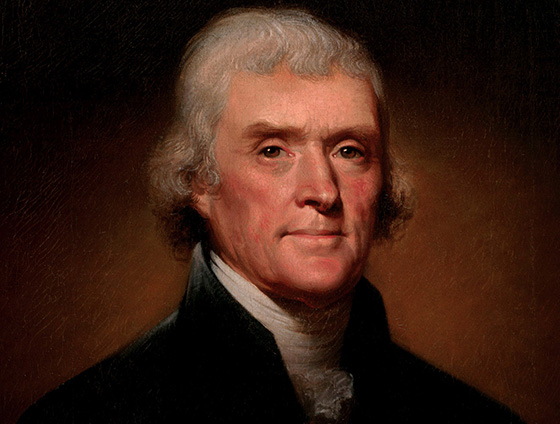
The passage of this repressive law spurred the formation of the first opposition party in the United States, with Thomas Jefferson [above] as its leader and figurehead.
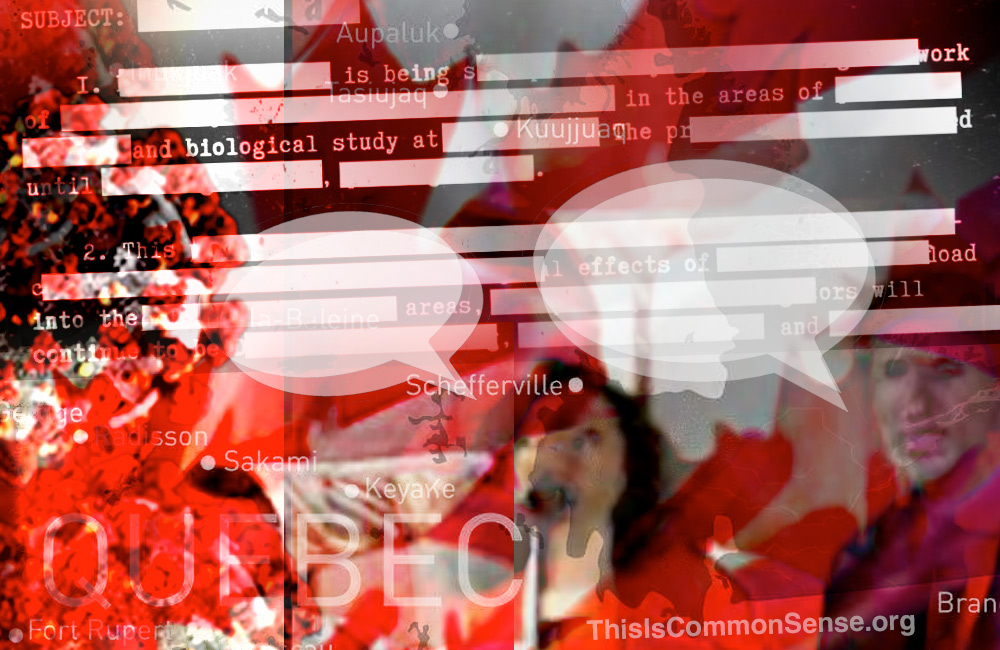
These are no places to be if you want to debate questions about pandemics and vaccines now “settled” by government-mandated consensus. Professors Patrick Provost and Nicolas Derome, who both teach at Laval, recently got the message in spades.
Provost, professor of microbiology and immunology, has been suspended for two months without pay for doubting the wisdom of giving COVID-19 vaccines to children. Kids face only a very low risk of serious consequences from the disease and a nonzero risk of being hurt by vaccination.
A newspaper that quoted his thoughts on the data and on free speech has cravenly deleted the offending article, stressing that “we can’t subscribe to” Provost’s views.
Laval also suspended Derome, professor of molecular biology, for expressing doubts about the value of vaccinating kids.
Canada’s authoritarians enjoy no monopoly on smothering academic and other speech. Many governments strive to more diligently repress their citizens. But Canadian officials fancy themselves pioneers in this area, and perhaps they are.
The hazards of squelching discourse about life-and-death matters should be obvious. It’s in our interest that scientists and everybody be able to freely investigate and discuss facts and interpretations without worrying whether an unauthorized assertion will cost the speaker two months of salary.
Or worse.
But some care nothing about logic and evidence — or, apparently, how useful these are to both individuals and to society at large.
It’s not an attitude consistent with . . . Common Sense.
I’m Paul Jacob.
See all recent commentary
(simplified and organized)
See recent popular posts
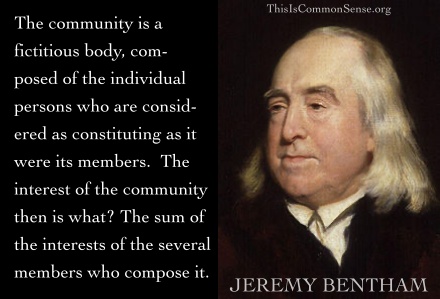
The community is a fictitious body, composed of the individual persons who are considered as constituting as it were its members. The interest of the community then is what? The sum of the interests of the several members who compose it.
Jeremy Bentham, An Introduction to the Principles of Morals and Legislation (1789; 1823), Chapter 1: “Of the Principle of Utility.”