Categories
Thought

Murray Leinster

And the schools repeated, too, the one great lesson that humanity had genuinely learned. That the secret of peace is freedom, and the secret of freedom is to be able to move away from people with whom you do not agree.

Murray Leinster, The Forgotten Planet (1954).
Categories
Today

Augsburg, Bill of Rights

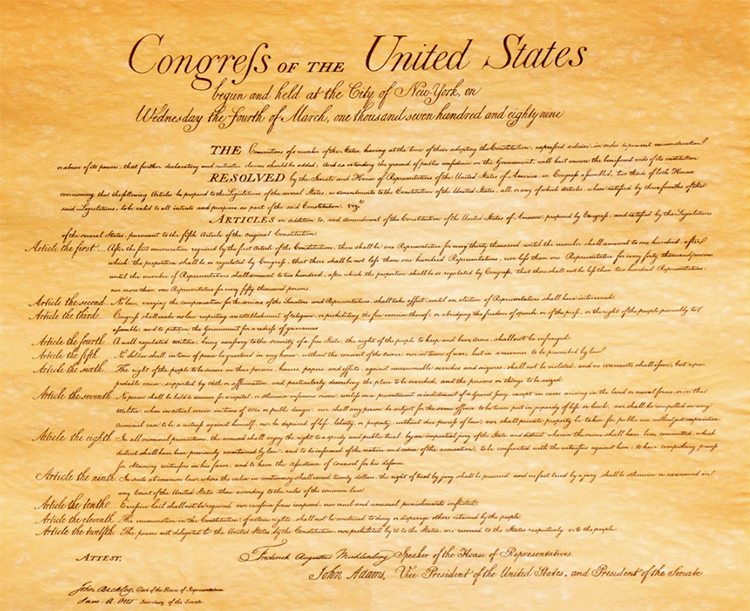
On September 25, 1789, the U.S. Congress passed twelve amendments to the United States Constitution: the Congressional Apportionment Amendment (which was never ratified), the Congressional Compensation Amendment (which was later enacted as the Twenty-seventh Amendment), and the ten that are known as the Bill of Rights.

Earlier on that date, in 1555, the Peace of Augsburg was signed in Augsburg by Charles V and the princes of the Schmalkaldic League.

Categories
audio podcast

Listen: The Separation of X and State

Paul reviews the big stories of the week, focusing on readers’ comments:

Categories
Thought

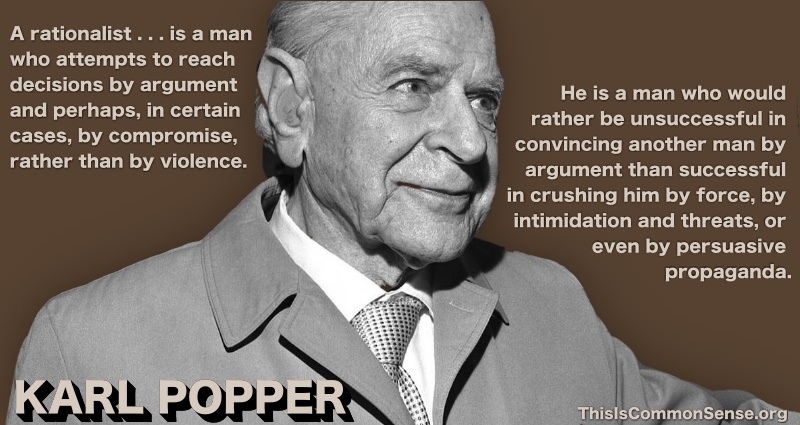
Sir Karl Raimund Popper

A rationalist, as I use the word, is a man who attempts to reach decisions by argument and perhaps, in certain cases, by compromise, rather than by violence. He is a man who would rather be unsuccessful in convincing another man by argument than successful in crushing him by force, by intimidation and threats, or even by persuasive propaganda.

Karl Popper, “Utopia and Violence,” an address to Institut des Arts in Brussels, Belgium (1947), published in Conjectures and Refutations: The Growth of Scientific Knowledge (1963).
Categories
Today

Judiciary Act

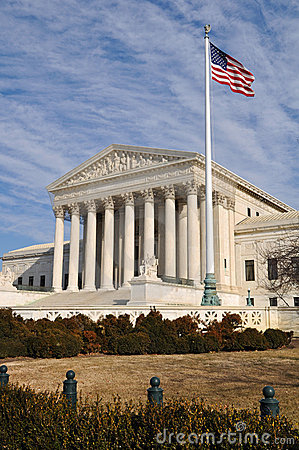
On September 24, 1789, the United States Congress passed the Judiciary Act, creating the office of the United States Attorney General and the federal judiciary system, and ordered the composition of the Supreme Court of the United States.

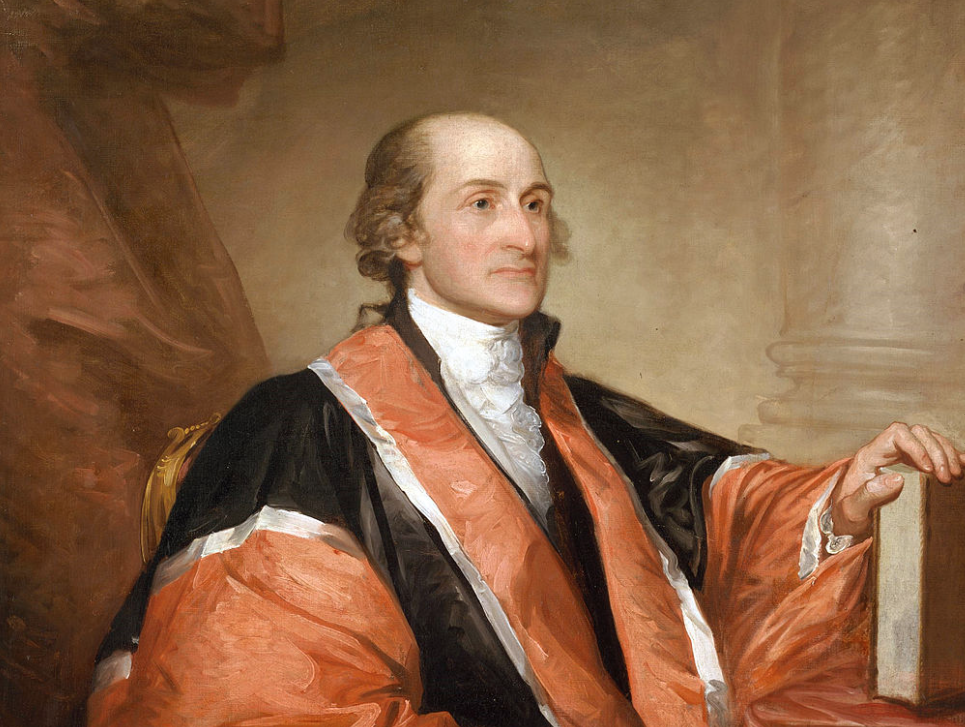
On the same day that President George Washington signed the bill into law, he officially nominated John Jay to the new position of Chief Justice of the Supreme Court. Jay (pictured in his official portrait, above) served in that position until 1795, when he resigned to take up his elected position as second governor of the State of New York. The Supreme Court heard only four cases during Jay’s Chief Justiceship; Jay refused to consult, officially, on legislation written by Alexander Hamilton, establishing the precedent that the Supreme Court has followed to this day: the Court would only rule on cases tried before it.

Categories
folly general freedom ideological culture national politics & policies too much government

The Energy Trap

After the spectacular failures of the COVID response, “the experts” appear to be on a roll. That is, they are once again not “following the science” but being led by politics, ideology, and the madness of crowds.

The big issues right now demonstrating mass folly on a societal level? Aside from agriculture policy, trade, subsidy, banking and high finance, and “climate change,” the big one — not unrelated to most of the rest — is the power grid.

About which our leaders seem to be nuts.

What we know is the supply of “renewable energy” is nowhere near enough to meet the general demand for energy. California’s a great example, announcing “the end of fossil fuel-powered car sales by 2035” but sporting a power grid that is already unable to handle demand, which became bitterly funny when the Golden State asked citizens not to charge their electric cars during high-demand hot days.

“US Power Grid Needs Trillions in Upgrades to Accommodate Renewable Energy Demands,” reads a recent Epoch Times feature.

Trillions.

It’s not as if America is rolling, like Uncle Scrooge, in trillion-dollar surpluses. As I type these words, the US Debt Clock shows the federal government quickly approaching $31 trillion in public debt.

So now we’ll need more trillions to keep the lights on?

Yes.

Our lives depend on electrical energy, our civilization runs on electricity, but our leaders have been painting us into a corner. Bad policies that hobble efficient fuel sources and pushing inefficient sources have set a trap.

And the only real way out of the trap is one politicians don’t like: admitting they were wrong and reversing their policies.

This is Common Sense. I’m Paul Jacob.


PDF for printing

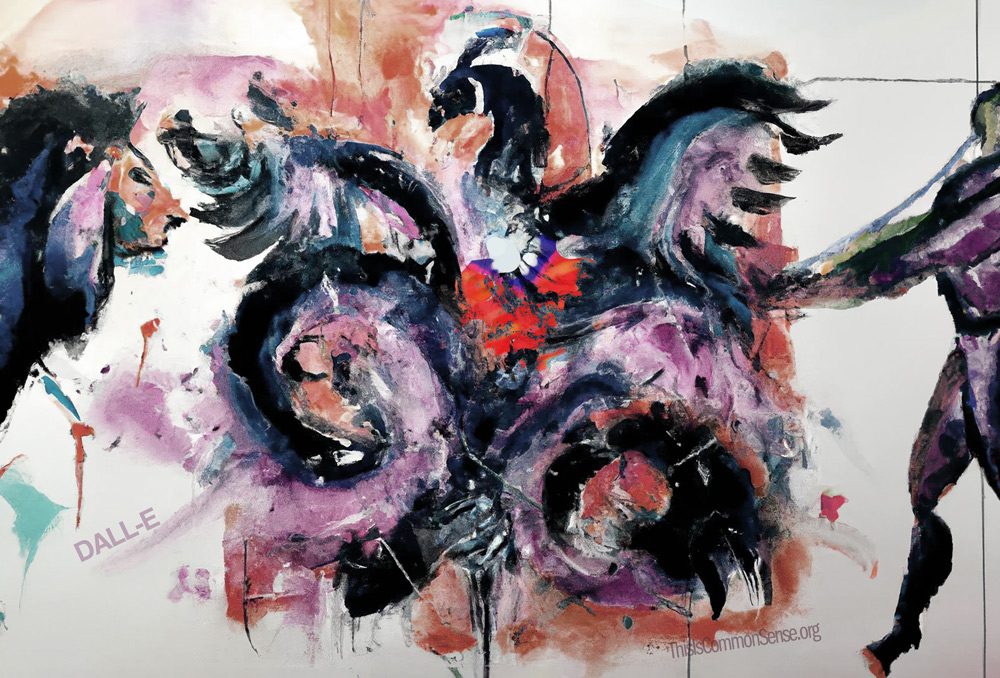
Illustration created with DALL-E

See all recent commentary
(simplified and organized)
See recent popular posts

Categories
Thought

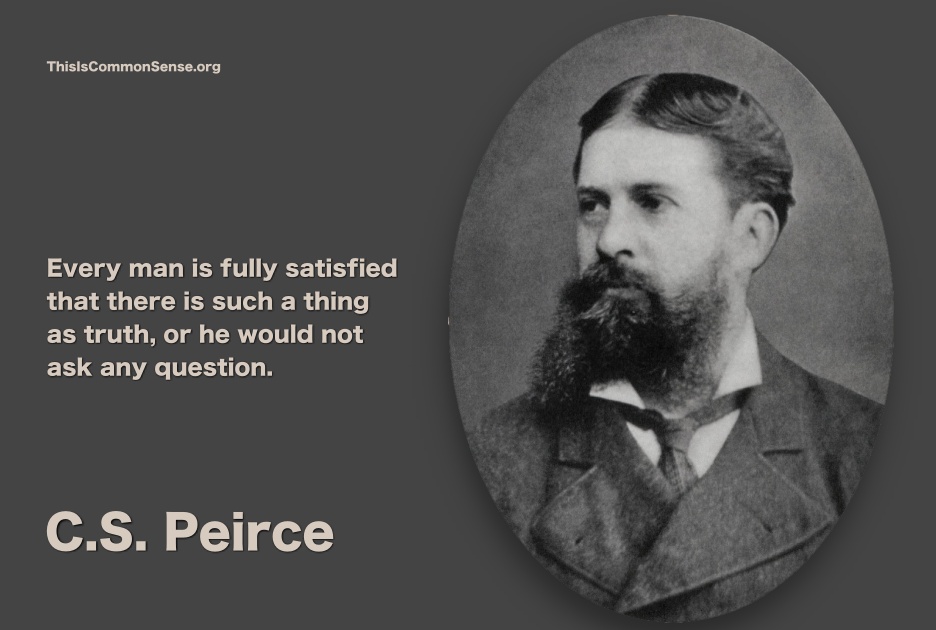
C.S. Peirce

Every man is fully satisfied that there is such a thing as truth, or he would not ask any question.

Categories
Today

Sweden minus Norway

On September 23, 1905, Norway and Sweden signed the “Karlstad treaty,” peacefully dissolving the union between the two countries.

Categories
general freedom international affairs

A Thousand Times Yes

“Yes,” President Joe Biden stated unequivocally in answer to an October 2021 CNN townhall question on whether he would “vow to protect Taiwan.” Biden repeated that “yes” three more times in his full reply.

Months earlier, this president spoke of democratic Taiwan as one of our key allies that we have a “sacred commitment” to defend. 

“Yes,” Mr. Biden emphatically informed a reporter back in May of this year who inquired, “Are you willing to get involved militarily to defend Taiwan if it comes to that?”

Last Sunday on 60 Minutes, correspondent Scott Pelley asked President Biden point-blank: “Would US forces defend the island?”

Again, the president replied, “Yes.”

“So unlike Ukraine, to be clear, sir, U.S. forces — U.S. men and women — would defend Taiwan in the event of a Chinese invasion?” Pelley followed up.

“Yes,” answered Biden.

Handlers-R-Us at The White House have walked back each and every one of these statements by the commander-in-chief to maintain the charade of “strategic ambiguity” — the U.S. strategy of not saying quite how we will respond to a Chinese invasion of Taiwan. A thoroughly silly policy.

And — come’on man! — the cat is out of the bag! Mr. Biden’s statements, as Aaron Blake wrote in The Washington Post, amount to “firmly committing to send troops to defend Taiwan if China invades.”

I hope the United States and other countries will stand — militarily — with Taiwan, and thereby prevent the Beijing bullies from snuffing out the freedom of 24 million free Taiwanese. 

Strength and unity and clarity of purpose are our best weapons against war.

This is Common Sense. I’m Paul Jacob.


PDF for printing

Illustration created with DALL-E

See all recent commentary
(simplified and organized)
See recent popular posts
Categories
Thought

Sir Karl Raimund Popper

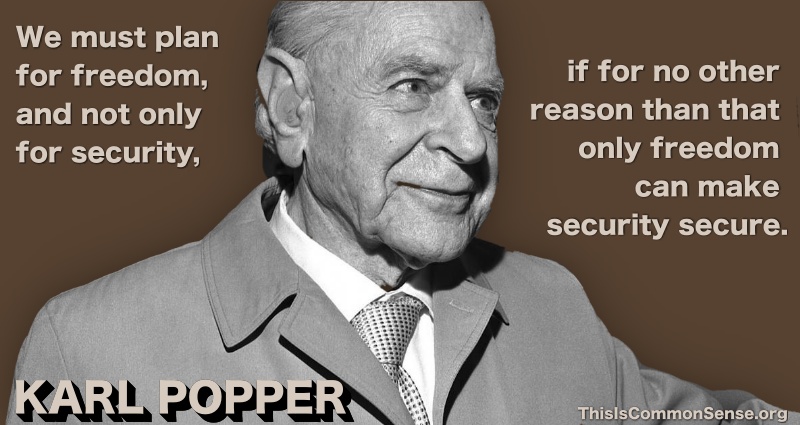
We must plan for freedom, and not only for security, if for no other reason than that only freedom can make security secure.

Karl Popper, The Open Society and Its Enemies (1945), Vol. 2, Ch. 21 “An Evaluation of the Prophecy.”