Appearances aren’t always what they seem.
Eric Frank Russell, “Basic Rights,” Astounding Science Fiction (April 1958).
Categories
Eric Frank Russell
Appearances aren’t always what they seem.
Eric Frank Russell, “Basic Rights,” Astounding Science Fiction (April 1958).
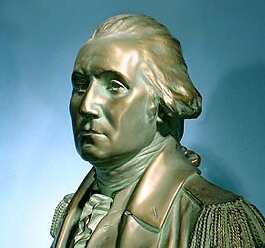
On October 2, 1789, George Washington sent the proposed Constitutional amendments (the United States’ Constitution’s Bill of Rights) to the States for ratification.
On the same date in 1919, U.S. President Woodrow Wilson suffered a massive stroke, leaving him partially paralyzed, preventing him from reacting to the economic downturn following the Great War in a Progressive fashion, making his response de facto laissez faire. One insider, and skeptic of Progressive hubris, archly referred to Wilson’s incapacitation as “a stroke of luck.”
His successor in office, President Warren G. Harding, would go on to massively cut spending as well as taxes, and take on regulation as well. He also released Woodrow Wilson’s domestic war prisoners — ranging from journalists, ordinary folk to socialist presidential candidate Eugene V. Debs — who had dissented from Wilson’s involvement in the war.
The Depression of the early 1920s, though as deep as the early 1930s, proved remarkably brief, thanks to Harding . . . and a “stroke of luck.”
Who really is running the show? Not Biden, surely. But who?
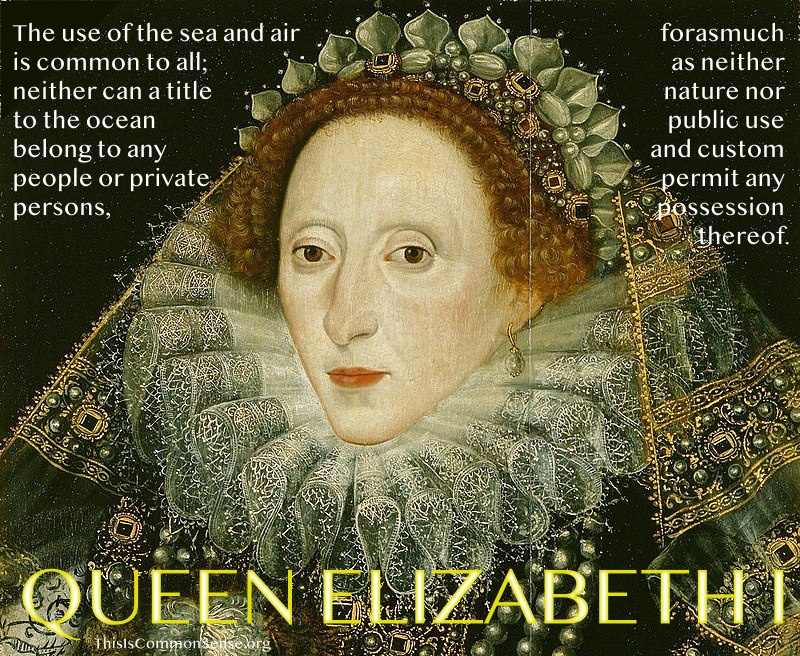
The use of the sea and air is common to all; neither can a title to the ocean belong to any people or private persons, forasmuch as neither nature nor public use and custom permit any possession thereof.
Elizabeth I, Queen of England, to the Spanish Ambassador (1580).

On October 1, 1908, Ford produced the first Model T at a plant in Detroit. The auto could travel 40 miles per hour and ran on gasoline or hemp-based fuel. (As oil prices fell, Ford phased out the hemp option.) The Model T was the first car designed for a mass market, rather than as a luxury item. By 1927, Ford had built 15 million Model T cars – the longest production run of any car model until the Volkswagen Beetle surpassed it in 1972.
On October 1, 1918, Lawrence of Arabia (T.E. Lawrence) helped lead a combined Arab and British force that captured Damascus from the Turks during World War I.
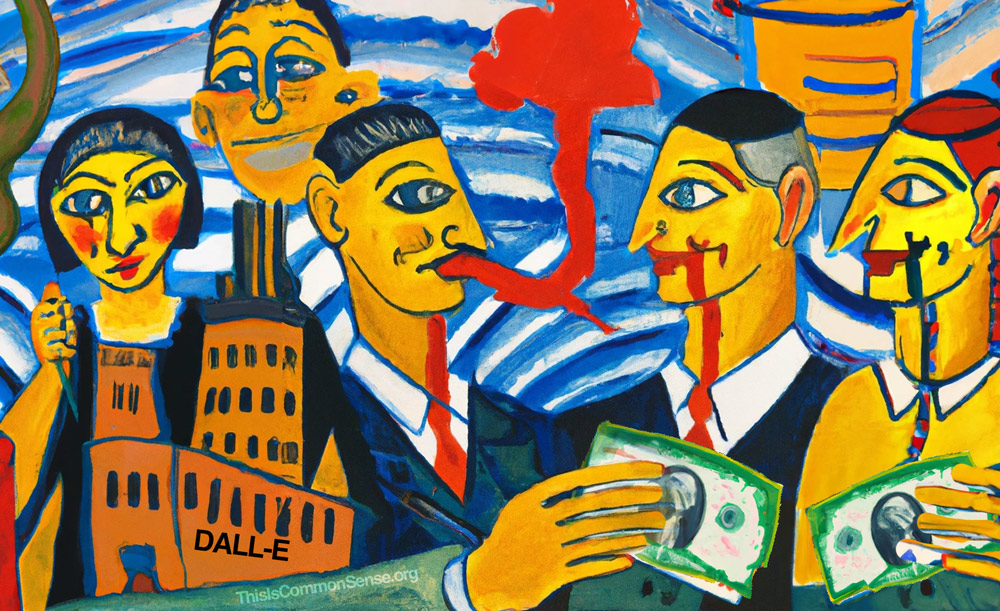
PayPal has closed the account of another innocent customer: UsForThem, a UK organization that has fought to keep schools open during the pandemic.
PayPal also blocked the group’s access to its PayPal balance, thousands of pounds in donations, for 180 days.
According to cofounder Molly Kingsley: “No prior warning or meaningful explanation was given, and despite their saying we could withdraw our remaining balance, we cannot.”
This is, alas, just one of many examples.
Last year, the Electronic Frontier Foundation reported that PayPal shut down the twenty-year-old PayPal account of Larry Brandt, which he had been using to support Tor. Tor is a way of encrypting Internet communications to protect the privacy of users, in part from regimes that repress political opponents.
No explanation, no warning — and, again, the same 180-day lockdown of funds belonging to the account holder.
At least in its stated intentions, PayPal originated as a radical alternative to establishment ways of doing things. But it now conducts itself in a repressive spirit, routinely hobbling customers whose legal speech or other legal activities it dislikes.
Or perhaps that governments dislike.
Email documents made public during a recent lawsuit in the United States confirm that our own federal government is issuing marching orders to Big Tech firms to repress users who say or do things that government officials dislike.
The firms are loath to acknowledge such pressure openly, let alone refuse on principle to cooperate.
This is how the Bill of Rights becomes void: made irrelevant in secret public-private partnerships.
This is Common Sense. I’m Paul Jacob.
Illustration created with DALL-E
See all recent commentary
(simplified and organized)
See recent popular posts

Botswanans celebrate their independence from Great Britain with an official day on September 30.
Also, September 30 has served as Blasphemy Rights Day since 2009, when it was initiated by the Center for Inquiry.
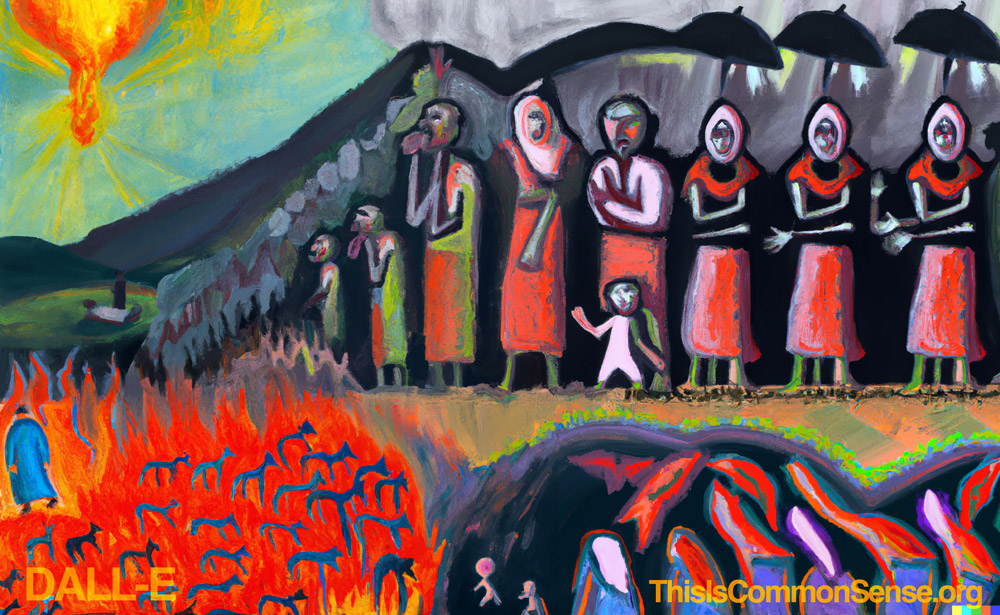
We can only hope that their efforts will bear fruit — or, if we’re Elon Musk, we can also provide protesters with Internet service via Starlink satellite, now that the Iranian government has blocked the Internet in much of the country.
The immediate spark was the death of 22-year-old Mahsa Amini.
On September 13, Mahsa was arrested by Iran’s morality police for incorrectly wearing the hijab, the traditional head covering mandatory for Iranian women since 1979. Some of her hair showed.
According to witnesses, the police beat Mahsa in the police van; the police deny it.
Within hours of being detained, Mahsa was hospitalized and in a coma. She soon died. The police not very plausibly claimed that she had a heart attack. All a terrible coincidence. The family says that Mahsa had no health problems before being detained.
The immoral morality police were obeying the country’s new president, Ebrahim Raisi, who on August 15 decreed that the nation’s dress code be more strictly enforced.
The protests — in which women have been burning their hijabs, cutting their hair, and shouting “Death to the oppressor!” — are ongoing and nationwide, and have spread to other countries.
At least thirty protesters have been killed.
In the words of the New Yorker’s Robin Wright, Mahsa’s death “lit the fuse of long-smoldering dissent in Iran,” and its people have taken to the streets before.
Godspeed this time.
This is Common Sense. I’m Paul Jacob.
Illustration created with DALL-E
See all recent commentary
(simplified and organized)
See recent popular posts

People now have more information, and they are smarter, overall, as a consequence — even in those ways they choose to be dumb.
Thomas M. Disch, The Dreams Our Stuff Is Made Of: How Science Fiction Conquered the World (1998), p. 226.
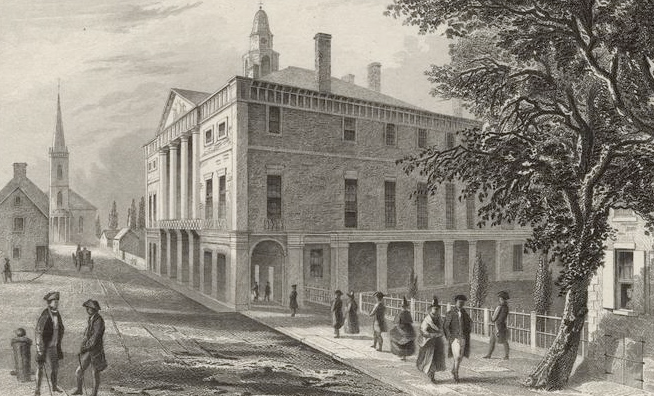
On September 29, 1789, the first Congress of the United States under the new Constitution adjourned.
On the same date in 1881, economist Ludwig von Mises was born in Lemberg, Galicia, of the Austria-Hungary Empire (now Lviv, Ukraine).