Categories
Today

Two Washingtons

On April 5, 1792, George Washington exercised the first presidential veto of a congressional bill, a new plan for dividing seats in the House of Representatives, which would have increased the number of seats for northern states. Washington vetoed only one other bill during his two terms in office, an act that would have reduced the number of cavalry units in the army.

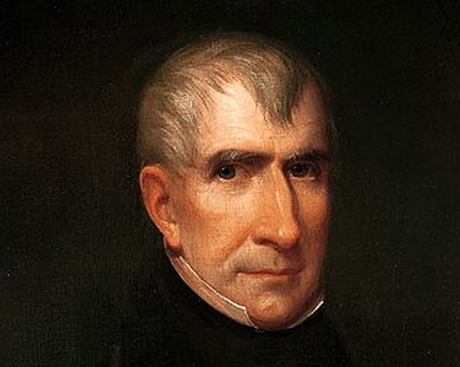
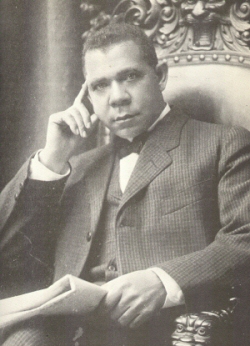
On April 5, 1856, Booker T. Washington (pictured above), American educator, first leader of the Tuskegee Institute in Alabama, author of 14 books, including his autobiography, Up From Slavery, was born a slave in southwestern Virginia. Though Washington faced criticism from leaders of the new NAACP, especially W.E.B. Du Bois, for not protesting the lack of civil rights more strongly, he secretly funded litigation for civil rights cases, such as challenges to southern constitutions and laws that disfranchised blacks.

Categories
Accountability crime and punishment property rights

Half-Win for Forfeiture Victim

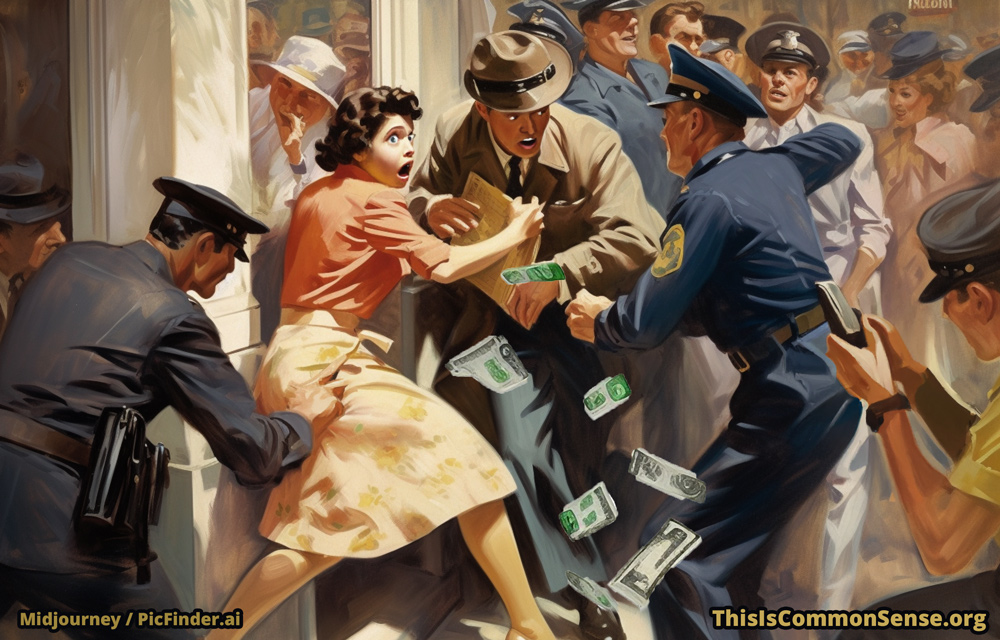
In August 2020, Jerry Johnson made a mistake: he carried a large sum of money while flying from Charlotte to Phoenix to buy a semi truck for his business. Police grabbed the cash when he arrived in Phoenix.

Mr. Johnson had decided to use cash to avoid certain fees and on the assumption that traveling with cash is legal.

Perhaps it is legal according to mere law. But police often grab any large amount of cash they see someone carrying. They accuse the naïve owners of drug-running and care nothing about actual evidence.

Threatened with jail when interrogated, Johnson signed a form that, he later understood, stated that the $39,500 was not his. The government kept the cash until he could wrest it back in court.

This, you may remember, is par for the course for civil asset forfeiture in America, where government agents behave like highway robbers.

But in this case — this course — the story didn’t end well for the robbers, for Jerry Johnson has gotten back his money. 

But he has not been made whole. As Land Line points out, in addition to all the time and trouble, there were the legal expenses that Johnson incurred before he obtained the help of Institute for Justice. 

And Johnson also lost business revenue: “There were a lot of business opportunities I’ve missed out on because that money was just sitting in a government account.”

Thankfully, the story is not over, yet, for there are organizations like Pacific Law Foundation and Institute for Justice to help victims of government predation at no charge. In this case, it was Institute for Justice that represented the victim in court.

IJ will continue the case to press for compensation.

This is Common Sense. I’m Paul Jacob.


PDF for printing

Illustration created with Midjourney and DALL-E2

See all recent commentary
(simplified and organized)
See recent popular posts

Categories
Thought

Sinclair Lewis

Under a tyranny, most friends are a liability. One quarter of them turn “reasonable” and become your enemies, one quarter are afraid to speak, and one quarter are killed and you die with them. But the blessed final quarter keep you alive.

Sinclair Lewis, It Can’t Happen Here (1935).
Categories
Today

Tippecanoe (and, sadly, MLK, too)

On April 4, 1841, William Henry Harrison died of pneumonia, becoming the first President of the United States to die in office and the one with the shortest term served (he died on his 32nd day as president). A renowned Indian killer (having risen to fame for his part in 1811’s Battle of Tippecanoe), a proponent of the expansion of slavery into Northwest Territories, and a Whig, Harrison won the presidency in part by turning the Democrats’ “log cabin and hard cider” aspersions on his character as the basic symbols of the campaign.

Though hardly a “limited government man,” some limited government history buffs proclaim him the Greatest President, on the ostensibly droll and possibly cynical grounds that he spent so little time in office.


On a much sadder note, Martin Luther King, Jr., was assassinated on this day in 1968.

Categories
crime and punishment general freedom insider corruption

If It Can Happen to Trump

If it can happen to former President Donald Trump — something like the politically motivated ham-sandwich indictment issuing from an avid Trump-hating Democratic DA — can it happen to you and me?

It already happened to me. Fifteen years ago.

Handcuffs and leg-irons. Paul Jacob, Rick Carpenter, Susan Johnson.

The Oklahoma Three. Indicted by an arch enemy of citizen initiative, Oklahoma Apparatchik and Attorney General Drew Edmondson.

No, we hadn’t robbed a bank or gunned down the sheriff.

We were accused of not following all regulations in conducting a 2006 petition drive in Oklahoma. The fictional charge: “conspiracy to defraud the state of Oklahoma.”

The possibility of ten years in prison hung over our heads for a year and a half. In all that time, the AG started but never completed a preliminary hearing after which a judge could decide whether the indictment had enough evidence to warrant a trial. (Because it didn’t.) Then, the federal 10th Circuit declared unconstitutional the law we had allegedly violated, residency requirements for signature gatherers. 

Gritting his teeth and with smoke pouring out of his ears, Drew Edmondson dismissed the charges.

If somebody with official power like Edmondson or New York County District Attorney Alvin Bragg wants to wield it against you and is indifferent to the requirements of justice, he might just do that.

Can it happen to you? Maybe not. Keep your head down, never say anything somebody somewhere could dispute, don’t leave the house, always wear a disguise, never exercise your political rights in a way that might draw the attention of thin-skinned and scared denizens of the political establishment.

Do all this, and you’ll probably almost certainly be fine. Maybe.

Or just fight them anyway.

This is Common Sense. I’m Paul Jacob.


PDF for printing

Illustration created with Midjourney

See all recent commentary
(simplified and organized)
See recent popular posts
Categories
Thought

Percy Bysshe Shelley

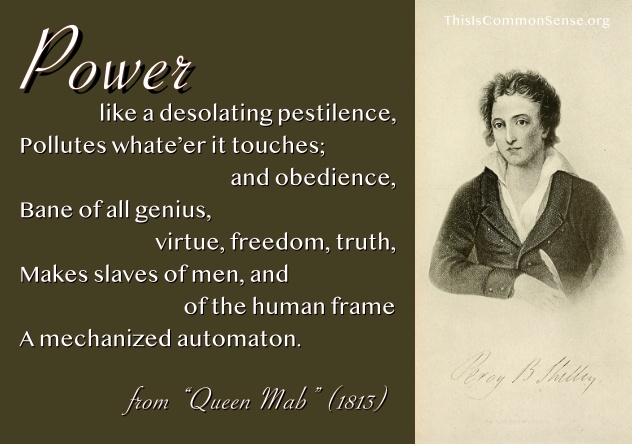
Power, like a desolating pestilence, 
Pollutes whate’er it touches; and obedience, 
Bane of all genius, virtue, freedom, truth, 
Makes slaves of men, and of the human frame 
A mechanized automaton.

Percy Bysshe Shelley, Queen Mab (1813), Canto III.
Categories
Today

Mountaintop

On April 3, 1968, Martin Luther King, Jr., delivered his “I’ve Been to the Mountaintop” speech.

Categories
by Paul Jacob video

Watch: We Fight — Why???

Paul focuses on his most controversial commentary of the week, and then the conversation moves back to . . . Nixon.

Categories
Thought

Søren Kierkegaard

The truth is a trap: you can not get it without it getting you; you cannot get the truth by capturing it, only by its capturing you.

The Journals of Søren Kierkegaard, 1854.

Image, above, is a caricature of Kierkegaard published in The Corsair, a satirical journal.

Categories
Today

Déchéance

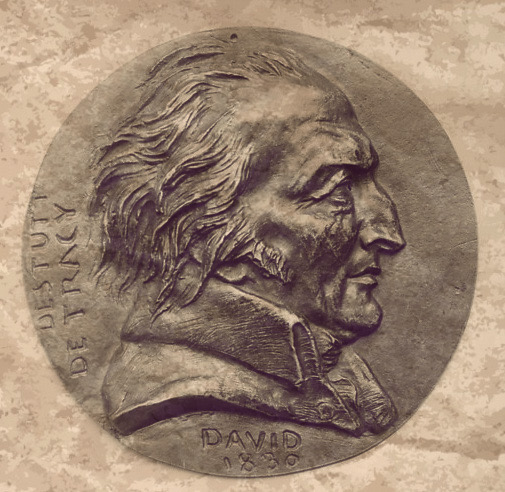
With the Acte de déchéance de l’Empereur (“Emperor’s Demise Act”) of April 2, 1814, France’s Sénat conservateur officially recognized the downfall of Napoléon I of France. The original resolution to remove the Emperor was moved on the legislative body’s floor, by Thomas Jefferson’s friend Destutt de Tracy (according to Tracy himself — official records do not name the member), and was drawn up by Charles Lambrechts. The final paragraph summarized the new reality concisely:

The Senate declares and decrees as follows: 1. Napoleon Buonaparte is cast down from the throne, and the right of succession in his family is abolished. 2. The French people and army are absolved from their oath of fidelity to him. 3. The present decree shall be transmitted to the departments and armies, and proclaimed immediately in all the quarters of the capital.

Nine days later, after attempting to put his son on the throne, Napoléon abdicated unconditionally. The Allies exiled him to Elba, which was to be the whole extent of this reign as “Emperor.”

This arrangement proved unstable, with Napoléon staging a comeback, eventually leading to more war, his defeat at Waterloo, and his exile to an island in the South Atlantic.


American author, art critic, and commentator Camille Paglia was born April 2, 1947.