Categories
First Amendment rights Ninth Amendment rights too much government

Unlisted Help

Kindness; generosity; aid — even these need defending from government.

In “Performing Charity Is a First Amendment Right,” C. J. Ciaramella writes about the difficulties people have had in feeding the poor in their towns and cities.

The problem is not lack of charity — unless you mean the lack of charity that local governments sport.

In Houston, Texas, and Fort Lauderdale, Florida, and Santa Ana, California — and in many other communities around the country — local governments have fined and prohibited the charitable from doing the good they do, often on grounds of “health and safety.” 

Houston even set up a hyper-specific charity area — reminiscent of the “free speech zones” set up for political rallies in recent years — in a parking lot near a police station. Just the kind of place that the destitute want to hang around in!

After the usual forms of police harassment came the court cases . . . and appeals to the First Amendment.

And as I read through Ciaramella’s article, the attempts to defend charity as a right of “religious expression” struck me as odd. Santa Ana politicians, for example, characterized charity as “incidental” to the core religious missions — a bizarre tack to take when dealing with Christian doctrine anyway! — and for once the U.S. Justice Department took the common-sense position on this. Thankfully.

But charity as “expression” leaves a bad taste. Charity’s more basic than “expression,” isn’t it? Some might see the art of giving as a duty, others as a rite, and others as mere generosity for its own sake. Jesus spoke of charity as something one did without speaking about it.

Could it even be more basic than free exercise of religion? Might it not more accurately be a Ninth Amendment right — one “retained by the people”? 

So fundamental there seemed no need to spell it out specifically. 

Our most basic rights are general rights, and charity is fundamental to being human.

This is Common Sense. I’m Paul Jacob.


PDF for printing

Illustration created with PicFinder and DALL-E2

See all recent commentary
(simplified and organized)
See recent popular posts
Categories
Thought

John Adams

The jaws of power are always open to devour, and her arm is always stretched out, if possible, to destroy the freedom of thinking, speaking, and writing.

John Adams, A Dissertation on the Canon and Feudal Law (1765).
Categories
Today

A Revolution Remembered

October 11, 1890, marks the founding of the Daughters of the American Revolution.

On the same date in 1976, President Gerald R. Ford approved a congressional joint resolution Public Law 94–479 to appoint, posthumously, George Washington to the grade of General of the Armies of the United States, as part of the bicentennial celebrations.

John J. Pershing (1860 – 1948) is the only other American to attain this high title, and the only one to achieve it while alive.

Categories
First Amendment rights partisanship too much government

Insane in the Meme Brain

Sane Republicans do exist, says Hillary Clinton. Even in the House of Representatives!

We know this because they voted to continue federal government operations by raising the debt limit. Or so Mrs. Clinton says. It’s just “common sense”!

Talking with Christiane Amanpour on CNN, last week, the former presidential candidate explained that these sane Republicans are “intimidated,” adding, “they oftentimes say and do things which they know better than to say or do.”

To get to common ground with these compromised GOP folks, however, the measures that intimidate them — while exciting their extremist, insane MAGA proponents — must be roundly defeated. 

No compromise.

In times past, our representatives in Congress could work together; but back then, argues the former First Lady, U.S. Senator, and Secretary of State, “there wasn’t this little tail wagging the dog of the Republican Party.”

That is, conservative representatives would kindly admit defeat every time the green light was given to more and more spending. Now they won’t cooperate.

It’s extremism, in Hillary’s judgment, to oppose the ceaseless growth of the warfare-welfare state.

But, Hillary being Hillary, she had a corker to unleash. “Maybe at some point there needs to be a formal de-programming of the cult members.”

Just like Mrs. Clinton to generously offer re-education camps to her opponents.

Followed by an admonition: “we have to be smarter.”

How is it smart (or sane) to continually grow the federal debt, its mere service now larger than the defense budget?

By talking about formally deprogramming MAGA extremists Hillary Clinton skillfully deflects her supporters’ attention from the real need: informally deprogramming their own insane debt-piling status quo mindset.

This is Common Sense. I’m Paul Jacob.


PDF for printing

Illustration created with PicFinder

See all recent commentary
(simplified and organized)
See recent popular posts

Categories
Thought

Ayn Rand

A gun is not an argument.

Ayn Rand, Capitalism: The Unknown Ideal (1966).
Categories
Today

Atlas?

On October 10, 1957, Ayn Rand’s dystopian/utopian novel Atlas Shrugged was published. Written to expound and defend an individualist, freedom/free-market point of view, it is one of the most influential and literarily successful didactic novels ever written.


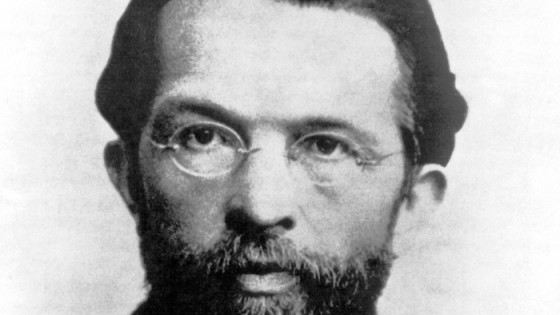
On October 10, 1973, Austrian-born American economist, Ludwig von Mises* (pictured above) died.

Two-hundred fifty-nine years earlier, the French law-maker and Jansenist Pierre le Pesant, sieur de Boisguilbert died.

Both economists were known for their defenses of freer markets: le Pesant for pioneering the critique of mercantilism, arguing that a nation’s wealth consisted in what its people produce and trade; Mises for systematizing economic theory and advancing the critique of both socialism and latter-day mercantilism (what he called “interventionism”).


* In January 1958, following the publication of Atlas Shrugged, Mises wrote Ayn Rand a letter of congratulations.

Categories
crime and punishment ideological culture media and media people

Why Criminals Commit Crimes

Is it a mystery?

“I really think if we can identify the ‘why,’ especially amongst the juveniles, we might be able to change our approach on how to slow this down,” says Carlos Heraud, an assistant chief at the DC police department.

Along with other crime in Washington. D.C., carjackings are up. Why?

Some people choose to be criminals. And some policymakers choose to aid and abet them.

It’s a matter of incentives and disincentives, but also choices and character. 

Since different people react differently to being born into poverty — or being disrespected, being peer-pressured, being bored, being fired — we cannot simply say that criminals are created by difficult circumstances.

Most do not become thugs and hoodlums.

Some who make criminal choices pull back and determine to do better. Others commit offenses forever. Chief Heraud and D.C. mayors and lawmakers should heed the insights of Stanton Samenow’s Inside the Criminal Mind. Although criminals make excuses for themselves and latch onto the excuses made for them by others, they know they’re responsible for their actions.

But while circumstances don’t create the criminal mind, circumstances can abet crime. For example, if you make it easier for criminals to get away with assault and theft, they’ll likely commit more assaults and thefts.

The government of our imperial capital makes it hard for potential victims to arm themselves, easy for criminals who are “caught” to walk away. If you’re a criminal operating in a town like that, it’d have to be encouraging to receive by this kind of encouragement?

After all, it’s not a question of bad incentives incentivizing all to be wicked. The effects can be seen on the margin, among those most likely to be induced by corrupt incentives, or to not be dissuaded from criminal action by reduced disincentives.

No great mystery.

This is Common Sense. I’m Paul Jacob.


PDF for printing

Illustration created with PicFinder.ai

See all recent commentary
(simplified and organized)
See recent popular posts

Categories
Thought

Plutarch

Empire may be gained by gold, not gold by empire. It used, indeed, to be a proverb that “It is not Philip, but Philip’s gold that takes the cities of Greece.”

Plutarch’s Lives: “Aemilius,” sec. 12.
Categories
Today

Banished

On October 9, 1635, Protestant theologian Roger Williams was banished from the Massachusetts Bay Colony as a religious dissident after he spoke out against punishments for religious offenses and giving away Native American land. He moved south, founding Providence Plantations, where he worked for separation of church and state, the rights of aboriginal Americans, and against slavery.

Categories
by Paul Jacob video

Watch: A Few Pointers!

“It’s just beyond belief”:

The vlog version of This Week in Common Sense for October 2–6, 2023.