Categories
Eclipse
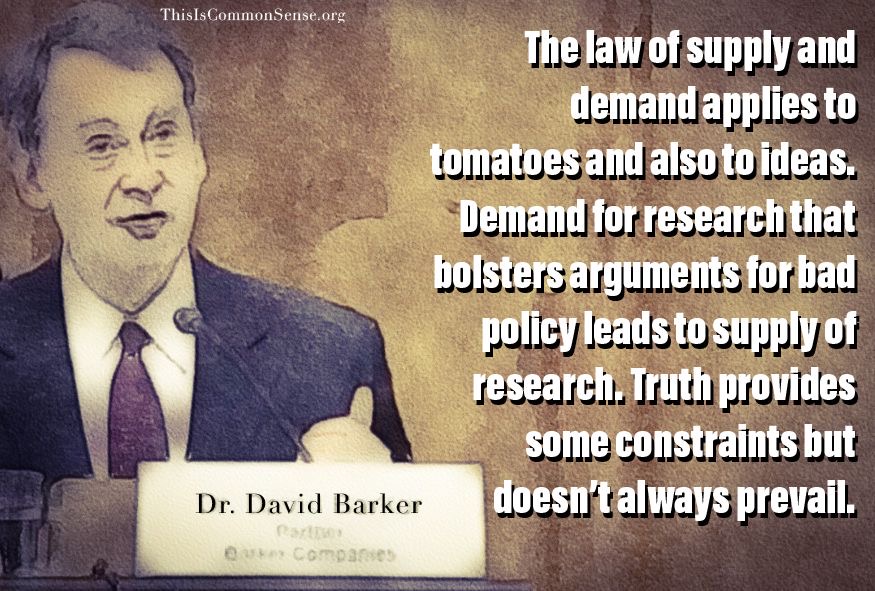
The law of supply and demand applies to tomatoes and also to ideas. Demand for research that bolsters arguments for bad policy leads to supply of research. Truth provides some constraints but doesn’t always prevail.
David Barker, “Climate Alarmists’ Bad Science,” Wall Street Journal (April 3, 2024.
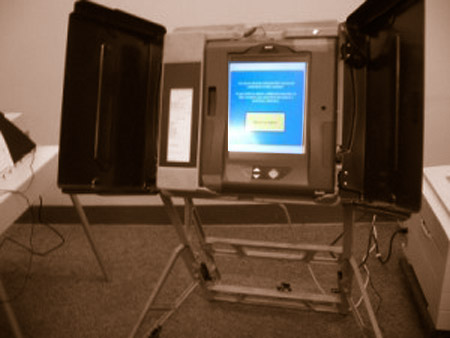
On April 8, 1913, the 17th amendment to the Constitution, providing for the popular election of U.S. senators, was ratified.

What’s the latest on the prosecution of the January 6th “rioters” at the Capitol?
Well, take the case of Mr. Daniel Goodwyn, 35, of Corinth, Texas. He pled guilty on January 31, 2023, to one misdemeanor count of entering and remaining in a restricted building or grounds without lawful authority.
“A sentencing requirement that Jan. 6 defendant Daniel Goodwyn have his computer monitored by the government for “disinformation” has been vacated by the U.S. Court of Appeals for the District of Columbia Circuit,” explains The Epoch Times:
The court on March 26 published a mandate sending the case back to U.S. District Judge Reggie Walton to remove the computer monitoring requirement he issued as part of the sentencing judgment in the case on June 15, 2023.
“Judge Walton had no legal basis to issue the special condition,” Carolyn Stewart, Mr. Goodwyn’s attorney, told The Epoch Times in an April 3 email.
The judge had also censured the defendant for his interview with Tucker Carlson, who, said the judge, had minimized Goodwyn’s involvement on the fateful day.
As The Epoch Times story relates, it’s been a colorful case, with the judge showing he was misinformed about some of the facts of the case, and adamantine in his error. He also disagreed with the defendant’s contention that Ashli Babbitt had been murdered by the police.
There are people with whom everything they consider a means turns mysteriously into an end.
Friedrich Schlegel, Philosophical Fragments, P. Firchow, trans. (1991) § 428.

On April 7, 1933, Prohibition in the United States was repealed for beer of no more than 3.2 percent alcohol by weight — eight months before the ratification of the XXI amendment, which repealed the 18th (or Prohibition) Amendment.
The enabling legislation was the Cullen-Harrison Act, which figured the low alcohol content as the excuse to get around the 18th Amendment’s prohibition of intoxicating beverages. The act passed Congress on March 21, 1933, and was signed into law by Franklin Delano Roosevelt the next day.
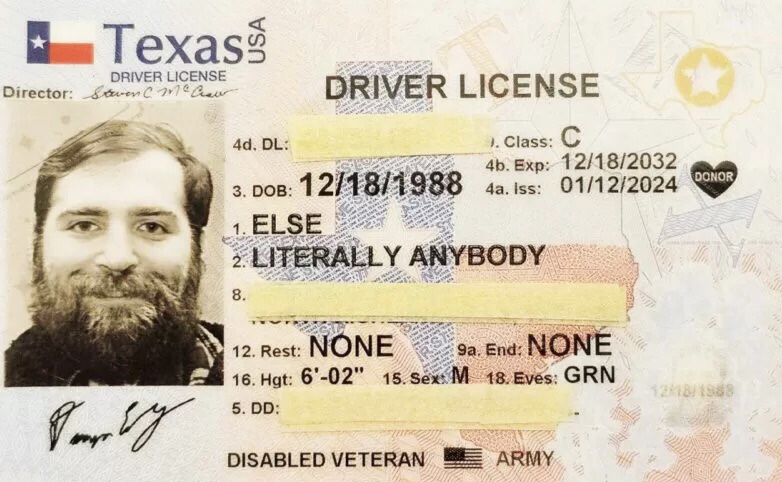
Using pseudonyms, or even legally changing your name, to run for office, is not unheard-of. The classic case came from the 2015-2016, when a likely lad ran for the U.S. Presidency under the name “Deez Nuts”:
EXCLUSIVE
The candidate polling at 9 percent in North Carolina against Trump and Clinton isn’t a real person. But 15-year-old Brady Olson, who lives on a farm in Iowa and gamed the FEC filing system, certainly is.
Ben Collins & Emily Shire, “Presidential Sensation Deez Nuts Is a 15-Year-Old Iowa Farm Boy,” Daily Beast, August 19, 2015.
For years, a man named Jim Burns ran for office using his altered middle name, “Libertarian,” to help make his statement in lieu of the shifting ballot status of his party of choice.
But has anyone done it better than Dustin Ebey?
The 35-year-old Texan became a viral sensation this week after legally changing his name to Literally Anybody Else and declaring his candidacy for the White House. The goal, he told Reason on Thursday, is “giving a unified voice to the idea that we deserve better.”
Eric Boehm, “Meet ‘Literally Anybody Else,’ the Presidential Candidate That 2024 Demands,” Reason, April 5, 2024.
The case he makes on his website is not very radical, though:
The call to action is clear: stand up to Washington and reclaim the voice of the American people. We refuse to accept the status quo, where the interests of the privileged few outweigh the needs of the many. It’s time to disrupt the entrenched power structures and demand accountability from all of our elected officials on both sides.
Let this rallying cry echo across the nation: “The American people want literally anybody else.” It’s a declaration of our collective desire for change, for leadership that prioritizes integrity, self-awareness, and a commitment to the common good.
“A New Way of Thinking about Politics,” LiterallyAnybodyElse.com.
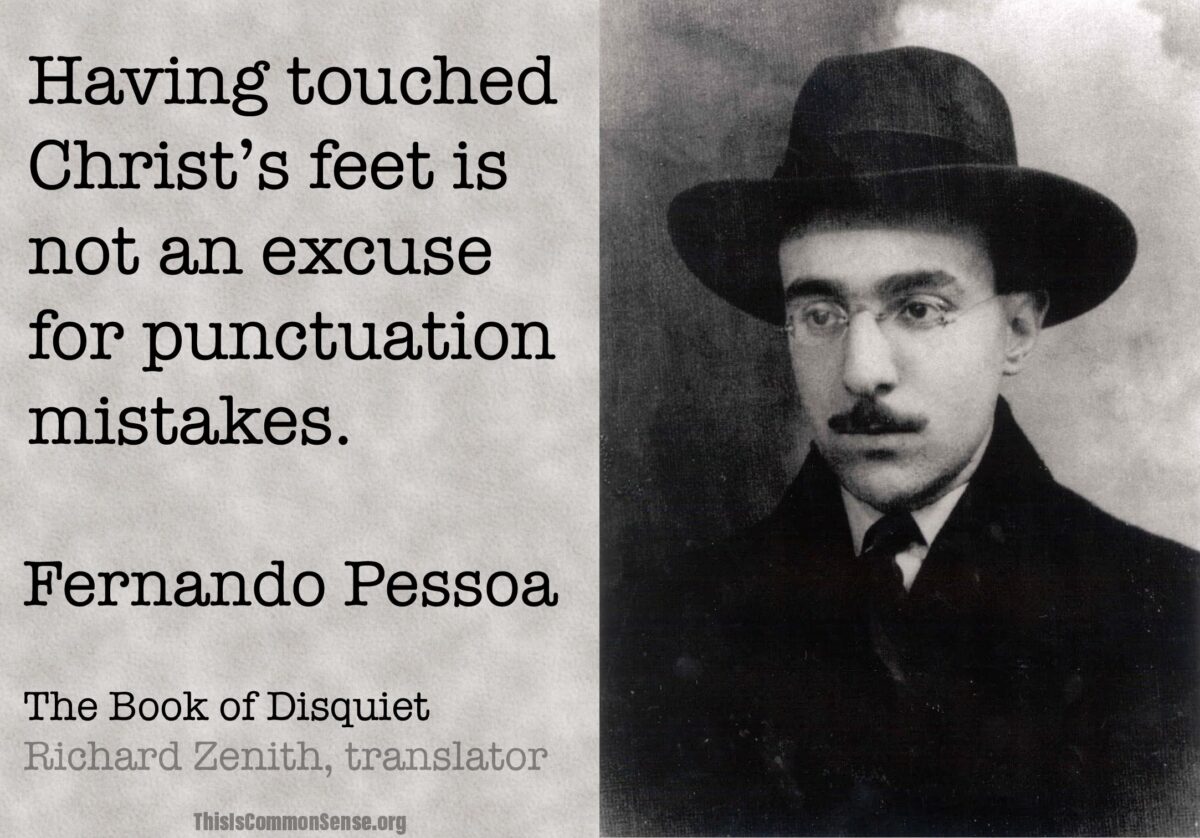
Having touched Christ’s feet is no excuse for punctuation mistakes.
Fernando Pessoa, The Book of Disquiet, Richard Zenith, translator.
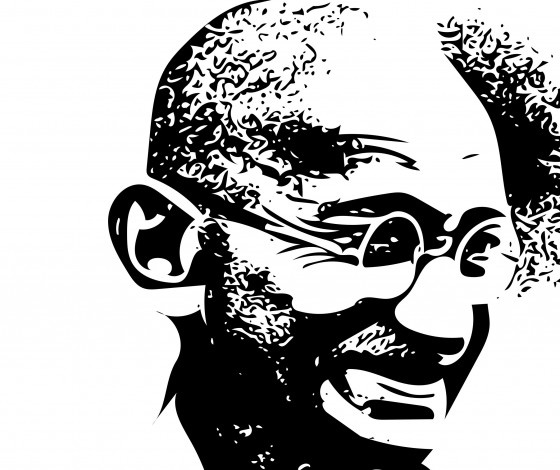
On April 6, 1930, Mohandas K. Gandhi raised a lump of mud and salt, declaring, “With this, I am shaking the foundations of the British Empire.”
Thus began the Salt Satyagraha.
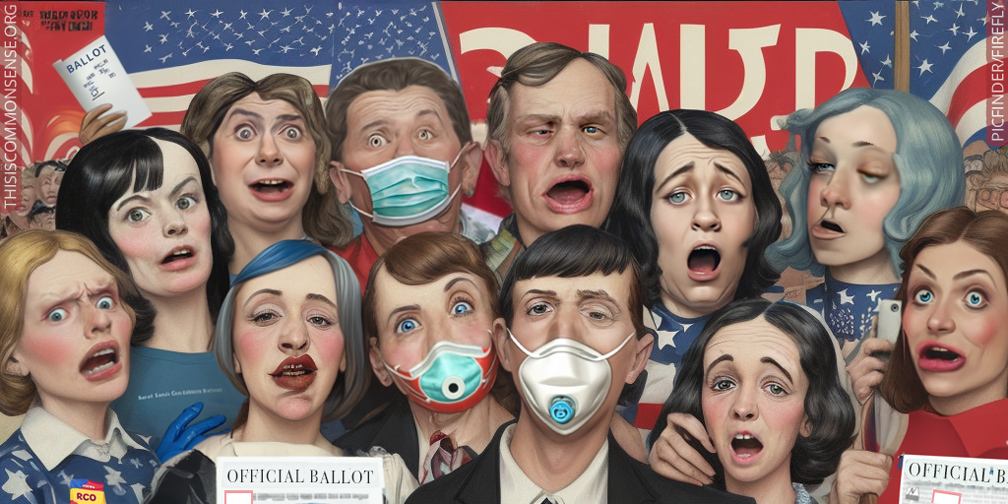
I’m of course talking about partisan politics.
The case at hand is covered by Matthew Petti at Reason, “Are New Jersey Voters Too Dumb for Normal Ballots?” In this April 3rd report, Petti explains that a “federal judge has ordered Democrats in New Jersey to draw up ballots fairly instead of putting their favorite candidates at the front. But state Democratic bosses think that voters can’t be trusted to figure out how to think
This is a dispute about ballot design. Remember the notorious “butterfly” ballots that so confused Palm Beach County, Florida voters in 2000? You know, even Pat Buchanan acknowledged that thousands in the liberal county voted for him by mistake.
Well, this is similar, though here the case is not so much a confusing ballot but a simple ballot with favored candidates getting the easiest-to-spot slots. “All but two of the state’s counties endorse candidates for the primary and then place their endorsed candidates all in one line,” explains NPR’s Nancy Solomon. “It’s called the ‘county line’ or ‘the party line’ and it includes candidates for various positions. . . . The other candidates for the same seat are placed in what’s known as ballot Siberia – way off to the right on the ballot
But when the party machine tried to replace the serially indicted Senator Bob Menendez with the governor’s wife, a challenger complained. And sued. And won.
County clerks are appealing the decision — but the court still requires them to design a new ballot.
“New” . . . meaning like ballots nearly everywhere.
This is Common Sense. I’m Paul Jacob.
Illustration created with PicFinder and Firefly
See all recent commentary
(simplified and organized)
See recent popular posts