Categories
Today

A Federalist Impeached

On November 30, 1804, the United States House of Representatives began impeachment hearings against Supreme Court Justice Samuel Chase. The House thought he was too partisan, too “Federalist.”

The Senate later acquitted Chase.

On 1835 on this date, Samuel Clemens was born, later to achieve world fame as author and humorist Mark Twain (pictured above). His most beloved books include The Adventures of Tom Sawyer (1876) and his masterpiece, Adventures of Huckleberry Finn (1885). He died in 1910.

It is perhaps worth noting that Mark Twain did write about impeachment:

I have been here a matter of ten days, but I do not know much about the place yet. There is too much weather. There is too much of it, and yet that is not the principal trouble. It is the quality rather than the quantity of it that I complain of; and more than against its quantity and its quality combined am I embittered against its character. It is tricky, it is changeable, it is to the last degree unreliable. It has catered for a political atmosphere so long that it has come at last to be thoroughly imbued with the political nature. 

As politics go, so goes the weather. It trims to suit every phase of sentiment, and is always ready. To-day it is a Democrat, to-morrow a Radical, the next day neither one thing nor the other. If a Johnson man goes over to the other side, it rains; if a Radical deserts to the Administration, it snows; if New York goes Democratic, it blows—naturally enough; if Grant expresses an opinion between two whiffs of smoke, it spits a little sleet uneasily; if all is quiet on the Potomac of politics, one sees only the soft haze of Indian summer from the Capitol windows; if the President is quiet, the sun comes out; if he touches the tender gold market, it turns up cold and freezes out the speculators; if he hints at foreign troubles, it hails; if he threatens Congress, it thunders; if treason and impeachment are broached, lo, there is an earthquake!

If you are posted on politics, you are posted on the weather.

Mark Twain, The Territorial Enterprise, December 4, 1867.
Categories
free trade & free markets political economy too much government

The Not-Unintended Consequences

When bad outcomes are obvious, we can no longer call them “unintended consequences,” can we?

Take the case of California’s double-barreled attack upon “fast food”: last year’s push through the legislature of Assembly Bill 102 and Assembly Bill 1228. These regulatory schemes would have introduced collective bargaining into fast food franchises and enforced much higher minimum wage rates.

The two laws sparked an industry backlash, in the form of ballot referendums to halt the regulatory onslaught, which Steven Greenhut writes about at Reason. “In September, Gov. Gavin Newsom announced a ‘truce,’” Greenhut explains. “The industry pulled its ballot measure and agreed to a $20 minimum wage. In return, Newsom and unions limited the power of the Fast Food Council and removed joint-liability provisions.”

The concession on hiking the legal wage minimum was agreed to, notice, by the fast food lobbyists. Not the workers. 

As those familiar with elementary economics understand, when the costs of an input (like labor) are increased, alternatives to those inputs will be sought. So we can expect more replacements of workers with automation — as we’ve seen all around the country in fast food, especially at McDonald’s — as well as higher prices.

Which, in a state sporting huge homelessness and unemployment problems, will only hobble the one industry that helps the poorest members of society both in terms of consumer products (inexpensive food) and entry-level jobs (at fast food joints).

Perhaps California’s Democrats know full well what they are doing. They push crazy policies not because the negative outcomes are “unintended” or unforeseeable.

You see, it’s not disastrous for them.

This is Common Sense. I’m Paul Jacob.


PDF for printing

Illustration created with PicFinder and Firefly

See all recent commentary
(simplified and organized)
See recent popular posts
Categories
Thought

George Orwell

In the end the Party would announce that two and two made five, and you would have to believe it. It was inevitable that they should make that claim sooner or later: the logic of their position demanded it. Not merely the validity of experience, but the very existence of external reality, was tacitly denied by their philosophy. The heresy of heresies was common sense. And what was terrifying was not that they would kill you for thinking otherwise, but that they might be right. For, after all, how do we know that two and two make four? Or that the force of gravity works? Or that the past is unchangeable? If both the past and the external world exist only in the mind, and if the mind itself is controllable what then?

George Orwell, Nineteen Eighty-Four (1949), Part 1, Chapter Seven.
Categories
Today

C. S. Lewis

Irish-English medievalist, theologian, and novelist Clive Staples Lewis was born on November 29, 1898. Among his best known works are Out of the Silent Planet, The Problem of Pain, Miracles, and the “Narnia” fantasies for children. His novelistic retelling of the Psyche myth, Till We Have Faces, and political essays such as “The Humanitarian Theory of Punishment” and The Abolition of Man, will almost certainly stand the test of time.

Categories
international affairs

‘Hardly Peace’

Xi Jinping’s “charm offensive” had hardly begun — punctuated by the standing ovation from a roomful of American CEOs even before the leader of this recognized genocidal regime offered his fervent desire for peace and friendship — when, over the weekend, as NBC News reported, “China Confronts U.S. Warship as Tension Grows Over Flashpoint.”

The Chinese People’s Liberation Army declared it had driven a U.S. destroyer away from the Paracel Islands, while the U.S. Navy simply said it conducted freedom of navigation exercises in international waters. 

“China claims almost the entire South China Sea,” explained NBC, “including parts claimed by the Philippines, Vietnam, Indonesia, Malaysia and Brunei.” Even though the “Permanent Court of Arbitration in 2016 said China’s claims had no legal basis.”

Sounds like trouble. 

“It is certainly not yet war in the South China Sea,” an Al-Jazeera article from years ago states, “but it’s hardly peace, either.”

Just days before that, as dictator Xi and Australian Prime Minister Anthony Albanese were finally talking about de-frosting relations, a Chinese warship used its sonar, injuring Australian divers. 

“According to an announcement by Defence Minister Richard Marles, the incident occurred ‘in international waters inside of Japan’s exclusive economic zone,’” noted Australia’s ABC, “and despite the Chinese ship receiving multiple warnings that the personnel were operating below the surface.”

Of course, the Chinese navy, coast guard and militia vessels have been constantly harassing the Philippines, Vietnam, and other countries in the South China Sea, which is why these countries are increasingly looking for U.S. help. 

And it provides us a clearer context for China’s fanciful claims and terrible threats against Taiwan.

This is Common Sense. I’m Paul Jacob.


PDF for printing

Illustration created with PicFinder and Firefly

See all recent commentary
(simplified and organized)
See recent popular posts

Categories
Thought

Richard Feynman

A very great deal more truth can become known than can be proven.

Richard Feynman, “The Development of the Space-Time View of Quantum Electrodynamics,” Nobel Lecture (December 11, 1965).
Categories
Today

Henry Hazlitt

In 1894, on November 28, economics journalist Henry Hazlitt was born. Hazlitt went on to write numerous books, including Economics in One Lesson, Time Will Run Back, and several works criticizing Keynesianism. He was the main proponent of the work of Ludwig von Mises and F.A. Hayek in America during the 1940s and 1950s.


Exactly one year earlier, women voted in a national election for the first time . . . in New Zealand. On the same date in 1917, the Estonian Provincial Assembly declared itself the sovereign power of Estonia. November 28 also marks the independence of Mauritania from France (1960), and East Timor from Portugal.

Categories
Accountability crime and punishment international affairs

Stuck With It?

Poland told Pfizer to stick it elsewhere. Now Pfizer’s suing for failure to pay for all the jabs . . . that Poland didn’t use. Or take. Or even allow in the country.

Pfizer’s a big company, of course, but you know we’re not talking about Celebrex or Fentanyl Citrate or Sonata here. We’re talking about The Jab. The one developed with BioNTech and contracted for by governments around the world.

As near as I can make out, it’s a breach of contract case.

But with a wrinkle.

Poland put a halt to pushing Pfizer’s COVID vaccine in April of 2022, and the people generally seem just fine with it, seeing as how they have a much, much lower rate of excess deaths now than does, say, Sweden, which pushed the vax for far longer. 

But why couldn’t Poland simply stop usage of the jab? 

After all, a customer shouldn’t be forced to take a medication, right? 

Well, the contract was not between Pfizer and Poles individually — this is the modern, statist world, after all — or even collectively, corporately, through the state. The contract was between Pfizer and the European Union!

And elements were secret

The Polish government, placed on the hook for the drug, was not allowed to see the whole contract.

Think of this as just one of the many ways that politicians who bash Big Pharma bent over backwards to give Big Pharma cushy, cushy deals.

But in court, how will those secret clauses play? I suspect that Pfizer’s prognosis may be negative.

Which would be a healthy outcome.

This is Common Sense. I’m Paul Jacob.


PDF for printing

Illustration created with PickFinder and Firefly

See all recent commentary
(simplified and organized)
See recent popular posts
Categories
Thought

Michael Polanyi

The columns of figures set out in governmental economic plans express claims to economic powers that are only imaginary. But belief in such powers may be induced by carrying out with great emphasis some fairly extensive economic policies — which cause a certain amount of stress and strain — and pretending that you are thereby putting into effect your economic plan, with all its figures.

Michael Polanyi, The Logic of Liberty: Reflections and Rejoinders (1951), p. 137.
Categories
Today

Nobel Prizes

November 27, 1295, the first elected representatives from Lancashire were called to Westminster by King Edward I to attend what later became known as “The Model Parliament.”

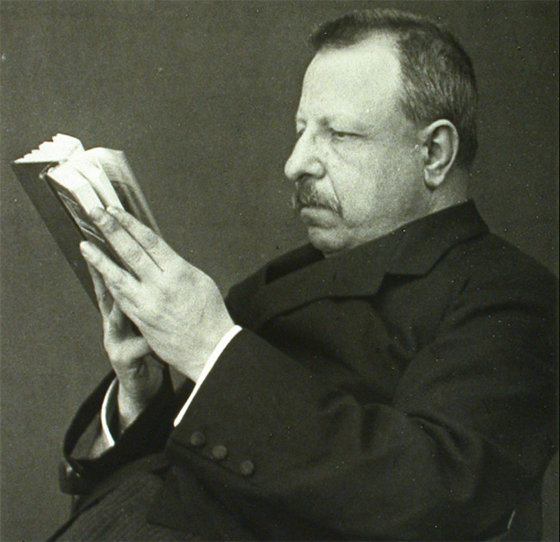
On the same date in 1895, Alfred Nobel (pictured) signed his last will and testament, thereby establishing the Nobel Prizes.