Categories
Today

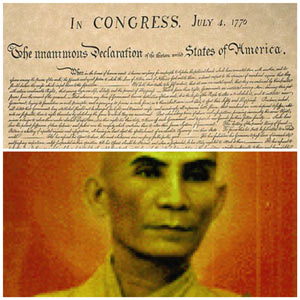
Religious Freedom

On January 16, 1786, Virginia enacted the Statute for Religious Freedom authored by Thomas Jefferson.

Categories
general freedom international affairs

Dangerous Neighbor

“Are you a journalist?” asked the woman in an overflow crowd of thousands, who, like me, couldn’t fit into the packed stadium for a Democratic Progressive Party rally on the eve of Taiwan’s election.

“Or do you just love Taiwan?” 

With a broad smile, I told her: “I love Taiwan.”

This, my second trip to the beautiful island nation, was as inspiring as my first, in 2019. 

Two other women in the crowd explained they flew in from Italy to cast their ballots — believing the future of Taiwan depended on their vote. Which, of course, it did.

Most poignant was my conversation with a couple who had escaped the Chinazi clampdown in Hong Kong. After discussing how those 2019 protests helped “wake up the world,” I snapped a selfie with them. 

Then, five minutes later, they came back to ask me not to post their picture on social media without blacking out their faces. You see, they have relatives still in Hong Kong who might face harassment or worse from the Chinazis, if they were outed. 

“Enjoy the freedom of Taiwan today,” a Taiwanese man had offered earlier in the day at the Kaohsiung Museum of History. “It may be gone tomorrow [Election Day].” He feared a KMT victory would usher in a government far too willing to cozy up to the Chinese regime. 

On Saturday, however, DDP presidential candidate Lai Ching-te won a clear victory. His triumph was declared by the gaslighting Butchers of Beijing to be an “extreme danger.” 

But it is obvious to all that the nation of Taiwan is a danger to no one . . . and Communist Party-ruled China is a danger to everyone. 

This is Common Sense. I’m Paul Jacob. 


* One doesn’t need to look to Asia to see the threat from China. Chinese dissidents in the U.S. and Canada are routinely harassed and threatened, which our governments seem unable to do much about. And the website we’ve launched — StopTheChinazis.org — has numerous writers but only two have chosen to use their real names. Why? Fear of reprisals from the CCP against Americans here in America. 

PDF for printing

See all recent commentary
(simplified and organized)
See recent popular posts
Categories
Thought

Earl Warren

I believe the preservation of our civil liberties to be the most fundamental and important of all our governmental problems, because it always has been with us and always will be with us and if we ever permit those liberties to be destroyed, there will be nothing left in our system worthy of preservation.

Earl Warren, as quoted in Lawyers Guild Review, Vol. 13-14 (1953), p. 47.

Categories
Today

New Connecticut?

On January 15, 1777, New Connecticut declared independence from the crown of Great Britain and the colony of New York.

Delegates first named the independent state New Connecticut and, in June 1777, finally settled on the name Vermaont, an imperfect translation of the French for Green Mountain.

This new “Vermont Republic” minted copper coins (see above), first struck in 1785. The people of Vermont took part in the American Revolution although the Continental Congress did not recognize the jurisdiction, because of vehement objections from New York, which had conflicting property claims.

In 1791, Vermont was admitted to the United States as the 14th state, upon which its minting of coins ceased.

Categories
Update

Update: California’s Hospitals

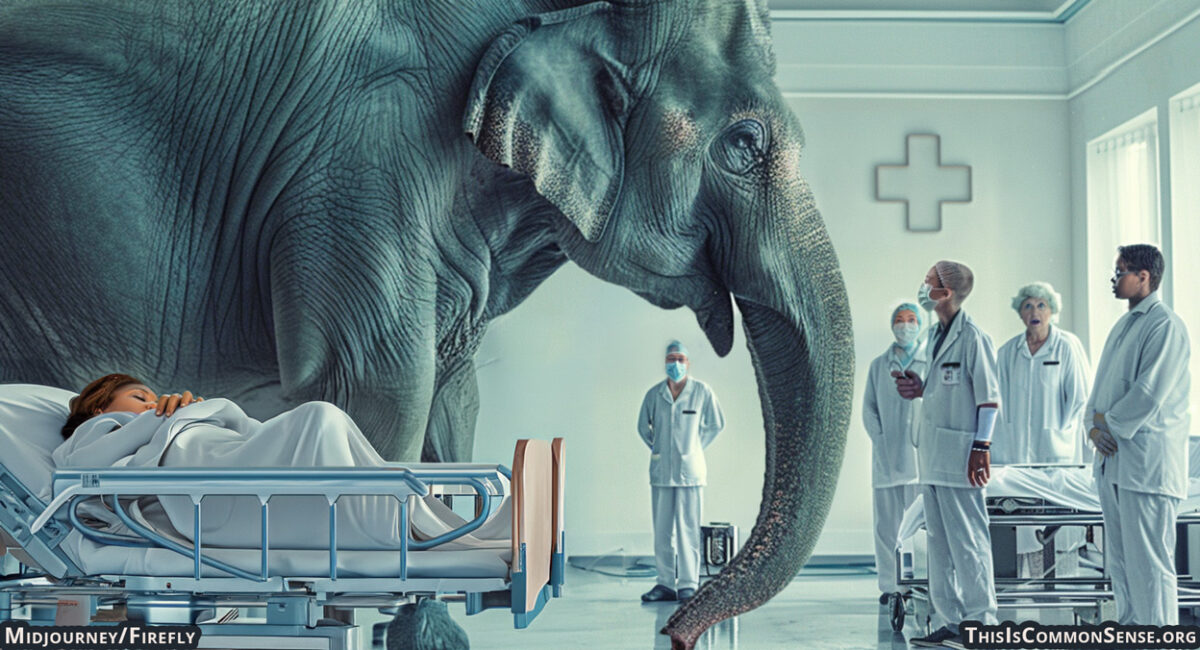
Last Thursday, in “The S-Word in California,” the subject was the danger posed to the stability of the Golden State’s medical system by the promise to guarantee service to nearly a million new illegal immigrants.

But one mechanism of this instability was not brought up, for reasons of space: the politicians’ past, as well as present, promises do not recompense hospitals at anything like a market rate. Which leads to insolvency. Which does not help the poor:

Across a state with the highest proportion of millionaires in the nation, 1 in 5 hospitals are now at risk of closing, according to a study released earlier this year by the California Hospital Association. Many serve the state’s rural redoubts, whose populations are often disproportionately poor and underinsured, and inner-city neighborhoods such as south-central Los Angeles.

Scott Wilson, “A hospital’s abrupt closure means, for many, help is distant,” Washington Post (November 16, 2023).

Now, the recent legislation discussed ostensibly solves the problem, as the Washington Post puts it:

As part of the final state budget, state lawmakers also approved one of the largest increases in years in the rates that Medi-Cal will reimburse hospitals for services. The move is particularly important for rural counties: While about 40 percent of California’s population is covered by Medi-Cal, the rate in Madera is nearly twice that.

And, beginning next year, all of California’s more than 2 million undocumented residents will be eligible for coverage under Medi-Cal, adding another 700,000 undocumented residents to the state insurance plan, meaning hospitals will no longer have to absorb their costs.

If it be true that the rates of reimbursement from Medi-Cal will now cover actual costs, then, as stated on Thursday, that will be an extra burden on the California taxpayer. But upping the rates is not a market phenomenon — a monopsonistic practice by definition — and the Post does not analyze whether the rate hikes will be enough to prevent more hospital failures. Like Medicare’s rates of reimbursement, these are historically pennies on the dollar, and vary widely by procedure and service, adding to administrative burden.

So of course politicians talk about adding more subsidies upon existing subsidies.

The spiral of burdens and benefits just goes out of control, as we would expect when governments seek to replace actual, effective markets for government “solutions.”

Categories
Thought

Jack Sarfatti

When you say “the government” . . . there is no such thing any more. There’s no government; we’re in a state of chaos.

Jack Sarfatti, in conversation with Danny Jones, KONCRETE Podcast, “CIA Funded Physicist Exposes Mind-Drive UFOs, Warp Drive & Time Travel,” Part One (August 28, 2023).

Categories
Today

Against Slavery

On January 14, 1514, Pope Leo X issued a papal bull against slavery.

On the same date in 1639, the first written constitution to create a government, the “Fundamental Orders,” was adopted in Connecticut.

Categories
by Paul Jacob video

Why Should Americans Defend Taiwan?

Paul Jacob is in Taiwan right now, so the question is on his mind. He has a few answers. And you have a few options:

  1. Listen to his talk on SoundCloud (where his podcasts were hosted).
  2. Watch the talk on StoptheChinazis.org.
  3. Go to Facebook to watch the video or chat about it with your social media contacts.
  4. Watch it below; comment on it below:
Categories
Thought

George Santayana

Almost all nations and religions, and especially the liberal party in them, think themselves the salt of the earth. They believe that only their special institutions are normal or just, and hope to see them everywhere adopted. They declare that only the scriptures handed down by their own clergy are divinely inspired; that only their native language is clear, convenient, deeply beautiful, and ultimately destined to become universal; that only the logic of their home philosophers is essentially cogent; and that the universal rule of morals, if not continued in tablets preserved in their temple, is concentrated in an insoluble pellet of moral prejudice, like the categorical imperative of Kant, lodged in their breast. Not being content, or not being able, to cultivate their local virtues in peace at home, they fiercely desire to sweep everything foreign from the face of the earth. Is this madness? No: I should say it was only haste, transposing a vital necessity into absurd metaphysical terms. Moral absolutism is the shadow of moral integrity.

George Santayana, The Genteel Tradition at Bay (1931), p. 27.
Categories
Today

Nullification?

On January 13, 1833, United States President Andrew Jackson (pictured, top left) wrote to Vice President Martin Van Buren (pictured, top right) expressing his opposition to South Carolina’s defiance of federal authority in the Nullification Crisis. Jackson insisted that “the crisis must be now met with firmness” and “the modern doctrine of nullification & succession put down forever.”

South Carolina had blamed protectionist high tariffs for the severity of the economic slump of the time, and Andrew Jackson’s compromise Tariff of 1832 was still too much special-interest “protectionism” for South Carolina, which threatened to nullify the law as unconstitutional. Jackson, a nationalist at heart, had no sympathy for dissidents in the southern states. (The tariffs were designed by northern politicians to encourage the growth of industry. The belief among most economists of that time was that such high “protective” tariffs favored certain businesses at the expense of the general consumer, particularly farmers and agricultural producers.) After the crisis subsided, tariffs were further reduced from the 1832 level, much lower than of 1828’s “Tariff of Abominations,” which had been signed into law by President John Quincy Adams — and written mainly by Martin Van Buren as a way to precipitate the election of Jackson.

Since the somewhat ambiguous end to the Nullification Crisis, the doctrine of state prerogatives — “states’ rights” — has been asserted by opponents of the Fugitive Slave Act of 1850, proponents of California’s Specific Contract Act of 1863 (which nullified the Legal Tender Act of 1862), opponents of Federal acts prohibiting the sale and possession of marijuana in the first decade of the 21st century, and opponents of implementation of laws and regulations pertaining to firearms from the late 1900s up to 2013. State opposition to ObamaCare has also recently conjured up the issue.


On January 13, 1898, Émile Zola’s J’accuse exposed the Dreyfus affair.