The rich…

The rich…

While it is true that some who were punished did engage in violence and riot,* many were peaceful but were imprisoned anyway, under horrific conditions. And even some who avoided imprisonment were treated atrociously.
Among the latter is former police officer Michael Daughtry, who recently told his story. A few of the details:
Invited by President Trump to go to the West Lawn to peacefully protest, Daughtry did so. There, “police officers removed the barricades and waved us onto the West Lawn.” The FBI later confiscated Daughtry’s video of this.
On January 16, he was charged with trespassing on the West Lawn.
Though he had been a police officer and had no criminal record, Daughtry was jailed for hours before being brought before a judge . . . “in handcuffs, leg irons and belly chains. . . .”
Even after he was released, his home was raided repeatedly.
He was forced to turn over passwords to email, social media, bank accounts and much other private information to federal agents, who threatened him with prison if he did not comply.
Daughtry was under house arrest “for almost two years for a crime that carries a maximum punishment of less than a year. I have not been allowed to plea in this case.”
More here.
Trump pardoned Daughtry for his non-crime. Would a President Harris have done so?
This is Common Sense. I’m Paul Jacob.
* Those who assaulted police officers or plotted to do violence on that day should not have been pardoned — even if deserving of mercy, commuted sentences, without wiping their record, would have sufficed.
Illustration created with Flux and Firefly
See all recent commentary
(simplified and organized)
See recent popular posts

Ideas are more difficult to kill than people, but they can be killed, in the end.
Neil Gaiman, American Gods (2001).

On January 28, 1981, President Ronald Reagan lifted the federal government’s remaining domestic petroleum price and allocation controls in the United States, helping to end the 1970s energy crisis and begin the 1980s’ oil glut.
The deregulatory move had been begun by Democrats in Congress, but had been placed on a gradual schedule, and the whole effort clouded with President Jimmy Carter’s talk of taxing the “windfall profits” that would immediately result from lifting the regulations.
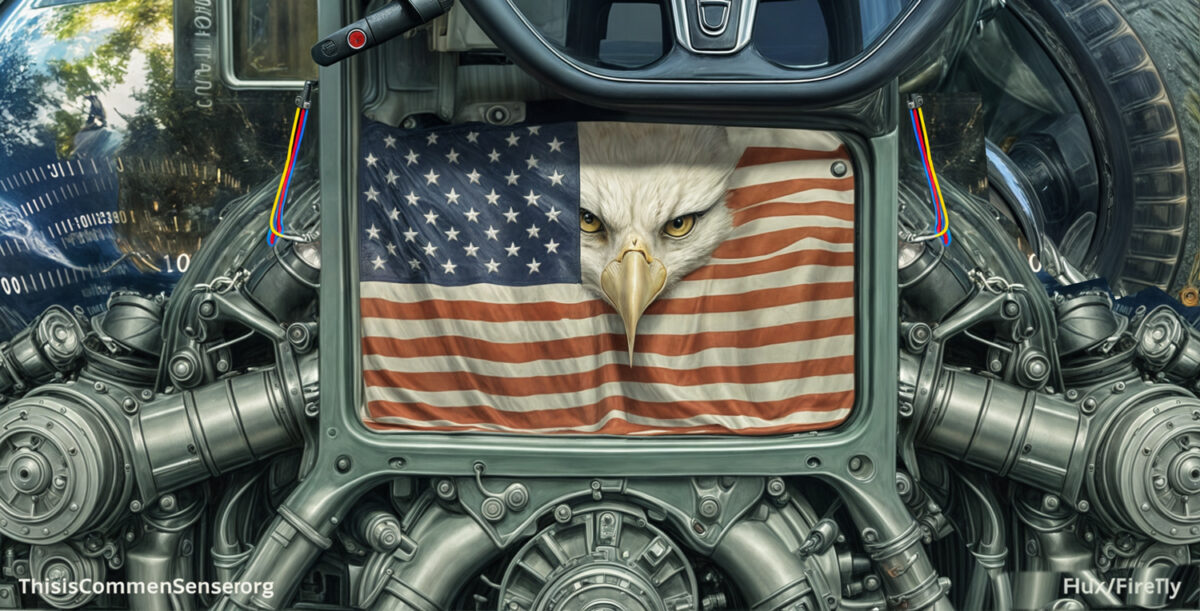
In March 2024, the EPA finalized Biden’s “crackdown on gas cars” by issuing absurdly stringent emission standards. The idea was to advance the administration’s “climate agenda” by sending gas-powered modes of transportation to the junkyard.
Leaders of the petroleum industry were among those who saw that the scheme would “make new gas-powered vehicles unavailable or prohibitively expensive for most Americans.” The policy would “feel and function like a ban.”
This was just one of many examples of Biden-oppression pushing American voters who value at least their own freedom into the Trump camp.
Electric vehicles have pluses and minuses. In past columns, I’ve expressed much enthusiasm for the technology, but recognized that it must develop naturally, in a free market, rather than unnaturally, out of ideological hope and fear-ridden “need,” forced by government regulation and subsidy.
As James Roth has noted over at StoptheCCP.org, we’ve had a century and a half to fine-tune gas-powered vehicles, a mature technology that is “beloved by the public.” Why not let electric and gas cars compete fair and square in the market? And why give an artificial boost to totalitarian China’s heavily subsidized and promoted EV industry by crippling the gas-car industry here at home?
President Trump has heard the cry of those who prefer to step on the gas.
Section 2(e) of his sweeping executive order on “Unleashing American Energy” states that it is the policy of the United States to “eliminate the electric vehicle mandate . . . by removing regulatory barriers to motor vehicle access” and other thumb-on-scale interventions in the market.
Is the future of gas cars going to be great again?
This is Common Sense. I’m Paul Jacob.
Illustration created with Flux and Firefly
See all recent commentary
(simplified and organized)
See recent popular posts
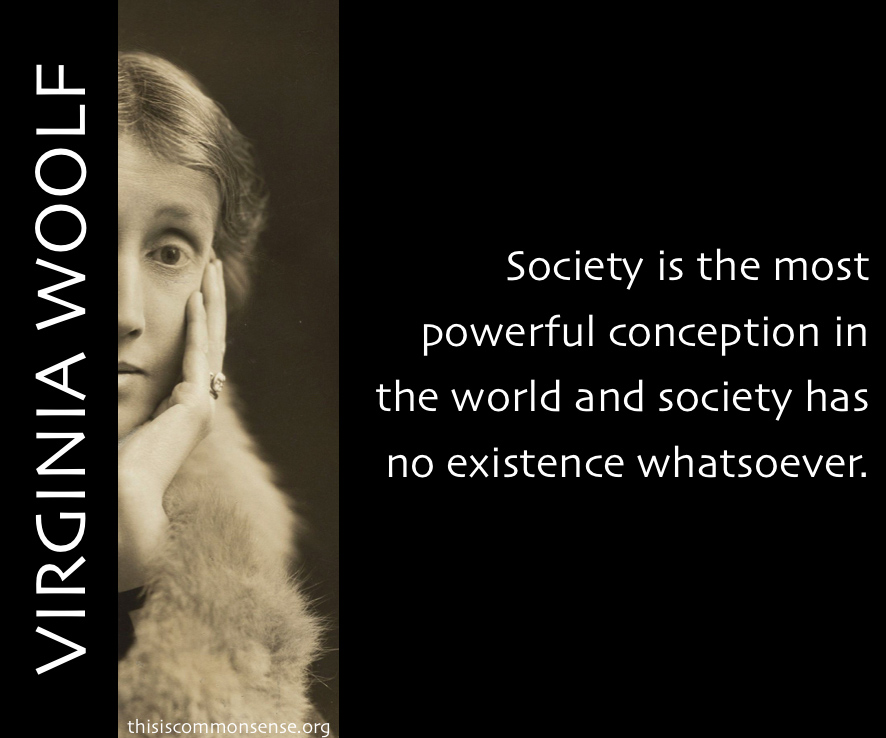
Society is the most powerful conception in the world and society has no existence whatsoever.
Virginia Woolf, Orlando: A Biography (1928).

On January 27, 1973, President Richard Nixon’s Secretary of Defense, Melvin R. Laird, announced an end to the military draft in favor of a system of voluntary enlistment. Since 1973, the United States armed forces have been known as the All-Volunteer Force.
President Donald Trump’s Second Inaugural Address will surely be regarded as a historically consequential speech. One consequence comes from the Speaker of the House: “It is my distinct honor and great privilege to invite President Donald Trump to address a Joint Session of Congress on Tuesday, March 4, 2025, to share his America First vision for our future.”
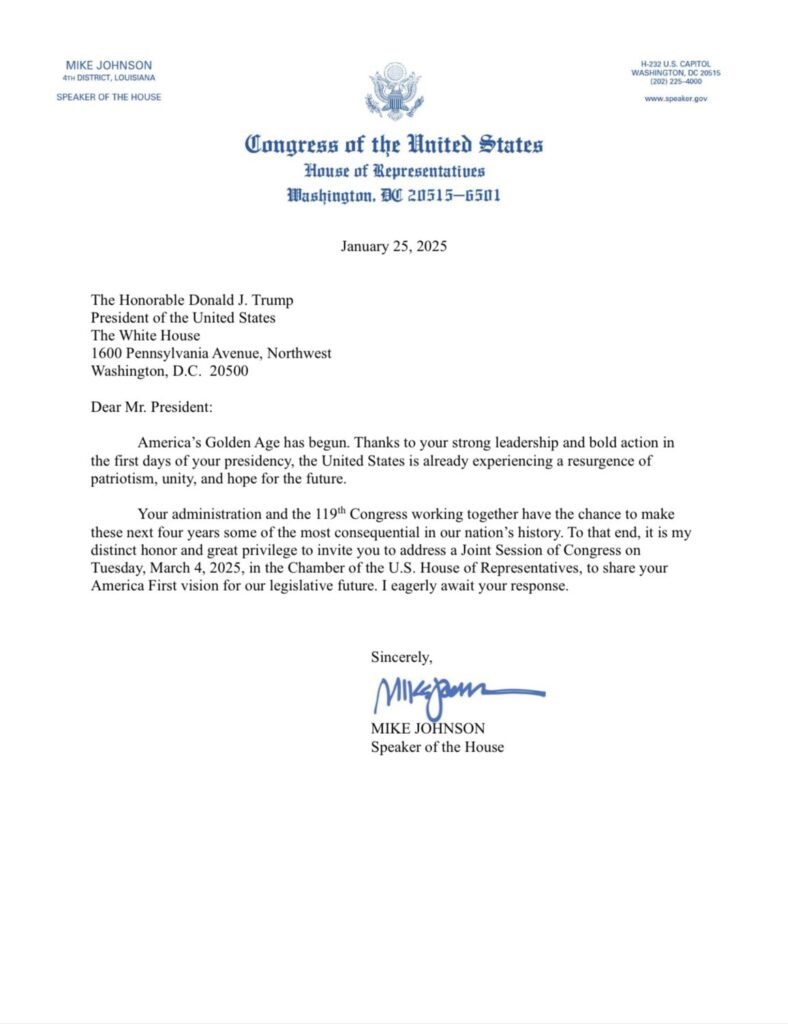
Does this signal an earnest willingness for Congress to work with the new president, or is it merely a formal nicety, the usual blather?
The Epoch Times offered an extended explanation:
The event, though not classified as a State of the Union, follows a tradition since President Ronald Reagan where newly inaugurated presidents deliver speeches that are marked by comparable formality and ceremony. Such speeches are an opportunity for presidents to outline their vision for the nation at the start of their term, and to rally bipartisan support for their agenda.
Reagan’s 1981 address set the tone for this modern custom, focusing on economic recovery and national renewal during a time of economic stagnation and inflation. The priorities Reagan outlined in his speech included the promise of tax cuts, deregulation, as well as measures to curb inflation while encouraging job growth.
Paul Jacob commented on the speech on Tuesday of last week.

Deny human rights, and however little you may wish to do so, you will find yourself abjectly kneeling at the feet of that old-world god, Force — that grimmest and ugliest of gods that men have ever created for themselves out of the lusts of their hearts.
Auberon Herbert, The Voluntaryist Creed, Being the Herbert Spencer Lecture Delivered at Oxford, June 7, 1906, London.

On January 26, 1992, Boris Yeltsin announced that Russia would stop targeting United States cities with nuclear weapons.