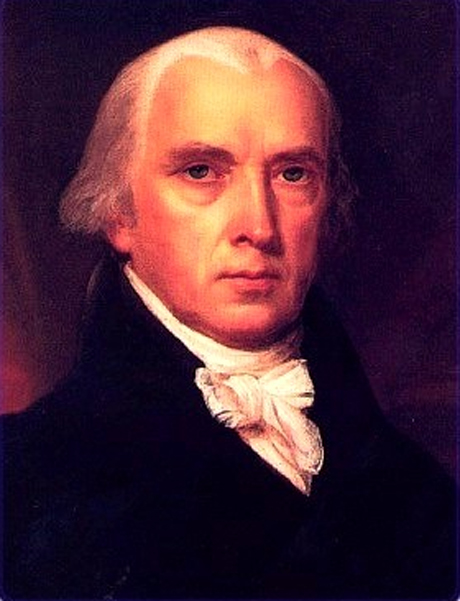
“Character, not circumstances, makes the man.”
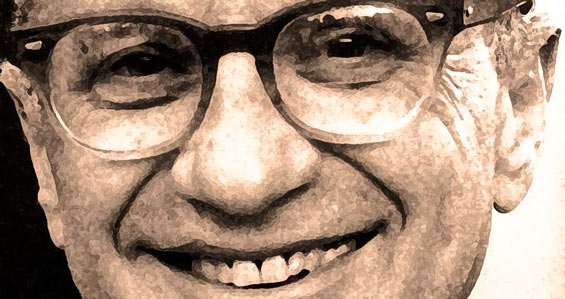
“One man cannot hold another man down in the ditch without remaining down in the ditch with him.”
“Character, not circumstances, makes the man.”
“One man cannot hold another man down in the ditch without remaining down in the ditch with him.”
On April 5, 1792, George Washington exercised the first presidential veto of a congressional bill, a new plan for dividing seats in the House of Representatives, which would have increased the number of seats for northern states. Washington vetoed only one other bill during his two terms in office, an act that would have reduced the number of cavalry units in the army.
On April 5, 1856, Booker T. Washington, American educator, first leader of the Tuskegee Institute in Alabama, author of 14 books, including his autobiography, “Up From Slavery,” was born a slave in southwestern Virginia. Though Washington faced criticism from leaders of the new NAACP, especially W. E. B. Du Bois, for not protesting the lack of civil rights more strongly, he secretly funded litigation for civil rights cases, such as challenges to southern constitutions and laws that disfranchised blacks.
When you hear the word “unprecedented,” reach for your . . . dictionary.
As I’ve noted before, the word no longer sports its traditional meaning.
On Monday, President Barack Obama commented on the possibility that the Supreme Court would strike down the 111th Congress’s Patient Protection and Affordable Care Act by saying that such a move would constitute “an unprecedented, extraordinary step of overturning a law that was passed by a strong majority of a democratically elected Congress.” Yesterday, a three-judge panel of the Fifth Circuit Court of Appeals ordered the Justice Department to clarify the president’s statement. By Thursday.
Does the president — who happens to have taught constitutional law — really think the courts do not have the power to review and disqualify law on the basis of constitutionality?
As reported on CBS News’s Crossroads site, “Overturning a law of course would not be unprecedented — since the Supreme Court since 1803 has asserted the power to strike down laws it interprets as unconstitutional.”
I’d like to take a moment and thank the president . . . for help making the Constitution a live topic of conversation these days. But there’s something worrisome here. The president knows better. This is even worse than, say, Newt Gingrich totally messing up his comments on “activist judges,” making hash of law and interpretation. This is a president with a Harvard-established reputation on the subject saying something patently untrue.
He could only have been “fibbing.” And hoping to get away with it . . . apparently on the supposition that Americans are so miseducated we wouldn’t even notice.
We noticed.
This is Common Sense. I’m Paul Jacob.
“Deep down in our non-violent creed is the conviction there are some things so dear, some things so precious, some things so eternally true, that they’re worth dying for. And if a man happens to be 36-years-old, as I happen to be, and some great truth stands before the door of his life – some great opportunity to stand up for that which is right.
“A man might be afraid his home will get bombed, or he’s afraid that he will lose his job, or he’s afraid that he will get shot, or beat down by state troopers, and he may go on and live until he’s 80. He’s just as dead at 36 as he would be at 80. The cessation of breathing in his life is merely the belated announcement of an earlier death of the spirit.
“A man dies when he refuses to stand up for that which is right. A man dies when he refuses to stand up for justice. A man dies when he refuses to take a stand for that which is true.”
On April 4, 1968, Dr. Martin Luther King Jr. was fatally shot on the balcony outside his second-story room at the Lorraine Motel in Memphis, Tennessee. King was struck in the jaw by a bullet that severed his spinal cord. The 39-year-old civil rights leader was pronounced dead on his arrival at a Memphis hospital. Following the assassination, riots broke out in cities across the country, with National Guard troops called out to quell unrest in Memphis and Washington, D.C.
On April 4, 1975, Microsoft was founded Albuquerque, New Mexico, as a partnership between Bill Gates and Paul Allen.
There’s not much I have in common with Van Jones, the Yale-educated lawyer, community organizer, former advisor to President Barack Obama, author of a new book, Rebuilding the Dream, and self-proclaimed communist. But that doesn’t make him wrong on everything.
Yesterday, as I was fixing lunch and experimenting with political hormesis by watching “Now with Alex Wagner” on MSNBC, I caught a discussion about leftwing frustration with the president.
“We thought we had a movement that was for the people,” Jones said about electing Obama.
“We have the wrong theory of the presidency,” Jones explained. “LBJ did not lead the civil rights movement. . . . You have to have two kinds of leadership, not just one, if you want to change the country. You got to have a head of state who’s willing to be moved, but you have to have a movement willing to do the moving.”
Rolling Stone magazine writer Tim Dickinson told the story of President Franklin Roosevelt, who responded to organized labor’s complaints, by saying, “Make me do it.” Dickinson explained, “He meant: ‘I need you guys to go out and create the conditions that force the government to act.’”
Van Jones has a frightening agenda, but on political strategy, he’s correct.
Remember when conservative activists, led by the late Paul Weyrich, stood up to block Bush from nominating Harriet Myers to the Supreme Court, giving us Justice Samuel Alito, instead?
Those of us fighting for freedom at the grassroots cannot rely on those we elect to do the right thing. We have to make them do it.
This is Common sense. I’m Paul Jacob.
On April 3, 1776, John Hancock, president of the Continental Congress, signed the authorization for privateers to attack British vessels. Lacking sufficient funds for a strong navy, the Congress gave privateers permission to attack any and all British ships.
On April 3, 1968, Martin Luther King spoke at the Mason Temple (Church of God in Christ Headquarters) in Memphis, Tennessee, in what has come to be known as his “I’ve been to the mountaintop” speech. The following day, King was assassinated in the city outside his hotel room.
“Well, I don’t know what will happen now. We’ve got some difficult days ahead. But it doesn’t really matter with me now. Because I’ve been to the mountaintop. I don’t mind. Like anybody, I would like to live a long life; longevity has its place. But I’m not concerned about that now. I just want to do God’s will. And He’s allowed me to go up to the mountain. And I’ve looked over. And I’ve seen the Promised Land. I may not get there with you. But I want you to know tonight, that we, as a people, will get to the Promised Land. So I’m happy, tonight. I’m not worried about anything. I’m not fearing any man. Mine eyes have seen the glory of the coming of the Lord.”
Martin Luther King, Jr., the conclusion of his “Mountaintop” speech (April 3, 1968).
On Apr 2, 1917, Jeannette Rankin took her seat in the U.S. House of Representatives as the first woman ever elected to Congress, representing Montana. Four days later, she would be one of only 50 representatives to vote against U.S. entry into the First World War. In 1941, after the Japanese attack on Pearl Harbor, Rankin would cast the only dissenting vote against the country’s entry into World War II.
The Ron Paul 2012 campaign’s caucus-state delegate strategy, discussed here before, aims to work around the candidate’s biggest hurdle: Republican voters. Though Ron Paul has a strong appeal to the young and to independents — constituencies needed to win against a sitting president — older, mainstream Republicans voters aren’t especially responsive to the maverick’s charms. Concentrating on selecting actual delegates at the caucuses, rather than the media-hyped (and electorally meaningless) straw polls, is a clever strategy.
But what’s good for the goose is great for the gander. A video from Washington State shows a self-proclaimed “mainstream” GOP activist offering caucus participants a slate of 31 delegates allegedly divided up amongst Romney, Santorum and Gingrich supporters, explicitly promoted to make sure that Ron Paulers don’t “take over” the party as they did, to his horror, in the Seattle area.
The Ron Paul supporters touting the video call it “election fraud.” Well, “caucus fraud” might be more to the point, considering that the slate offered was rejected by Rick Santorum’s supporters as a con job. Since then Santorum folks and Paul folks have united. As one Santorum activist put it, “[i]n order for us to win the nomination in Tampa in August, we must deny Romney delegates to that convention. If . . . Romney receives 1,144 delegates before the national convention, it is all over for our campaign. That is the reason why the Senator himself directed us to coalition with the Ron Paul delegates to deny Romney any state delegates.”
Whether as a grand dialogue of ideas or a horse race, this time around the politics is interesting.
This is Common Sense. I’m Paul Jacob.