 To be able to destroy with good conscience, to be able to behave badly and call your bad behavior “righteous indignation” — this is the height of psychological luxury, the most delicious of moral treats.
Categories
To be able to destroy with good conscience, to be able to behave badly and call your bad behavior “righteous indignation” — this is the height of psychological luxury, the most delicious of moral treats.
President Obama is catching flak from pro-capitalist quarters for explaining to businessmen proud of building a business that “you didn’t build that.”
Another sign of federal contempt for the work-for-a-living ethic has received less attention, but is just as revealing. It takes the form of Spanish-language radio “novelas,” produced in 2008, touting food stamps. The USDA recently yanked the novelas from its website after word spread about the brazenness of their something-for-nothing philosophy. (DailyCaller.com, which called attention to the campaign, has links to English translations.)
The episodes suggest that it’s almost impossible to eat healthy meals without relying on food stamps — or, these days, an electronic food-subsidy card — and that even if one’s husband is employed, a dutiful wife and mother would be remiss to refrain from getting government subsidies also.
One episode features two friends pontificating about a third, delinquent Diana. It’s a snap that Diana should take advantage of SNAP (the Supplemental Nutrition Assistance Program). But she keeps saying stupid things about how she doesn’t “need help from anyone.” Diana is “always making up excuses not to apply for SNAP,” laments Claudia.
Oh Diana! Stop making excuses!
It’s quite a suspenseful series, because we are supposed to be on the edge of our seats wondering whether the torpidly recalcitrant Diana will ever learn to be just as dependent on government handouts as all the healthily-eating people. Of course, in the end, Diana has learned her lesson.
Or un-learned one.
This is Common Sense. I’m Paul Jacob.
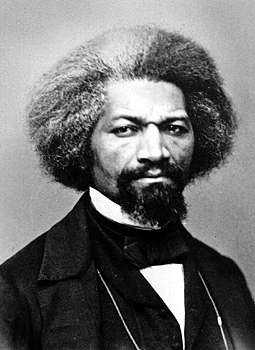 If there is no struggle, there is no progress. Those who profess to favor freedom, and yet depreciate agitation, are men who want crops without plowing up the ground. They want rain without thunder and lightning. They want the ocean without the awful roar of its many waters. This struggle may be a moral one; or it may be a physical one; or it may be both moral and physical; but it must be a struggle. Power concedes nothing without a demand. It never did and it never will.
The masses, the hosts of common men, do not conceive any ideas, sound or unsound. They only choose between the ideologies developed by the intellectual leaders of mankind. But their choice is final and determines the course of events. If they prefer bad doctrines, nothing can prevent disaster.
 The main thing that every political campaign in the United States demonstrates is that the politicians of all parties, despite their superficial enmities, are really members of one great brotherhood. Their principal, and indeed their sole, object is to collar public office, with all the privileges and profits that go therewith. They achieve this collaring by buying votes with other people’s money. No professional politician is ever actually in favor of public economy. It is his implacable enemy, and he knows it. All professional politicians are dedicated wholeheartedly to waste and corruption. They are the enemies of every decent man.
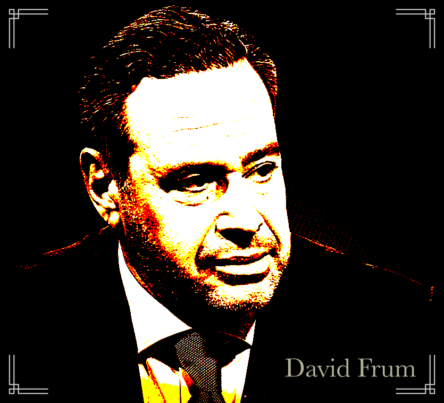
Columnist David Frum appears to be upset about the waning of Milton Friedman’s influence in the conservative movement, his status as Free Market Economist allegedly being replaced by the Austrian-American economist Ludwig von Mises. Historian Tom Woods’s reaction is worth considering:
The taxes with which we are familiar class themselves readily according to the basis on which they rest. 1. Capital. 2. Income. 3. Consumption. These may be considered as commensurate; Consumption being generally equal to Income, and Income the annual profit of Capital. A government may select either of these bases for the establishment of its system of taxation, and so frame it as to reach the faculties of every member of the society, and to draw from him his equal proportion of the public contributions; and, if this be correctly obtained, it is the perfection of the function of taxation. But when once a government has assumed its basis, to select and tax special articles from either of the other classes, is double taxation. For example, if the system be established on the basis of Income, and his just proportion on that scale has been already drawn from every one, to step into the field of Consumption and tax special articles in that, as broadcloth or homespun, wine or whiskey, a coach or a wagon, is doubly taxing the same article. For that portion of Income with which these articles are purchased, having already paid its tax as Income, to pay another tax on the thing it purchased, is paying twice for the same thing; it is an aggrievance on the citizens who use these articles in exoneration of those who do not, contrary to the most sacred of the duties of a government, to do equal and impartial justice to all its citizens.
Thomas Jefferson, note to Destutt de Tracy’s Treatise on Political Economy.
The federal debt is no mystery. It is fed by deficits. “Because the federal government has long been spending more than it takes in tax revenues, we now face a $16 trillion debt, an amount that has grown by $5 trillion in the last four years alone.”
That’s Richard Lorenc and Jonathan Bydlak writing in The Daily Caller. And they are not merely describing a bad situation. They are proposing a solution.
They formed a Coalition to Reduce Spending, and are encouraging citizens and politicians to sign their “Reject the Debt” pledge. The vow has some takers, most notably Ted Cruz, running in a close U.S. Senate race in Texas, with a runoff at the end of the month. Like all who take the pledge, he promises
Other candidates — from Minnesota and North Carolina as well as Texas — have signed on, and more likely will, as the campaign hits the news, gains fame . . . and “notoriety.”
Perhaps unlike the folks I talked about yesterday, supporters of this coalition and its pledge aim at the heart of the problem. So go on: sign the pledge. And press your favorite candidate until he or she does so as well.
After all, there’s a lot at stake.
The idea that politicians can just run up a tab indefinitely, and “feel no pain,” is absurd.
The pain is coming. The only question is: Do we act in advance to forestall some of it, or just let it hit us like a full ton brick-load?
This is Common Sense. I’m Paul Jacob.
Slavery does away with fathers, as it does away with families. Slavery has no use for either fathers or families, and its laws do not recognize their existence in the social arrangements of the plantation.
When the bus you’re in is set to drive off the cliff, what do you do?
Let off the accelerator, stamp on the brakes, steer clear. If the cliff cuts through the road ahead, stop. And turn around.
Unfortunately, though the U.S. is heading directly toward a “fiscal cliff,” half the folks in Washington want to speed up, while the other half think just a little deceleration will do it.
Enter the Committee for a Responsible Federal Budget and its new newly launched project, the Campaign to Fix the Debt. According to this non-partisan outfit, “temporary patches” and “one-year extensions” will not work, not while the federal government amasses “trillion dollar annual deficits” and “borrows 40 cents of every dollar it spends.”
Economist Arnold Kling hazards that an honest debate about deficits and debt is not possible, and that a “bipartisan solution to the deficit has passed its sell-by date.” Further,
the “fiscal cliff” noise will drown out everything else after the election. My definition of “fiscal cliff” is running out of suckers willing to lend to our government at low interest rates. (We are closer to this cliff than you may think — look at how much of the debt the Fed has to buy.) But in Washington-speak, the “fiscal cliff” refers to the thought that the budget deficit might be reduced suddenly next year. Horrors!
My own fear is that this group is, in reality, just a bunch of politicians who will wind up pushing the old, tired mix of tax increases and spending cuts, with the “cuts” swallowed up in the CBO’s baseline annual spending increases.
This is Common Sense. I’m Paul Jacob.
N.B. Stay tuned for tomorrow’s installment, when we look at a new group tackling this problem with greater gusto.