 Follow the money.
Categories
Henry David Thoreau
 The law will never make men free; it is men who have got to make the law free.
 On July 12, 1817, Henry David Thoreau was born. He would go on to become one of the leading figures in America’s Transcendentalist movement, most famously writing Walden: or, Life in the Woods [cabin pictured]. His defense of John Brown deeply affected later interpretations of the raid on Harper’s Ferry, and his “Essay on Civil Disobedience,” protesting the Mexican-American War, has become a classic not only of protest but of political theory.
Are “the people” a problem for technology to solve?
One of the benefits of the Internet has been the increased ease with which citizens can learn about their governments. Just as important has been the increased opportunity to tell elected representatives and public officials, along with their hired guns in federal, state, and local bureaucracies, just what they think.
Technology has given democracy a second lease on life.
But that doesn’t mean that politicians aren’t fighting back. And finding service providers and consultants to help them.
According to Michael Cohen, co-founder of Peak Democracy, Inc., online public comment forums can have awful consequences for politicians. They may fall prey to the dreaded “Referendum Effect.” This malady, Cohen explains, is
the loss of decision-making autonomy that government leaders incur when a community expects decisions to be based solely on the majority opinion of public feedback. More specifically, the Referendum Effect occurs when public feedback usurps the decision-making independence of government leaders.
Note the assumption here: government leaders should be “independent” of the voters.
Another way he counsels the International City/County Management Association “to minimize the Referendum Effect is to exclude the word ‘vote’ from the user interface – as the ‘v-word’ can create an expectation that feedback with the most votes wins.”
Cohen ends with an offer: “To learn more about the Referendum Effect and ways to prevent it, contact Mike@PeakDemocracy.com.”
Cohen is more than willing to advise how to keep pesky citizens from actually having an effective voice online. If you want to keep yours, meet his e-realpolitik with e-vigilance.
This is Common Sense. I’m Paul Jacob.
Note: Robert J. O’Neill, Jr. (roneill@icma.org) is the executive director of the International City/County Management Association, which published Cohen’s comments.
Categories
CARE Wins
Communist dictator Mao Tse Tung was fond of quoting Laozi, who said, “A journey of a thousand miles begins with a single step.”
Dennis Collins is neither a Taoist philosopher nor a dictator. The physician’s assistant, husband and father from Jacksonville, Illinois, is fine with that. “I’m just a private citizen,” says Collins. “I saw something that I thought wasn’t right and needed to be righted and it worked out for us.”
What Collins saw was a ballot referendum that would have raised the sales tax in his county. With his area facing a tough economy and job losses, he didn’t think raising taxes made any sense.
So he took the first step; he called some neighbors and, together, they formed “Morgan County CARE.” CARE stands for Citizens Acting for Responsible Education.
“We knew we were outgunned from the start, but we just did the best we could,” Collins recalls in a video produced by the Illinois Policy Institute.
On a budget of just $3,100 and shoe leather, group members went door-to-door and made countless phone calls. “We went out and gave an honest message,” Collins explains, “and ended up making a change.” They defeated the tax hike.
“When I go to the store and see the sales tax receipt it feels very good,” Collins explains after the victory at the polls. “I’m thinking about the less fortunate and the elderly that are on fixed incomes and knowing they aren’t going to have to struggle any more than they currently are.”
“Individual citizens do need to step up and try to make change,” says Collins. That’s not the voice of a history-making dictator or a philosopher, but a community-protecting American citizen.
This is Common Sense. I’m Paul Jacob.
Categories
Alexander Hamilton
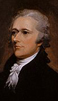 Men are rather reasoning than reasonable animals, for the most part governed by the impulse of passion.
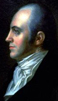 On July 11, 1804, U.S. Vice President Aaron Burr [pictured] shot former Secretary of the Treasury Alexander Hamilton, who died within days. The shooting was a duel of honor in which Burr had challenged Hamilton. But in a sense Burr lost, for Hamilton had left a letter that made him seem almost a martyr. The letter may have been less than veracious, but it was effective, and popular opinion quickly turned on Burr.
On July 11, 1909, mathematician, astronomer, and economist Simon Newcomb died. On this date in 1960, Harper Lee’s classic novel “To Kill a Mockingbird” is published.
July 11 is World Population Day, an event cooked up by the Governing Council of the United Nations Development Programme in 1989. The day may be a propagandistic tool of the international statist elite, but freedom-lovers could celebrate by promoting the anti-Malthusian population writings of Nassau Senior, Herbert Spencer, and Julian Simon.
Categories
Condy Raguet
 Nothing is wanted to overthrow the whole delusion which has been imposed upon the American people as a wise and judicious course of policy, but a dispassionate and unprejudiced examination of its real character, when divested of the false theories upon which it is built.
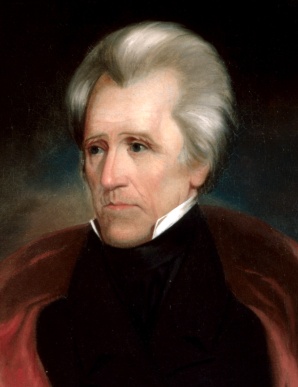 On July 10, 1832, President Andrew Jackson vetoes the Second Bank of the United States, ending central banking in America until the establishment of the Federal Reserve in 1913.
On July 10, 1913, the record for the highest temperature in the United States is set in Death Valley, California, at 134° F. Must’ve been global warming.
Categories
Fair is Fair
President Barack Obama is not targeting the country’s 99 percent against the wealthiest 1 percent. In a news conference, yesterday, he instead singled out the top 2 percent.
Even though they account for 46 percent of all income taxes collected, Obama says members of this group don’t pay their “fair share.” Meanwhile, the bottom 50 percent of income earners pay just 3 percent of income taxes. 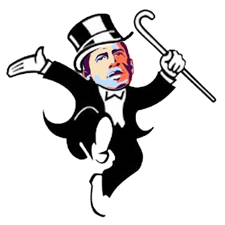
Though the president readily confesses to being in that top two-percent, sadly I’m not. But hey, even if I’m not rich, this country is as much mine as any wealthy person’s. If tax hikes truly are necessary (and this is for the sake of argument — I do not believe they are), shouldn’t I be part of his tax-hike solution to our national deficit and long-term debt?
Even those making less could afford to hand over an extra percent or two of their income for essential government services, eh?
And why leave out the poor? A surcharge of $20 (or $10 or $2.50) a year — even if that’s only removed from their earned income credits or food stamps or welfare payments — would put their “skin in the game.”
We should all be in this together, so why didn’t Obama propose a solution that included sacrifices by everyone?
My guess: It has nothing to do with revenue, everything to do with November’s election.
Obama is asking Congress to extend the Bush tax cuts for everyone making less than $250,000 a year. But he seeks a mere one-year extension.
Why?
My guess is that the over-$100,000 cohort is next on his list.
But he needs their votes, first.
This is Common Sense. I’m Paul Jacob.