 The inefficiency of political control of an economy has been demonstrated more often, in more places, and under more varied conditions, than almost anything outside the realm of pure science.
Categories
The inefficiency of political control of an economy has been demonstrated more often, in more places, and under more varied conditions, than almost anything outside the realm of pure science.
 Liberty, as we all know, cannot flourish in a country that is permanently on a war footing, or even a near war footing. Permanent crisis justifies permanent control of everybody and everything by the agencies of central government.
President Obama often takes credit for President Bush’s worst policies while also averring that the economy hasn’t resurged yet because of his predecessor’s bad policies. I’m happy to blame both of them for the bad policies and bad results.
While campaigning in Ohio recently, Obama said we should pick him in November because he didn’t “let Detroit go bankrupt.”
Financial writer Steve Conover points out that the car-czar idea started with Bush in the frantic last months of his administration. Also that the choice for dealing with troubled auto firms “in 2008-2009 was not bankruptcy versus no bankruptcy [but] between precedent-driven bankruptcy and White House-driven bankruptcy — rule-of-law versus rule-of-czar.”
Not every car company was going bankrupt back then and being “rescued” by the elephantine intercession of the federal government. GM and Chrysler were the special beneficiaries of that galumphing guidance. As were the auto unions at whose behest the usual bankruptcy procedures were bypassed.
Better-managed firms like Ford and Honda had circumvented the abyss. The reward for their hard work and foresight? Government-subsidized competition. Conover’s most basic point is that the only resource that can (and should) “save” any company from failing in the marketplace is “a sufficient number of buying customers.” The auto industry would have continued minus GM and Chrysler. People who wanted to buy cars would simply have bought cars elsewhere — from companies better able to supply their demand. And auto jobs would have moved accordingly.
This is Common Sense. I’m Paul Jacob.
To be able to destroy with good conscience, to be able to behave badly and call your bad behavior “righteous indignation” — this is the height of psychological luxury, the most delicious of moral treats.
President Obama is catching flak from pro-capitalist quarters for explaining to businessmen proud of building a business that “you didn’t build that.”
Another sign of federal contempt for the work-for-a-living ethic has received less attention, but is just as revealing. It takes the form of Spanish-language radio “novelas,” produced in 2008, touting food stamps. The USDA recently yanked the novelas from its website after word spread about the brazenness of their something-for-nothing philosophy. (DailyCaller.com, which called attention to the campaign, has links to English translations.)
The episodes suggest that it’s almost impossible to eat healthy meals without relying on food stamps — or, these days, an electronic food-subsidy card — and that even if one’s husband is employed, a dutiful wife and mother would be remiss to refrain from getting government subsidies also.
One episode features two friends pontificating about a third, delinquent Diana. It’s a snap that Diana should take advantage of SNAP (the Supplemental Nutrition Assistance Program). But she keeps saying stupid things about how she doesn’t “need help from anyone.” Diana is “always making up excuses not to apply for SNAP,” laments Claudia.
Oh Diana! Stop making excuses!
It’s quite a suspenseful series, because we are supposed to be on the edge of our seats wondering whether the torpidly recalcitrant Diana will ever learn to be just as dependent on government handouts as all the healthily-eating people. Of course, in the end, Diana has learned her lesson.
Or un-learned one.
This is Common Sense. I’m Paul Jacob.
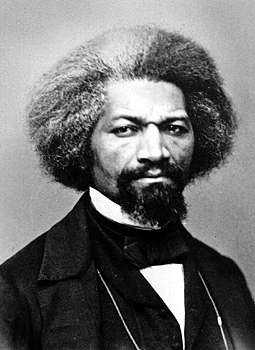 If there is no struggle, there is no progress. Those who profess to favor freedom, and yet depreciate agitation, are men who want crops without plowing up the ground. They want rain without thunder and lightning. They want the ocean without the awful roar of its many waters. This struggle may be a moral one; or it may be a physical one; or it may be both moral and physical; but it must be a struggle. Power concedes nothing without a demand. It never did and it never will.
The masses, the hosts of common men, do not conceive any ideas, sound or unsound. They only choose between the ideologies developed by the intellectual leaders of mankind. But their choice is final and determines the course of events. If they prefer bad doctrines, nothing can prevent disaster.
 The main thing that every political campaign in the United States demonstrates is that the politicians of all parties, despite their superficial enmities, are really members of one great brotherhood. Their principal, and indeed their sole, object is to collar public office, with all the privileges and profits that go therewith. They achieve this collaring by buying votes with other people’s money. No professional politician is ever actually in favor of public economy. It is his implacable enemy, and he knows it. All professional politicians are dedicated wholeheartedly to waste and corruption. They are the enemies of every decent man.
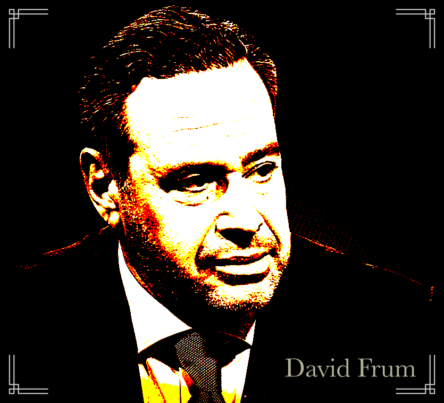
Columnist David Frum appears to be upset about the waning of Milton Friedman’s influence in the conservative movement, his status as Free Market Economist allegedly being replaced by the Austrian-American economist Ludwig von Mises. Historian Tom Woods’s reaction is worth considering:
The taxes with which we are familiar class themselves readily according to the basis on which they rest. 1. Capital. 2. Income. 3. Consumption. These may be considered as commensurate; Consumption being generally equal to Income, and Income the annual profit of Capital. A government may select either of these bases for the establishment of its system of taxation, and so frame it as to reach the faculties of every member of the society, and to draw from him his equal proportion of the public contributions; and, if this be correctly obtained, it is the perfection of the function of taxation. But when once a government has assumed its basis, to select and tax special articles from either of the other classes, is double taxation. For example, if the system be established on the basis of Income, and his just proportion on that scale has been already drawn from every one, to step into the field of Consumption and tax special articles in that, as broadcloth or homespun, wine or whiskey, a coach or a wagon, is doubly taxing the same article. For that portion of Income with which these articles are purchased, having already paid its tax as Income, to pay another tax on the thing it purchased, is paying twice for the same thing; it is an aggrievance on the citizens who use these articles in exoneration of those who do not, contrary to the most sacred of the duties of a government, to do equal and impartial justice to all its citizens.
Thomas Jefferson, note to Destutt de Tracy’s Treatise on Political Economy.