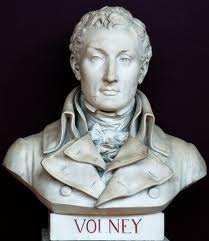
 Politics is like the human body, beautiful when viewed from the outside, but if you open it up and look inside, it’s disgusting.
Categories
Politics is like the human body, beautiful when viewed from the outside, but if you open it up and look inside, it’s disgusting.
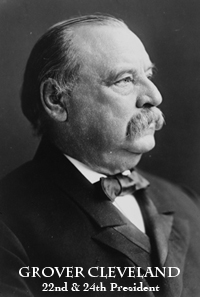 Public officers are the servants and agents of the people, to execute the laws which the people have made.
Sometimes it seems that politicians have set up for us a Looming Financial Doom.
Why would they do that? And how do we avoid it?
Expanding on the subject of Friday’s Common Sense, I try to tackle both questions in this weekend’s Townhall column, “Over the Cliff.”
The column takes a few long quotations from The Washington Post article, and one short quotation from the actual study. Also linked in the column is a Common Sense from some time back, about public employees gaming the public employee pension system. It’s worth noting that the chief problem with the system is that it is badly rigged. But the gaming doesn’t help.
I use the phrase “cordon off” — it is interesting to remember that “cordon” basically means “rope off,” but that “cordon” doesn’t mean “rope.”
For a previous discussion of the metaphor of the “fiscal cliff,” see “Cliff Notes.”
The “tax the rich” mantra “wastes our time and diverts our attention” from real fixes for the fiscal solution. Here’s why:
 Those who seek absolute power, even though they seek it to do what they regard as good, are simply demanding the right to enforce their own version of heaven on earth. And let me remind you, they are the very ones who always create the most hellish tyrannies. Absolute power does corrupt, and those who seek it must be suspect and must be opposed.
When you hear talk about “the fiscal cliff,” ask, “Which one?”
This coming January, if Congress and the president fail to take action, every American who pays income taxes will pay more. Also set to increase? Payroll taxes, which every worker pays.
But even if we can avoid falling off those cliffs, another threatens.
It has been identified by finance professors Robert Novy-Marx at the University of Rochester and Joshua Rauh at the Stanford Graduate School of Business, who summarized their recent research paper, “The Revenue Demands of Public Employee Pension Promises.”
The bottom-line? Looking at the pension commitments state and local governments have already made to public employees, the professors “found that, on average, a tax increase of $1,385 per U.S. household per year would be required, starting immediately and growing with the size of the public sector.”
That’s only the average. “New York taxpayers would need to contribute more than $2,250 per household per year over the next 30 years,” according to their analysis. “In Oregon, the amount is $2,140; in Ohio, it is $2,051; in New Jersey, $2,000.”
Politicians have promised lavish pension benefits. And then not funded them. Plus, employees often outrageously game the system, spiking their benefits to the tune of millions over decades of retirement — like the Illinois teacher’s union lobbyist did by teaching a single day in the classroom.
If we don’t get the problem under control, this cliff keeps getting higher, making, as the professors put it, “the $1,385 per-household increase required today seem cheap.”
This is Common Sense. I’m Paul Jacob.
 If we lose freedom here, there is no place to escape to. This is the last stand on Earth.
A new website, Marijuana Majority, makes an impression by listing famous people who think America’s laws against marijuana are crazy, unjust, or at least not very wise.
The site is elegant; it presents a long list. And by offering statements from each celebrity, we get a few ideas beyond the “marijuana should be legalized [to some degree]” message. Lawrence O’Donnell makes something close to an actual argument:
Since Gallup starting asking Americans if marijuana should be legal back in 1969, most have always said no — until now. In a Gallup poll released yesterday, 50 percent said pot use should be legalized. . . . A minority of 46 percent continue to say marijuana should not be legalized. . . . In a democracy we should expect such a dramatic shift in public opinion to be reflected in our public officials.
Evangelist Pat Robertson offers the practical point, often iterated:
I really believe we should treat marijuana the way we treat beverage alcohol. I’ve never used marijuana and I don’t intend to, but it’s just one of those things that I think: this war on drugs just hasn’t succeeded.
A lot of folks, including British entrepreneur Richard Branson, enthuse about the taxing possibilities:
[I]t’s currently estimated that the annual revenue that would be raised in California if it taxed and regulated the sale of marijuana would be $1,400,000,000!
But this is not primarily a propaganda-by-the-word site, it’s a propaganda-by-the-celebrity site. Alas, the bulk of celebrities hail from the entertainment industry . . . not the most convincing bunch on the whole.
Still, the barrage of support and ideas is impressive, showing you don’t have to be a stoner to want to liberalize marijuana laws.
This is Common Sense. I’m Paul Jacob.
 The pursuit of individual happiness within those limits prescribed by social conditions, is the first requisite to the attainment of the greatest general happiness.
No one can be perfectly free till all are free; no one can be perfectly moral till all are moral; no one can be perfectly happy till all are happy.