Categories
Thought

Thomas Jefferson

The taxes with which we are familiar class themselves readily according to the basis on which they rest. 1. Capital. 2. Income. 3. Consumption. These may be considered as commensurate; Consumption being generally equal to Income, and Income the annual profit of Capital. A government may select either of these bases for the establishment of its system of taxation, and so frame it as to reach the faculties of every member of the society, and to draw from him his equal proportion of the public contributions; and, if this be correctly obtained, it is the perfection of the function of taxation. But when once a government has assumed its basis, to select and tax special articles from either of the other classes, is double taxation. For example, if the system be established on the basis of Income, and his just proportion on that scale has been already drawn from every one, to step into the field of Consumption and tax special articles in that, as broadcloth or homespun, wine or whiskey, a coach or a wagon, is doubly taxing the same article. For that portion of Income with which these articles are purchased, having already paid its tax as Income, to pay another tax on the thing it purchased, is paying twice for the same thing; it is an aggrievance on the citizens who use these articles in exoneration of those who do not, contrary to the most sacred of the duties of a government, to do equal and impartial justice to all its citizens.


Thomas Jefferson, note to Destutt de Tracy’s Treatise on Political Economy.

Categories
national politics & policies too much government

Against Debt

The federal debt is no mystery. It is fed by deficits. “Because the federal government has long been spending more than it takes in tax revenues, we now face a $16 trillion debt, an amount that has grown by $5 trillion in the last four years alone.”

That’s Richard Lorenc and Jonathan Bydlak writing in The Daily Caller. And they are not merely describing a bad situation. They are proposing a solution.

They formed a Coalition to Reduce Spending, and are encouraging citizens and politicians to sign their “Reject the Debt” pledge. The vow has some takers, most notably Ted Cruz, running in a close U.S. Senate race in Texas, with a runoff at the end of the month. Like all who take the pledge, he promises

  • not to vote to raise the debt ceiling;
  • not to borrow more money to pay for spending;
  • to support balanced budgets; and
  • consider all spending fair game for reduction.

Other candidates — from Minnesota and North Carolina as well as Texas — have signed on, and more likely will, as the campaign hits the news, gains fame . . . and “notoriety.”

Perhaps unlike the folks I talked about yesterday, supporters of this coalition and its pledge aim at the heart of the problem. So go on: sign the pledge. And press your favorite candidate until he or she does so as well.

After all, there’s a lot at stake.

The idea that politicians can just run up a tab indefinitely, and “feel no pain,” is absurd.

The pain is coming. The only question is: Do we act in advance to forestall some of it, or just let it hit us like a full ton brick-load?

This is Common Sense. I’m Paul Jacob.

Categories
Thought

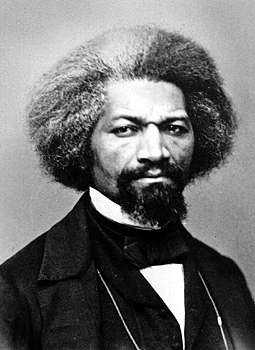
Frederick Douglass

Slavery does away with fathers, as it does away with families. Slavery has no use for either fathers or families, and its laws do not recognize their existence in the social arrangements of the plantation.


Categories
national politics & policies too much government

Cliff Notes

When the bus you’re in is set to drive off the cliff, what do you do?

Let off the accelerator, stamp on the brakes, steer clear. If the cliff cuts through the road ahead, stop. And turn around.

Unfortunately, though the U.S. is heading directly toward a “fiscal cliff,” half the folks in Washington want to speed up, while the other half think just a little deceleration will do it.Beware Dangerous Cliffs

Enter the Committee for a Responsible Federal Budget and its new newly launched project, the Campaign to Fix the Debt. According to this non-partisan outfit, “temporary patches” and “one-year extensions” will not work, not while the federal government amasses “trillion dollar annual deficits” and “borrows 40 cents of every dollar it spends.”

Economist Arnold Kling hazards that an honest debate about deficits and debt is not possible, and that a “bipartisan solution to the deficit has passed its sell-by date.” Further,

the “fiscal cliff” noise will drown out everything else after the election. My definition of “fiscal cliff” is running out of suckers willing to lend to our government at low interest rates. (We are closer to this cliff than you may think — look at how much of the debt the Fed has to buy.) But in Washington-speak, the “fiscal cliff” refers to the thought that the budget deficit might be reduced suddenly next year. Horrors!

My own fear is that this group is, in reality, just a bunch of politicians who will wind up pushing the old, tired mix of tax increases and spending cuts, with the “cuts” swallowed up in the CBO’s baseline annual spending increases.

This is Common Sense. I’m Paul Jacob.

N.B. Stay tuned for tomorrow’s installment, when we look at a new group tackling this problem with greater gusto.

Categories
national politics & policies too much government

Wanting Too Much

An old joke runs something like this:

    “We lose a dollar on every widget sold.”
    “So how do you stay in business?”
    “We make up for it in volume.”

The lesson? Mere numerical productivity is not key to the success of any human enterprise. Adding value is key. Quality counts. And profit.

Tell that to Ezra Klein. He measures Congress by how many laws it makes. The current Congress has made very few laws compared to previous ones — Klein has a very nifty graph of this, see at right — so Klein blasts Congress: “there’s no session of Congress with such a poor record of productivity.”

But it’s not gross-weight productivity that counts. As economist David Henderson perceptively noted, what matters is whether the laws are good or not.

The more laws we’re encumbered with, the less their quality. Or as Cicero once put it: “The more laws, the less justice.”

Laws carry the weight of force, and force is the opposite of freedom, so the more the laws, the less the freedom. Further, it’s almost impossible to manage the huge bulk of the legal code, leading to bureaucratic drudgery both in and out of government, and mismanagement of resources everywhere. At best, we wind up with only piecemeal enforcement, which is itself a temptation for a common sort of tyranny, the prosecution of folks someone in power doesn’t like.

Note that graph. Each session adds to existing law. And unlike spending feeding debt, which is at least somewhat offset by revenues, these laws tend not to be the repeal of old laws. Graph the accumulation of laws, and it goes only one direction.

The wrong direction.

This is Common Sense. I’m Paul Jacob.

Categories
Thought

Frédéric Bastiat

In the department of economy, an act, a habit, an institution, a law, gives birth not only to an effect, but to a series of effects. Of these effects, the first only is immediate; it manifests itself simultaneously with its cause – it is seen. The others unfold in succession – they are not seen: it is well for us, if they are foreseen. Between a good and a bad economist this constitutes the whole difference: the one takes account only of the visible effect; the other takes account of both the effects which are seen and those which it is necessary to foresee. Now this difference is enormous, for it almost always happens that when the immediate consequence is favourable, the ultimate consequences are fatal, and the converse. Hence it follows that the bad economist pursues a small present good, which will be followed by a great evil to come, while the true economist pursues a great good to come, at the risk of a small present evil.

Categories
Thought

Frédéric Bastiat

When plunder becomes a way of life for a group of men in a society, over the course of time they create for themselves a legal system that authorizes it and a moral code that glorifies it.

Categories
crime and punishment national politics & policies too much government

Programs for Peace

Mayor Cory Booker of Newark, New Jersey, calls himself a “social media enthusiast,” and recently engaged Reddit.com’s public, for whom he clarified his stance on drug prohibition:Cory Booker

The so called War on Drugs has not succeeded in making significant reductions in drug use, drug arrests or violence. We are pouring huge amounts of our public resources into this current effort that are bleeding our public treasury and unnecessarily undermining human potential. I see the BILLIONS AND BILLIONS of dollars being poured into the criminal justice system here in New Jersey and it represents big overgrown government at its worst.

Yes. Recreational drug prohibition has been and continues to be a horrifying example of “big overgrown government at its worst.”

My only qualm comes with the good mayor’s next sentence:

We should be investing dollars in programs and strategies that work not just to lower crime but work to empower lives.

The biggest reduction in crime would come from ceasing to criminalize peaceful behavior; the biggest relief from the drug war’s horrific consequences would be the war’s cessation itself. People “empower” their own lives, through peaceful work and family life. Are more programs really necessary? Wouldn’t individual freedom and personal responsibility be enough?

We don’t need “big overgrown government at its best.” We need streamlined, accountable government . . . that protects all peaceful folk. That would be far better. “Bestest.”

This is Common Sense. I’m Paul Jacob.

Categories
national politics & policies too much government

EPA Won’t Stop Polluting

The Environmental Protection Agency is one of the country’s most dangerous polluters, striving to blanket our economic life in a suffocating ideological miasma.

The EPA’s poisonous ruling that carbon dioxide — “a colorless, odorless, non-toxic gas” — constitutes a “threat” to public health and the environment has been endorsed by the Obama administration and now the U.S. Court of Appeals in DC. If it is never rescinded, economic growth will suffer. Representative democracy will also suffer, given how Congress has been bypassed here.EPA, polluting

Just FYI, we’d be dead ducks without carbon dioxide. The notion that carbon dioxide is a pollutant must flabbergast all plants, which blithely use carbon dioxide as a critical component in photosynthesis, thereby making all carbon-based animal and human life possible. (Damn you, plants!)

Unproven assumptions regarding the extent to which industrial activity adds to greenhouse gases like carbon dioxide — even the extent to which the planet has warmed and will warm further, or to what extent any variation in average global temperature is even a special problem, let alone a catastrophic one — lie at the hemorrhaging heart of EPA’s hubris.

EPA officials suppose that they can smartly operate a globe-wide climate machine by increasing the expense or reducing the supplies of the fossil fuels that we use to warm our homes, drive our cars, operate our assembly lines. No, bureaucrats can’t centrally plan the earth’s atmosphere. But they sure can make it harder for people to survive and prosper.

This is Common Sense. I’m Paul Jacob.

Categories
Thought

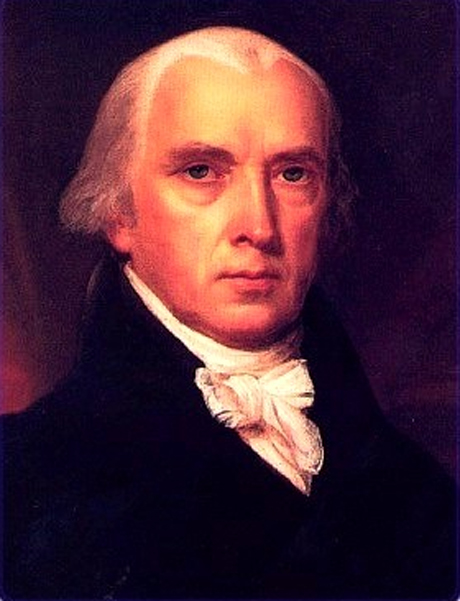
James Madison

Religion & Govt. will both exist in greater purity, the less they are mixed together.