Categories
free trade & free markets national politics & policies too much government

Banker Away

Republican candidate for the U.S. Presidency Mitt Romney has received some flak for keeping some of his vast hoard of wealth in foreign accounts. Though I have a few problems with Mr. Romney, this isn’t one of them. Folks with savings and investments should diversify. Anyone with large amounts of money should consider diversifying beyond our borderlines.

And not just for “tax avoidance” reasons, either.

For one thing, as nice and generous as our politicians are, the U.S. isn’t exactly stable and business-friendly. That used to be the U.S. It may not be, any longer.

Take Peter Schiff’s new endeavor. The redoubtable Schiff, an investment expert perhaps best known for having predicted the 2008 mortgage crisis and the severity of the current recession, has started a gold bank, Euro Pacific Bank Ltd., which will back deposits with gold. The actual yellow stuff.

Its most interesting innovation will be its offer of a “gold debit card,” for use worldwide. Peter Wenzel calls this idea “awesome,” but then notes the downside:

U.S. security laws have become so intrusive, burdensome, and expensive to comply with, that it made it difficult for Schiff to offer the services in the U.S. So, Schiff opened his bank offshore, in St. Vincent and the Grenadines. It operates outside the jurisdiction of U.S. security regulations, and does not accept accounts from American citizens or residents.

America’s place in the world is changing. And not for the better.

This is Common Sense. I’m Paul Jacob.
Categories
Thought

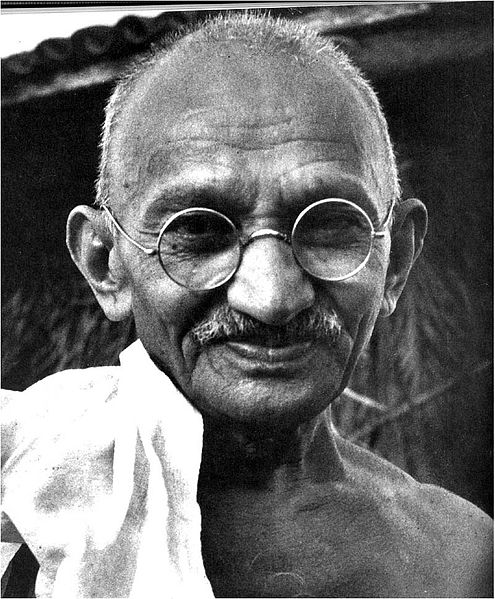
Mohandas Karamchand Gandhi

If one has no affection for a person or a system, one should feel free to give the fullest expression to his disaffection so long as he does not contemplate, promote, or incite violence.

Categories
Thought

Francis Hutcheson

The ultimate notion of right is that which tends to the universal good; and when one’s acting in a certain manner has this tendency he has a right thus to act.

Categories
ideological culture

The Left Discriminates

The political “left” dominates a number of institutions, including, most famously, Hollywood entertainment and up-market journalism. But perhaps even more striking is the heavily “liberal-progressive” bent observed in many academic fields, particularly in the humanities and social sciences, far in excess of the leftist percentage in America at large.

And this certainly deserves an explanation.

Could it be the result of bias and discrimination?

It’s long been fun to listen to academics defend their heavily leftist cut of the higher ed pie using arguments that have nothing to do with bias. Why “fun”? Because similar arguments trotted out in other fields receive nothing but scorn from academics.

Now there’s a study showing that social psychologists, at least, self-admit to an anti-conservative bias in grading papers, awarding grant proposals, inviting symposium speakers, and accepting job applicants. And here’s the kicker: “The more liberal the survey respondents identified as being, the more likely they were to say that they would discriminate.”

Those who are already sharpening their ad hominem retorts should note that the study was not conducted by folks on “the right.” Co-author Yoel Inbar described himself to Inside Higher Ed as “‘a pretty doctrinaire liberal,’ who volunteered for the Obama campaign in 2008 and who votes Democrat. His co-author, Joris Lammers of Tilburg, is to Inbar’s left, he said.”

The most interesting aspect of bias uncovered in the study, however, is that interviewed academics estimated that their colleagues were twice as likely as themselves to discriminate on ideological grounds.

The “other guy” is always worse than oneself.

Which is where bias and prejudice begin, perhaps.

This is Common Sense. I’m Paul Jacob.

Categories
free trade & free markets national politics & policies too much government

A Fraudulent Pill to Swallow

If you’re like me, you often rub up against common opinion and find little sense in it — or, as I like to put it, popular opinion with the common sense bled out of it.

On Monday I reported on an anti-Obamacare lawsuit against the federal government for mandating the purchase of medical insurance that included “free” contraceptive drugs (including “morning after pills”). I took on the obvious problems, but neglected to mention that it’s not insurance.

I guess you can call turnips “rainbows” and politicians “angels,” but, based on accepted meanings of terms, it is not “insurance” when benefits include regular maintenance or common preventive (“prophylactic”) products.

One doesn’t insure against dandruff by buying a policy that provides you with “free” shampoo or against sunburn by purchasing a policy that offers free SPF50 sunscreen. One doesn’t insure against obesity with insurance that provides “free” healthy foods according to This Diet or That Diet.

For instance, it would be absurd to have an insurance policy to pay for one’s vitamins.

In a sense, the vitamins are the insurance. Think of them as a separate, medicinal form of insurance, which you pay for at purchase.

Same for contraception.

One buys insurance for unexpected and irregular needs. Calling Obamacare’s “contraception benefit” mandate “insurance” is a fib.

Much of what we think of as insurance actually amounts to confused (and confusing) methods of savings (at best) or a confidence game to get some people to pay for the regular goods and services other folks use (at worst). By force and fraud.

The force is the government mandate. The fraud is calling this whole program “insurance.”

This is Common Sense. I’m Paul Jacob.

Categories
Thought

Mohandas Karamchand Gandhi

A man is but the product of his thoughts. What he thinks, he becomes.

Categories
government transparency

Hidden Taxpayer Treasure

If I found $54 million I didn’t know I had, I’d be ecstatic. Yet, when California taxpayers discovered $54 million stuck in secret state parks system bank accounts, they were miffed.

California parks, constrained by the state’s multi-year budget crunch, were facing closure. Meanwhile, these funds went unreported to the Department of Finance. Ruth Coleman, who has led the parks system for the last decade, resigned. Her second-in-command was fired.

A spokesperson for California’s finance department admitted that, historically, the department had relied upon “accurate and correct accounting being reported to us by the relevant departments.” The San Jose Mercury News called it, “The little-known practice of trusting — and not verifying . . .”

Seems there are 500 “special funds” accounting for supposedly $37 billion about which California’s Department of Finance doesn’t have any real clue.

Jonathan Coupal, president of the Howard Jarvis Taxpayers Association, says this is hardly “an isolated incident,” and points out that it must be piled “on top of the High Speed Rail fiasco, pay hikes for legislative employees, having to pay $34 million in penalties for overdue bills, raids on special funds to pay for Legislative malfeasance, etc.”

Meanwhile, Governor Jerry Brown continues to push a tax increase. One of his arguments for the tax hike has been that parks were being closed due to the budget crunch — er, well, rather, due to state officials hiding $54 million dollars.

The Governor’s tax initiative is in trouble. Coupal notes that fiscally prudent Californians have defeated the last eight tax increases on the ballot.

This is Common Sense. I’m Paul Jacob.

Categories
Thought

F. Byrdsall

The great object of a constitution is, to prevent the officers of government from assuming powers incompatible with the natural rights of man; and it is certain that our present constitution does not accomplish this paramount design. If the powers of public agents under it are distinctly limited and clearly defined, why should their political principles be a matter of such solicitude at elections? If the constitution contains a plain guarantee of the rights of the people, whence the necessity of pledging legislators not to violate those rights? The plain truth is, that constitutions in these United States have been constructed in the spirit of compromise. . . .

Categories
First Amendment rights Ninth Amendment rights too much government

The First Isn’t Enough

The First Amendment isn’t enough.

Because its provisions have stronger teeth than most other amendments in the Bill of Rights, it gets put into service quite a lot, to bolster other freedoms. It’s a pity there’s no general “right to freedom” — or even “freedom of contract” — amendment.

A Western Pennsylvania Christian higher education outfit, Geneva College, joined by Seneca Hardware Lumber Co. in Cranberry, has sued the federal government over the new “Obamacare” requirement to provide morning-after “contraception” to employees, saying that the provision violates their religious freedom. The Justice Department argues that the case should be thrown out, on grounds that public entities like the college and the lumber company do not possess the legal right to “impose” their religious values on others.

As noted at reason.com, this is a weird misreading of the crucial negative right/positive right distinction: Under the “negative right” to freedom, an employer not providing a benefit to employees imposes nothing. Quite literally. The imposition lies entirely with the government forcing its way into contracts between businesses and employees.

One could construe a positive right to contraception, I guess, but that positive right would also be an imposition. “Imposition” belongs to the language of positive rights.

The government’s lawyers also object to the hardware company seeking sanctuary (so to speak) in the First Amendment to oppose the contraception mandate. If just anyone can appeal to the First Amendment’s freedom of religious exercise clause, then the government could hardly enforce conformity.

Well, yes.

That’s the idea of limited government. The problem, today, is that we citizens don’t have enough legal oomph to protect ourselves (either as employers or employees) from the federal government’s vast overreach.

This is Common Sense. I’m Paul Jacob.

Categories
Thought

Equal Rights Party, 1837

Government is but an agent to exercise such powers as are expressly delegated to it by the people.