As the president yammers on about making the rich “pay their fair share,” behind the scenes his administration has suggested reducing corporate tax rates by seven points. Meanwhile, Obama’s main challenger, Mitt Romney, promised a full ten point rate cut, if elected.
Why? By international standards, American corporate taxes are obviously way too high.
The U.S. effective tax rate on new corporate investment sits at 35.6 percent today, which, write Duanjie Chen and Jack Mintz for the Cato Institute, “is almost twice the average rate for the 90 countries” the duo studied, in “Corporate Tax Competitiveness Rankings for 2012.”
The U.S. has higher corporate tax rates than France.
And India, Colombia, Brazil, Japan, Venezuela, Korea, Russia, Costa Rica, you name it. This is not something we want to be No. 1 at.
Well, at least Argentina, Chad and Uzbekistan tax at even higher rates.
There’s no consolation in others’ folly, though.
The authors look northward, to Canada, which, since 2000, made some huge adjustments downward on tax rates affecting businesses: 15 percent cuts in federal statutory tax rates, eliminating most capital taxes, removing sales taxes on capital goods, and scaling back on special preferences that tend to make taxation such a mess there as well as here. And all the while revenues from these taxes have remained stable per GDP.
Could we get lower corporate taxes, here? Well, this is not an area where those on the left can enviously eye their beloved European social democracies to make their usual, tedious case for higher taxes. Norway’s rates are ten percent lower than ours, and Sweden’s, Denmark’s and Finland’s are lower yet.
This is Common Sense. I’m Paul Jacob.
 Liberality consists less in giving profusely, than in giving judiciously.
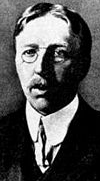 Only two classes of books are of universal appeal: the very best and the very worst.
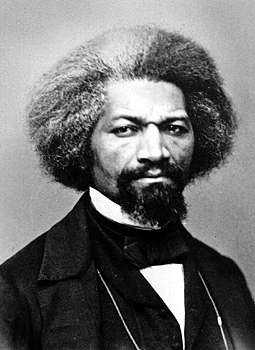 I prefer to be true to myself, even at the hazard of incurring the ridicule of others, rather than to be false, and incur my own abhorrence. From my earliest recollection, I date the entertainment of a deep conviction that slavery would not always be able to hold me within its foul embrace; and in the darkest hours of my career in slavery, this living word of faith and spirit of hope departed not from me, but remained like ministering angels to cheer me through the gloom. This good spirit was from God, and to him I offer thanksgiving and praise.
 Force is no remedy.
 I believe that the harm which Mill has done to the world by the passage in his book on Political Economy in which he favours the principle of Protection in young communities, has outweighed all the good which may have been caused by his other writings.