Categories
term limits

No a la Reelección

Her name is Cristina Fernández de Kirchner, and she’s Argentina’s president. She is apparently chafing under the country’s presidential term limits.

The last time I wrote about Mrs. Kirchner, five years ago, I had some advice: “Don’t cheer for Cristina, Argentina.” Thankfully, the Argentines aren’t cheering. In Beunos Aires, “Throngs of people banged pots and pans Thursday, as they protested government policies in Argentina,” relates a CNN report:

The massive march was the latest in a series of “cacerolazos,” protests named for the cooking pots participants hit to draw attention to problems they say are growing in the South American nation, including crime rates, inflation and political corruption.

Many demonstrators said a key issue drove them to the streets: the possibility that President Cristina Fernandez de Kirchner could push through changes to the country’s constitution and run for re-election.

Term limits. The people want them, and if the signs at the protest rallies are any indication, Argentines are against “Corrupcion,” oppose Kirchner’s “Reelección,” and are for “Libertad.”

And here in the putative Land of Liberty, a Miami, Florida, neighborhood known as Little Buenos Aires heard pots and pans clanging, too, as marchers expressed sympathy with friends and relatives in the Southern Hemisphere: “We are not afraid” and “We don’t want a communist Argentina.”

The full story of the protests, which have been going on since June, echo some of the issues and criticisms that were pushed for and charged against both Tea Party and Occupier protests in past years here in America. There’s talk of secret partisanship, even “astro-turf.”

But fear of dynastic rule isn’t confined to any party, or require any special organization.

For Argentines, I wish only the best: “Libertad.”

This is Common Sense. I’m Paul Jacob.

P.S. I will be in Buenos Aires later today — this evening, actually — and if I find anything to modify or amplify this story, you can be sure I’ll do so at thisiscommonsense.com.

Categories
crime and punishment

When It’s Smart to Play Dumb

In 1993, I was in Russia to witness Boris Yeltsin’s first referendums, which was perhaps the high point of Russian democracy.

Along with the sweep of history, I also remember boarding a midnight train from Moscow to St. Petersburg and being accosted by some kind of Russian gendarme. This fellow berated me in words none of which I understood. I could tell he wanted something from me (money, probably). So I stood there looking bewildered and playing dumb — my specialty — until the guy finally lapsed into frustrated silence and I could walk away. Another Russian later told me that it was indeed a shakedown attempt.

The incident came to mind when I heard about a recent attempted robbery down in Tampa. Three masked thugs spilled into a Chinese restaurant and demanded the contents of the cash register. According to a brief report, the trio “left empty-handed after the restaurant workers who only spoke Cantonese couldn’t understand what the English-speaking suspects were saying.” At one point, a gun went off when the would-be robbers banged the cash register with it.

The report states that the “botched robbery” was caused by a “failure to understand English.” Well, maybe the workers knew little English. But they knew what the robbers wanted. The workers played dumb. More basically, they refused to cooperate.

Risky. I’m not saying you should try this at home. But sometimes being too dumb to be victimized is the smartest thing you can do.

This is Common Sense. I’m Paul Jacob.

Categories
initiative, referendum, and recall video

On the Road in South America, Part One

This week Paul Jacob is traveling down south — way down south. Here he reports from the Lima, Peru, airport, explaining what he’s up to:

If all goes according to plan, he’ll report a few more times while in South America, and after.

You can view this video in HD, here.

Categories
Thought

G.K. Chesterton

Bigotry may be called the appalling frenzy of the indifferent. This frenzy of the indifferent is in truth a terrible thing; it has made all monstrous and widely pervading persecutions. In this degree it was not the people who cared who ever persecuted; the people who cared were not sufficiently numerous. It was the people who did not care who filled the world with fire and oppression. It was the hands of the indifferent that lit the faggots; it was the hands of the indifferent that turned the rack. There have come some persecutions out of the pain of a passionate certainty; but these produced, not bigotry, but fanaticism — a very different and a somewhat admirable thing. Bigotry in the main has always been the pervading omnipotence of those who do not care crushing out those who care in darkness and blood.



Categories
Thought

G.K. Chesterton

The oligarchic character of the modern English commonwealth does not rest, like many oligarchies, on the cruelty of the rich to the poor. It does not even rest on the kindness of the rich to the poor. It rests on the perennial and unfailing kindness of the poor to the rich.

Categories
initiative, referendum, and recall Tenth Amendment federalism U.S. Constitution

Put Federalism In Your Pipe

Though centralized power, coalescing in Washington, D.C., has increased in recent years as a bipartisan effort to grow government, it’s worth noting that true federalism is not dead.

Take one of America’s longest-running atrocities, the “War on Drugs.” The American people are rebelling, leaving their political representatives, state and national, in the back seat. The recently successful marijuana legalization initiatives in Colorado and Washington State are already taking effect, thus marking a major retreat in the once-popular, now increasingly hopeless war.

Last Friday, The Seattle Times reported that King County has dismissed 175 cases involving people over 21 and possession of one ounce of cannabis or less. “Although the effective date of I-502 is not until December 6, there is no point in continuing to seek criminal penalties for conduct that will be legal next month,” explained the county prosecutor.

A smaller number were dismissed in Pierce County, with its prosecutor saying that, “as a practical matter, I don’t think you could sell a simple marijuana case to a jury after this initiative passed.”

In Colorado, a major drug task force has been disbanded. The excuse is lack of funds, but I suspect that Colorado officials had read the writing on the wall, and it wasn’t “Mene, Mene, Tekel, u-Pharsin” — it was the wording of Colorado’s Initiative 64.

The federales don’t have the manpower to enforce federal law in the 50 states, or the constitutional authority to dictate state enforcement of either federal law much less the nature of state criminal laws.

Courtesy of the citizen initiative, we could be seeing the next major devolution of power away from the nation’s capital.

This is Common Sense. I’m Paul Jacob.

Categories
free trade & free markets too much government

The Kindness of Bureaucrats

When the local government of Washington, D.C., says, “Don’t worry” — people worry.

Matthew Marcou, deputy associate director of the District of Columbia’s Department of Transportation’s Public Space Regulation Administration, told those ruled by his long-worded administrative agency — the people working the city’s many food trucks, which feed lunch to a great number of Washingtonians and tourists on sidewalks every day — not to worry.

Just because the wording of a new sidewalk regulation would shut down eight of the city’s ten most popular food trucks doesn’t mean the good folks at the Public Space Regulation Administration couldn’t simply — almost magically — grant a waiver.

Be happy.

Still, there are the malcontents, the businesspeople who want some sort of certainty about the rules controlling their enterprise. The Washington Post reports that “Owners of food trucks . . . are put off by a still-unknown process that relies on the kindness of bureaucrats to keep their businesses alive.”

Che Ruddell-Tabisola is the D.C. Food Truck Association’s executive director and also a co-owner of the BBQ Bus. “[W]hy would you put forward regulations that are only successful when you make an exception to the rule?” asked Che.

The word “regulate” comes from the word “regular”; the goal of regulation being to make things regular. Therefore, regulations that require significant use of waivers fail. They aren’t rules at all. They constitute, instead, a labyrinth of economically suffocating and graft-inducing red tape.

This is Common Sense. I’m Paul Jacob.

Categories
Thought

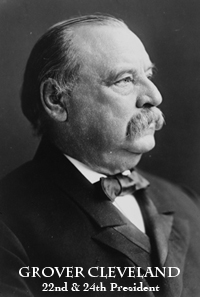
Grover Cleveland

A government for the people must depend for its success on the intelligence, the morality, the justice, and the interest of the people themselves.

Categories
links

Townhall: Dale Carnegie, Where Are You?

This weekend on Townhall, a suggestion to Republicans: what not to do! Click over to Townhall and then come back here for references and further reading:

Categories
video

Video: One-World Schoolhouse

Fascinating discussion of education on the Internet:

Compare and contrast with this recent audio podcast: EconTalk’s “Kling on Education and the Internet.”