The main controversy over the current administration’s drone strikes program has not been about committing acts of war without a declaration of war.
It has not been about committing acts of war within the boundaries of allied countries.
It has not been about killing innocents.
And it has certainly not been about the reliability of information that gets to the president’s desk that might cause him to order a drone strike.
No, the controversy has centered on the killing American citizens abroad with drone strikes. Some people favor it, since the main American targets are “traitors” and “terrorists.” But many others balk: Without a trial, how do we determine their guilt?
The usual response to that? “This is war!”
But no war has been declared. And, ahem, our side often blows up people far away from any battlefield and in allied territory . . . including a 16-year old American citizen killed in Yemen for being related to his father, Anwar al-Awlaki.
This, however, is just the tip of the enormity. The language from the folks in the administration suggests that borderlines mean nothing to them. Which raises a big question: “What about within our borders?”
The administration has been evasive.
This disturbs Sen. Rand Paul. “What I’m asking is about drone strikes on Americans, on American soil. The president will not answer that he cannot do this. In fact, he seems to be asserting that he can do this; all he’ll say is he doesn’t intend to do this.”
Sending drones to kill foreigners, innocents as well as enemies, on allied soil, in secret, without any method of accountability, is the behavior of a rogue nation. To claim the same power on our own soil? That’s tyrannical.
This is Common Sense. I’m Paul Jacob.
 Philosophical argument, trying to get someone to believe something whether he wants to believe it or not, is not, I have held, a nice way to behave towards someone; also it does not fit the original motivation for studying or entering philosophy. That motivation is puzzlement, curiousity, a desire to understand, not a desire to produce uniformity of belief. Most people do not want to become thought-police. The philosophical goal of explanation rather than proof not only is morally better, it is more in accord with one’s philosophical motivation.
 American astronomer and celebrity Neil deGrasse Tyson
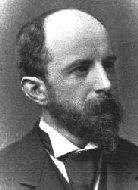 On February 16, 1838, Henry Adams was born. One of the long line of Adamses, grandson of John Quincy Adams, Henry became a world-famous historian and critic of American politics. He also wrote several novels, including the classic, “Democracy.”