The place of minor parties — challenger parties — in American politics needs to be rethought.
Last weekend I wrote one of my regular columns for Townhall.com. I considered what the Libertarian Party challenge means to limited-government folks in the Republican Party. Unfortunately, while I was told they would be publishing that column, it has still not been.
That’s a first. I’ve been writing a regular column, finalizing it every Saturday (minus one or two vacations) since late 2003. And even when I’ve criticized conservatives, the good folks at Townhall have been kind enough published my words. This time, well, maybe it’s a horrible column. You tell me. Click on over to the column at my archive on this Common Sense site, and then come back here and give me your opinion.
Now, I understand that this is a somewhat controversial issue.
Voting, after all, is a tricky business, with one’s choices very limited. Voting for the lesser of evils might (a) prevent an awful lot of extra evil, or (b) endorse, as a self-fulfilling prophecy, an outcome that guarantees (at least some degree of) malevolence.
Since I believe most of us when we cast our ballot are making the best choices we can to protect ourselves from an oppressive government, I’m not quick to find fault — either with those voting against the worst evil or those opting for the candidate best representing their principles, regardless of the chance to win.
But I do find fault in the attitude that says folks are foolish if they don’t vote for a candidate with whom they have major disagreements, your preferred candidate, instead of a candidate they enthusiastically endorse, because they should despise the other guy even more. If Republicans want Libertarian, or small-l libertarian votes, they’ll have to actually earn them.
“I get that libertarianism is not Republicanism,” writes Carrie Sheffield at Forbes. “But in a two-party, winner-take-all system (for better or worse, that’s just the reality), it begs the question why someone committed to a small-government philosophy would knowingly generate a big-government winner.”
But aren’t those who nominate a Republican candidate unable to win the libertarian votes needed to prevail in the election just as culpable in generating “a big-government winner” as the libertarians who decline to vote for that GOP candidate?
And certainly my suggestion, late in my column, shows a way around the problem. The problem, as it is right now, is that “the best” (the Libertarian Party? — yes, for some of us) serves as the enemy of the “good” (or at least “better than the Democrat”). By altering the manner in which we cast and count ballots — whether IRV or proportional representation, or something similar — the best will not work against the “good enough.”
It seems like an idea whose time has come.
This is especially droll since the mathematician who first spotted the problem, French philosopher Condorcet, did so before the drawing up of the Constitution of the United States. Perhaps its time for a revolution in our heads, or a new rethink of democracy. You know, to make it more, not less democratic; more, not less, republican.
This is Common Sense. I’m Paul Jacob.
And these links provide some additional food for thought:
 The jury has the right to judge both the law as well as the fact in controversy.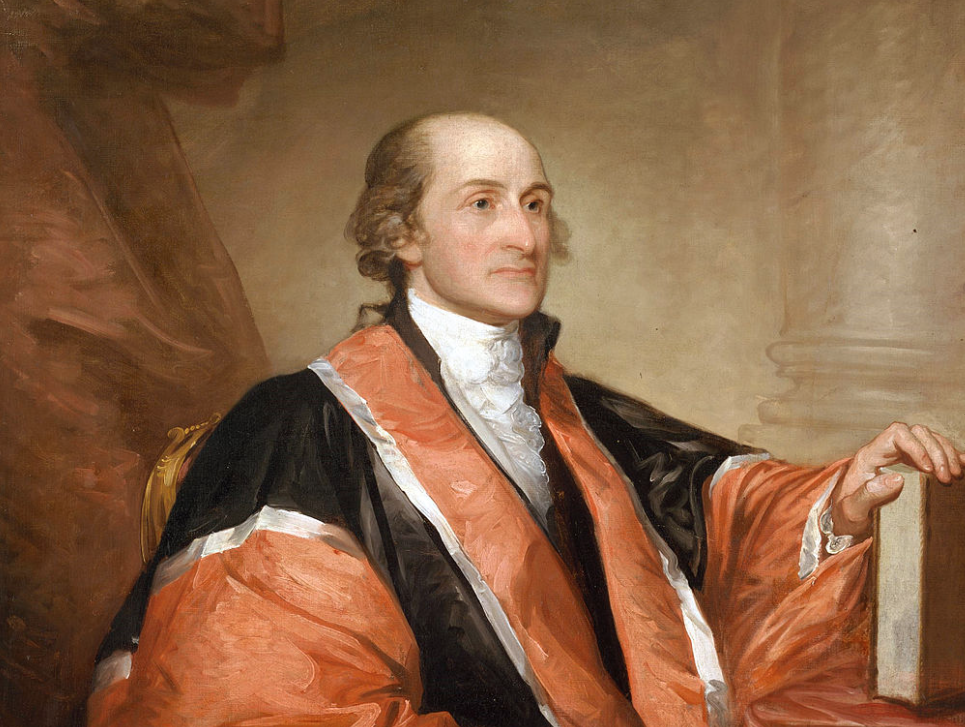

 On December 11, 1957, American cartoonist and Reason magazine contributor Peter Bagge was born.