 The capitalist distribution network, a complex chain of factory, transport, warehouse and retail outlet, is one of the greatest male accomplishments in the history of culture.
Categories
The capitalist distribution network, a complex chain of factory, transport, warehouse and retail outlet, is one of the greatest male accomplishments in the history of culture.
This is a little demonstration/experiment pertaining to a currently celebrated cause.
Not everybody is amused by Schiff’s stunt. But not everybody sees it as pointless, either.
On December 21, 1826, American settlers in Nacogdoches, Mexican Texas, declared their independence, starting the Fredonian Rebellion.
 On December 20, 1740, Arthur Lee — Revolutionary Era diplomat, spy, and Virginia delegate to the Continental Congress — was born. He practiced law in London from 1770 to 1776, where he wrote polemics against slavery and in defense of the American colonies’ resistance to the Townshend acts and other tyrannical British policies. He was brother to Richard Henry Lee and Francis Lightfoot Lee.
Modern liberalism suffers unresolved contradictions. It exalts individualism and freedom and, on its radical wing, condemns social orders as oppressive. On the other hand, it expects governments to provide materially for all, a feat manageable only by an expansion of authority and a swollen bureaucracy. In other words, liberalism defines government as tyrant father but demands it behave as nurturant mother.
The pitches aired in service of Obamacare have descended from the twee and lightly vulgar to worse than disastrously kitschy and outrageously camp.
The latest example is not the pajama boy icon for Obamacare, a young man wearing a onesie and demonstrating all the manliness of Peter Pan. Of that, Nick Gillespie agrees, it’s egregious: “For many — arguably most — Americans, this guy is hipster douchitude on a cracker.” But, Gillespie reminds me, I’m not the campaign’s audience. Young single women are.
Hmmm?
No, the nadir of fawning, in-groupy appeal went much further in a video advertisement concocted, we are told, for the LGBT community. You have to see it to believe it — or better yet, just take my word for it. The first minute is jaw-droppingly silly; the second goes beyond tasteless.
Its propaganda value? Dubious. I would not be surprised to discover that this was made as a parody, for comic purposes alone.
But I think I know enough about camp — the theory of which I’ll leave to Camille Paglia — to not be surprised that someone, somewhere, might actually think it a good way to reach the LGBT community.
Folks often complain about advertising. Well, the pandering, lip-smacking vulgarity of “capitalist realism” has now come to the welfare state — even if at the hands of folks not directly connected to government. But to those in the know, let me confess: what gets my goat the most is its frank promotion of “assistance to help you pay.”
With the singer making the most vulgar gesture of all, a show-me-the-money shot.
This is Common Sense. I’m Paul Jacob.
 Judgment comes from experience, and experience comes from bad judgment.
Politicians always talk about how hard they work for us.
Of course, not even the most recent tumblers off the proverbial turnip truck believe them. Politicians don’t work so hard, first of all, and certainly not with the idea of putting what “We, the People” want ahead of what “They, the Politicians” want.
This is true across party lines. Republican New Jersey Governor Chris Christie is under fire and two high-level appointees have resigned over allegations that they closed two highway access lanes from Fort Lee, New Jersey, over the George Washington Bridge into New York City, causing a massive traffic jam just to punish the town’s mayor for not endorsing Christie in the election.
Working hard for the people or turning the screws of government for one’s own benefit?
Meanwhile, a new report by the Administrative Conference of the United States (ACUS), an independent federal agency, finds that the Obama White House “systematically delayed enacting a series of rules on the environment, worker safety and health care to prevent them from becoming points of contention before the 2012 election.”
ACUS also determined that delays in issuing regulations “under Obama went well beyond those of his predecessors” and were caused by “concerns about the agencies issuing costly or controversial rules prior to the November 2012 election.”
Notice that the Obama Administration wasn’t willing to permanently shelve any rules as too burdensome. The only concern? Delaying the pain they intended to inflict on folks until after the election, when voters would have less effective means for expressing their disapproval.
Hardly working for the people; working hard for themselves.
This is Common Sense. I’m Paul Jacob.
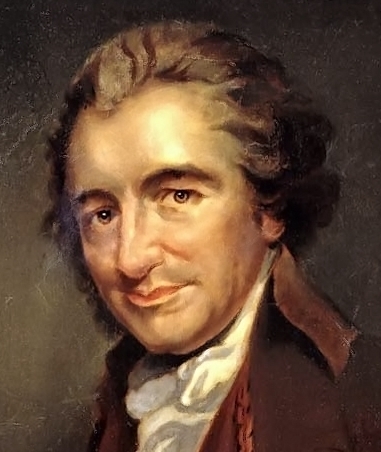 On December 19, 1776, Tom Paine published one of a series of pamphlets in the Pennsylvania Journal titled The American Crisis. Exactly one year later, George Washington’s Continental Army went into winter quarters at Valley Forge, Pennsylvania.
On December 19, 1828, Vice President of the United States John C. Calhoun penned the South Carolina Exposition and Protest, protesting the Tariff of 1828, a key moment in what became known as the Nullification Crisis.
Is non-compliance the answer?
I recently discussed how sheriffs in Colorado and elsewhere are refusing to cooperate with oppressive new laws, in their case farcical gun-control laws. Can we find similar inspiration in other fields?
Yes. Consider the medical industry.
Despite the Supreme Court decision okaying some of Obamacare’s key unconstitutional assaults on commerce, judicial battles over the new law are still being fought. More to our point, many doctors scheduled to be manacled by Obamacare have been refusing to slap on the cuffs.
A survey by the New York State Medical Society finds that 44 percent of respondents won’t work with Obamacare clients; another third are unsure what they’ll do. The doctors perceive the chaos and uncertainty of the new regulations and expect low fees.
Dr. Sam Unterricht, president of the Society, says, “This is so poorly designed that a lot of doctors are afraid to participate.” Others are participating only because obliged by organizations that employ them. Perhaps those doctors loath to becoming cogs in the galumphing Obamacare bureaucracy will find ways to extricate themselves from their organizations. Maybe they will emulate the respondent who says that from now on he will accept only cash for his services.
Another survey respondent says: “The solution is simple: Just say no.”
Are these non-cooperating docs motivated by fear of Obamacare’s destructive impact? Or are they moved mainly by uneasiness about the color of ink at their bottom line? Or, just possibly, are they expressing principled concern for their rights and freedom?
All of these, I hope.
Whatever the case, though, they’re following the right prescription.
This is Common Sense. I’m Paul Jacob.