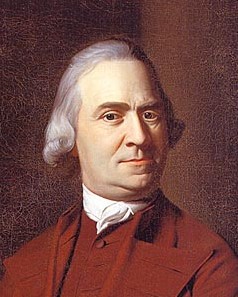
 Our contest is not only whether we ourselves shall be free, but whether there shall be left to mankind an asylum on earth for civil and religious liberty.
Categories
Our contest is not only whether we ourselves shall be free, but whether there shall be left to mankind an asylum on earth for civil and religious liberty.
On December 29, 1911, Mongolia gained independence from the Qing Dynasty.
Selling Obamacare turns out to be not as easy as its devisers thought. The folks at PJ Media have some thoughts:
Among the natural rights . . . are these: first, the right to life; secondly, to liberty; thirdly, to property; together with the right to support and defend them in the best manner they can. Those are evident branches of, rather than deductions from, the duty of self-preservation, commonly called the first law of nature.
On December 28, 1832, John C. Calhoun resigned as Vice President of the United States, the first to do so.
Mankind are governed more by their feelings than by reason.
Why so many things are made in China, or Taiwan, Singapore . . . or Mexico?
I have no beef with foreign trade, mind you. Just as I don’t want government to favor one business over another here in the U.S., I don’t really want that to happen across borders, either. I know what comparative advantage means.
But one reason we rely so heavily on imports is that we don’t have a free market in the states. Too much regulation favors some businesses at the expense of others.
Tesla Motors is trying to sell its cars direct to the public. But, in most states if not all, the market for automobiles is heavily regulated. Direct, factory sales are prohibited by law. Why? To protect dealerships.
So, after the Ohio legislature failed to make a special deal to keep Tesla’s electric car out of the state, a number of special interest groups, including Midwestern Auto Group and Ricart Automotive Group, have sued Tesla, the Ohio Department of Public Safety, and the Ohio Bureau of Motor Vehicles. The idea is to get Tesla’s license to sell cars in the state revoked.
Forget competition and the innovation it brings. Instead, businesses conspire with governments to keep out upstarts, competitors. You know, the innovators.
Tesla’s electric sportscar may be way out of my price range, but it would be interesting to see an electric car actually make a go of it. I hope the suit fails, and we get to see whether Tesla can make it on the open market.
This is Common Sense. I’m Paul Jacob.
On December 27, 1657, a group of English citizens in Flushing, New York, who were not themselves Quakers, signed a petition protesting the persecution of Quakers, a document that has become known as the Flushing Remonstrance. An eloquent statement of the principle of religious liberty, it is widely regarded as a forerunner to the U.S. Constitution’s First Amendment.
The petition was delivered to Director-General of New Netherlands, Peter Stuyvesant.
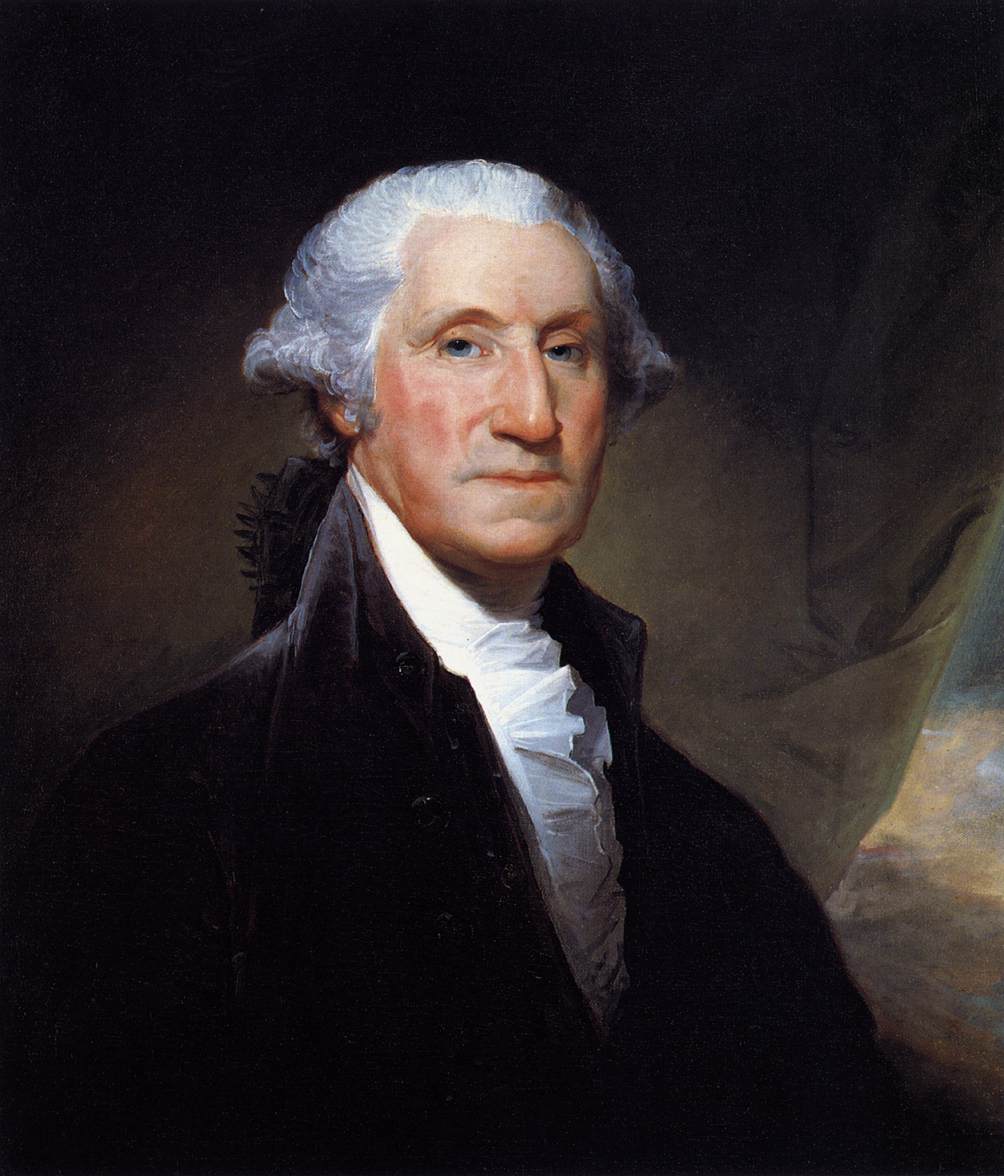 On December 26, 1799, four thousand people attended George Washington’s funeral where Henry Lee III honored him as “first in war, first in peace and first in the hearts of his countrymen.”
The Decembrist revolt againt Tsar Nicholas I occurred on the 26th of December in 1825. It was, alas, put down. Later revolts would prove less liberty-minded, more communist, and more bloody-minded.
“Colorado’s ski resorts and mountain towns are bracing for an influx of tourists,” writes Trevor Hughes in USA Today, “seeking a now-legal Rocky Mountain high.”
Recreational marijuana legalization worries some “police and ski area operators,” Hughes explains. Marijuana tours have been set up by some enterprising folks, and the locals worry “that tourists who don’t understand the rules will be sparking up on the slopes.”
Or in their cars.
Or on the sidewalks.
One sheriff clarified: “We do have this misperception . . . where people have smoked in public, been charged, and were under the perception that it’s a free-for-all.”
An over-reaction to what appears to be an end to the war on drugs? A lack of awareness that all sorts of things get regulated at the local level?
Or perhaps a few people don’t really understand the nature of liberty.
Liberty — freedom for all — isn’t a free-for-all!
That is, the freedom that we all can have isn’t a “do anything you want/anywhere you want/any time you want” deal. The freedom we can all have is a freedom from initiated force, from intrusive coercion, from interference with our persons and our property.
“Free speech” doesn’t mean you can barge into my home and shout in my face. “Freedom of association” doesn’t mean the Skeptic Society can hold a conference in a Christian Science Reading Room, or the Klan can march through the campus of Howard University. “Free Exercise of Religion” doesn’t mean you will be allowed to hold a candlelight vigil in a fireworks factory.
There’s a logic to liberty. Most Americans get that. Even most tourists.
This worry should should vanish like a puff of smoke.
This is Common Sense. I’m Paul Jacob.