On January 26, 1992, Boris Yeltsin announced that Russia would stop targeting United States cities with nuclear weapons.
Categories
On January 26, 1992, Boris Yeltsin announced that Russia would stop targeting United States cities with nuclear weapons.
Equality. We’re all equal, even if we’re all different. So maybe harping on real-world inequality is not to the point of justice, eh? Click on over to Townhall, then back here for some further linkages of ideas:
The Citizens United decision is still talked about, blogged about, whined about. Maybe it should be understood, first:
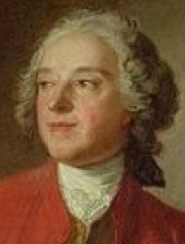 On January 24, 1732, French playwright, watchmaker, inventor, musician, diplomat, fugitive, spy, publisher, horticulturalist, arms dealer, satirist, financier, and revolutionary (both French and American) Pierre-Augustin Caron de Beaumarchais was born. He proved instrumental in securing armaments for the America Revolution, but remains best known for his three “Figaro” plays, Le Barbier de Séville, Le Mariage de Figaro, and La Mère coupable.
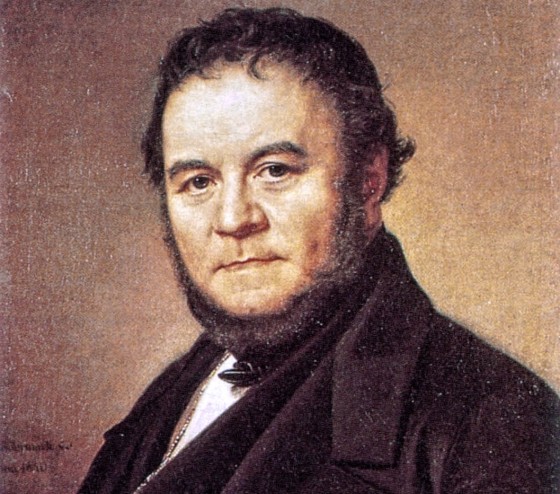
The shepherd always tries to persuade the sheep that their interests and his own are the same.
U.S. Senator Tom Coburn would easily win a third term in 2016, if he chose to run. But just as he stepped down from the U.S. House after three terms, after having pledged to do, so he is stepping down after winning two terms in the U.S. Senate.
Coburn had affirmed his commitment to serve no more than two terms before winning re-election in 2010. But now he has announced that he is leaving at the end of 2014, two years early.
He was recently diagnosed with prostate cancer, but says “this decision isn’t about my health, my prognosis or even my hopes and desires. My commitment to the people of Oklahoma has always been that I would serve no more than two terms. Our founders saw public service and politics as a calling rather than a career. That’s how I saw it when I first ran for office in 1994, and that’s how I still see it today. I believe it’s important to live under the laws I helped write, and even those I fought hard to block.”
Expect to hear from Tom Coburn after he leaves office. A prominent former office-holder can easily exert influence on public policy debate if that is what he wants to do. And Coburn rightly observes that many Americans “with real-world experience and good judgment” can fill either his shoes directly in Washington, or make their voices heard in other ways.
This is Common Sense. I’m Paul Jacob.
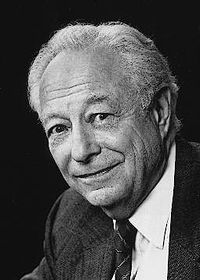 In comparison to the French Revolution, the American Revolution has come to seem a parochial and rather dull event. This, despite the fact that the American Revolution was successful–realizing the purposes of the revolutionaries and establishing a durable political regime–while the French Revolution was a resounding failure, devouring its own children and leading to an imperial despotism, followed by an eventual restoration of the monarchy.
Whatever one makes of the direction Egypt is headed, the most ominous headline I’ve seen, recently, is the one that is ostensibly optimistic: “Egypt: 98.1% of voters approve constitution.”
That was in USA Today.
It is not, of course, believable.
What do more than 98 percent of America’s voters agree on?
Transplant that radical supermajority to Egypt, where politics is often deadly, a coup recently took out the biggest faction — and with it, the previous working constitution — and where the major faction is associated with terrorism and street violence, and we are to expect a consensus like this?
The title defeats itself, undermines itself.
It might as well have said, “This Title Is a Lie,” except without the paradox.
Then again, with only 38.6 percent of voters going to the polls, that 98.1 figure takes on a new meaning. Could it be that, of 38.6 percent of eligible voters actually voting, the ones who did show up were nearly unanimous in their support of the new regime?
More likely, but still not likely at all.
Revolutionary politics is an ugly business. And what we are to make of what’s really happening in Egypt is beyond my ken. I just know that 98.1 percent of Egyptian voters do not approve of the constitution.
But if this kind of nonsense gets reported with a straight face in America, it should make us more circumspect about the other information we receive about conflicts overseas.
I’m 98.1 percent confident of that opinion. At least.
This is Common Sense. I’m Paul Jacob.
A magazine profile of President Barack Obama has set the commentariat a-talking.
On racism, the president says that “some” folks hate him because he’s black; and others support him because he’s black.
Wow. What was obvious in 2008 seems . . . painfully obvious now.
Similarly, the prez ’fessed up (again) to his past marijuana use — and his long-term tobacco habit. He uttered the word “vice.” He noted that marijuana doesn’t seem any more harmful than alcohol . . . which implies that the prohibition of marijuana makes less sense than the once-prohibited but now-legal hootch.
A reasonable opinion. Held, before President O’s pronouncement, by a clear majority of the public . . . not as radical, but as obvious.
So why make such a big deal about these statements? Because of previous taboos? It’s not as if Obama took leadership on any of these ideas, moving them from “horrors!-false” to “blah-true.”
Years ago, the movie Bulworth featured Warren Beatty as a senator who, all the sudden, started blurting out things he believed to be true, but which were not usually said in public. It was a comedy. (Your tastes and appraisals may vary.) The prez comes off as nowhere near as outrageous (or straightforward) as the Beatty character, though he, too, has rapped in public.
But perhaps we grade on a curve. A president speaking obvious truths is memorable not because the truths are daring, but because of the novelty: a politician has deigned to acknowledge truth.
File the brouhaha under O, not for Obama but for Obvious.
This is Common Sense. I’m Paul Jacob.
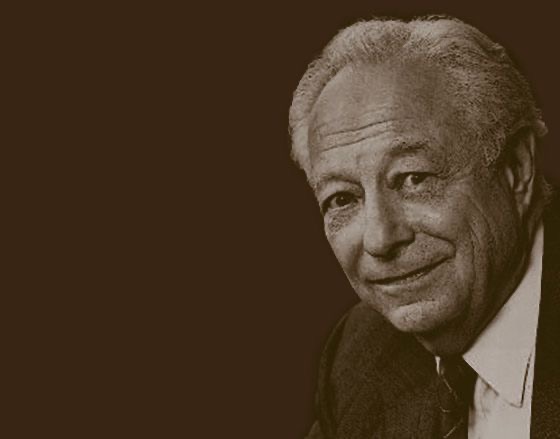
On January 22, 1920, American pundit and author Irving Kristol was born.