Let’s celebrate longevity. But should we specifically cheer one solitary person holding a seat of power for 60 years? Or rejoice over a single family maintaining a vise grip on a political position for a whopping 81 cycles around the Sun?
And . . . should that federal office continue to be filled by hereditary succession via the advantages of incumbency?
For 100 years? More?
Rep. John Dingell (D-Mich.), 87, just announced his retirement after occupying a congressional perch for 59 years, the longest in history. He won a special election back in 1955, when the seat’s previous occupant, his father, passed away.
This “master legislator,” as an always-objective Washington Post news story called him, stated he was leaving because Congress had become “obnoxious.”
Trust me, we feel your pain, Mr. Dingell.
The Natural Resources Defense Council’s David Goldston told the New York Times that the “truly distressing thing” about Dingell and several multi-decade career politicians departing Congress “is that they’re the ones who know how to negotiate, know how to legislate, know how to get things done.”
Really? Then, why didn’t he help prevent the nation from sinking 5,600 percent deeper into debt, from $318 billion to almost $18 trillion during those last six decades?
Deadline Detroit notes that in response to praise from “fellow politicians, friends and media outlets . . . online commentators are having a field day ripping Dingell, his legacy, and even his wife, Debbie, who is widely expected to replace him.”
It turns out that Mrs. Dingell, occupation lobbyist, has indeed officially announced she will run for her husband’s seat, obnoxious as it no doubt is.
Can America survive a century of rule by Dingells?
This is Common Sense. I’m Paul Jacob.

 In the economy, an act, a habit, an institution, a law, gives birth not only to an effect, but to a series of effects. Of these effects, the first only is immediate; it manifests itself simultaneously with its cause—it is seen. The others unfold in succession—they are not seen: it is well for us if they are foreseen. Between a good and a bad economist this constitutes the whole difference—the one takes account of the visible effect; the other takes account both of the effects which are seen and also of those which it is necessary to foresee.
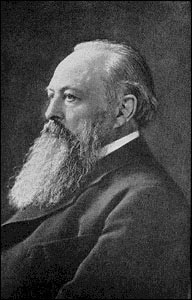 After the fourth century the declarations against slavery are earnest and continual. And in a theological but yet pregnant sense, divines of the second century insist on liberty, and divines of the fourth century on equality. There was one essential and inevitable transformation in politics. Popular governments had existed, and also mixed and federal governments, but there had been no limited government, no State the circumference of whose authority had been defined by a force external to its own.
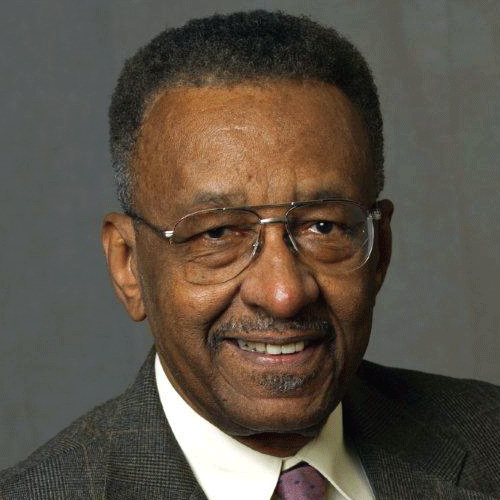 A right, such as a right to free speech, imposes no obligation on another, except that of non-interference. The so-called right to health care, food or housing, whether a person can afford it or not, is something entirely different; it does impose an obligation on another. If one person has a right to something he didn’t produce, simultaneously and of necessity it means that some other person does not have right to something he did produce. That’s because, since there’s no Santa Claus or Tooth Fairy, in order for government to give one American a dollar, it must, through intimidation, threats and coercion, confiscate that dollar from some other American.