Why do politicians do what they do? Droll considerations of the popular Netflix show:
Categories
Why do politicians do what they do? Droll considerations of the popular Netflix show:
On March 21, 1921, the Soviet Union’s Bolshevik Party implemented the New Economic Policy (NEP) in response to the economic failure of War Communism.
Economist Ludwig von Mises and many other observers would go on to note that this slight liberalization of socialist policy — the re-introduction of money, for example — was a frank admission of the inability of bureaucrats and politicians to run an industrial economy from a central board. That is, in a socialist commonwealth, it is impossible to calculate and plan for the needs of society.
Vladimir Lenin called the NEP “state capitalism.”
Who was the first woman to receive an Electoral College vote?
Not the one you are probably thinking of — Geraldine Anne Ferraro (1935-2011).
The answer is: Theodora Nathan, listed on the ballots of Colorado and Washington State in 1972 as Tonie Nathan. She ran as the first Vice Presidential candidate for the fledgling Libertarian Party. She didn’t receive many votes — the party had barely been formed. But she got that one Electoral College vote because a Virginia state elector, Roger MacBride, was so disgusted by President Nixon and his wage and price controls (everybody has a tipping point) that he went renegade.

I bring this up because of sad news: Tonie Nathan died yesterday, age 91.
I knew her, having served with her on the Libertarian National Committee back in the 1980s. (See a recent picture of her, with former party chair Alicia Clark and me, at the 2012 Libertarian National Convention.) Tonie was a dynamo: sharp, kind, hard-working, organized, a people person committed to making a difference.
Her run to unseat Senator Bob Packwood (R-Oregon) in 1980 was memorable for the three televised debates with her major party opponents. In the first of them, all the major papers dubbed her the winner, one of which headlined her as having “skewered” her opponents.
Odd fact: She received eleven times more votes in her senatorial race than in her “nationwide” campaign.
I’ve noticed fewer debates with Libertarian candidates in them, since. I think it might be the result of fear of a Nathanesque “skewering.”
Her place in history should be more widely acknowledged.
This is Common Sense. I’m Paul Jacob.
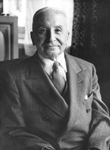 It is paradoxical indeed that the economic order that forces the most eminent individuals to serve the welfare of the masses of ordinary people is decried as a system in which the common man is “exploited” and “sinks deeper and deeper.” While the average manual worker enjoys in the capitalistic countries amenities of which the well-to-do of ages gone by did not even dream, the most successful and most popular ideology of our age, Marxism, is based upon the doctrine that the laboring masses are being impoverished more and more.
The chief characteristic of the capitalistic system is precisely that it leaves for the most eminent individuals only one avenue open to deriving greatest advantage from their intellectual and moral superiority, viz., to minister to the best of their abilities to the well-being of the masses of less endowed fellow men. The captains of industry vie with one another in endeavors to supply the much talked-about common man with ever better and cheaper goods. An enterprise can .grow into bigness only by serving the many. Capitalism is essentially mass production for the satisfaction of the wants of the masses.
Harriet Beecher Stowe’s novel “Uncle Tom’s Cabin” was published on March 20, 1952. Exactly two years later the Republican Party was organized in Ripon, Wisconsin.
Why is New Jersey Governor Chris Christie against profit?
You expect such an idea from a leftist. The big man is no leftist.
Christie’s anti-profit bias came up within a long, rambling answer to the subject of a recent bill in the New Jersey legislature to decriminalize possession of small amounts of marijuana. He’s against it. But he’s been for “medical” marijuana. Ed Krayewski of Reason quotes the governor, who insists that legal cannabis distribution “be a hospital-based program, that way the profit motive is drained out a lot from it.”
I get his logic. He doesn’t want recreational use, but realizes there are legitimate medical uses. To allow the latter but discourage the former, he wants to monopolize the sale of the drug.
It’s the old “monopoly” idea leveraged to discourage over-use. Post-Prohibition, many states set up liquor control boards and sold liquor in state-owned or state-franchised stores. My state, Virginia, still does. They raised prices on the product, and made it harder to get. More monopoly, higher cost, less product.
But turn the subject on its head.
We want medicine to be cheaper. More accessible and more efficiently delivered.
So why do states limit the setting up of hospitals with hospital boards? Why the prescription system? Why, even, medical licensing? After all, quality controls can be imposed other ways.
Modern medicine has been subjected to monopolistic practices and cartelizing regulations for years. Decades. A century.
Such intervention limits supply and availability, and increases costs.
I suspect that Gov. Christie hasn’t really thought his position all the way through.
(He might be high on government.)
This is Common Sense. I’m Paul Jacob.
How do you topple a regime?
John Adams said that the American Revolution was effected in “the hearts and minds of the people” before a single shot was fired. But there are many ways to influence hearts and minds in the run-up to a revolution.
In the Romania of the 1980s, one means was the dubbing of bootlegged foreign movies. It was a one-woman job: Margareta Nistor’s. She dubbed thousands of films, making hers the best-known voice in the country.
In a New York Times article and video, “VHS vs. Communism,” Romanian documentary maker Ilinca Calugareanu recalls her childhood under a Communist regime “that, among countless repressions, reduced television to two hours a day of dull propaganda” and other bland, censored fare. But one day, her parents borrowed a VCR and played Hollywood movies all night long. It was “like walking into a secret, magical and free world.”
The female voice translating the dialogue was always the same.
After the 1989 revolution that led to the demise of dictator Nicolae Ceaușescu, Calugareanu learned about Margareta Nistor. Once a translator for state television — which carefully repressed any hints that life was better in the West — Nistor had then teamed up with a “mysterious entrepreneur” who was smuggling in foreign movies.
For many Romanians, the movies provided a lifeline. Their forbidden, exotic glimpses into another way of life helped them both to escape the all-controlling regime and to resist it.
This is Common Sense. I’m Paul Jacob.
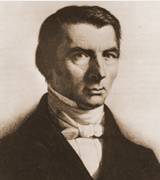 Competition is only the absence of constraint. In what concerns my own interest, I desire to choose for myself, not that another should choose for me, or in spite of me—that is all. And if anyone pretends to substitute his judgment for mine in what concerns me, I should ask to substitute mine for his in what concerns him. What guarantee have we that things would go on better in this way? It is evident that Competition is Liberty.
On March 19, 1918, the U.S. Congress established time zones and approved daylight saving time. Arguably the first is a classic example of beneficial legislation under the Constitution, and the second a classic over-step.
Two years later the U.S. Senate rejected, for the second time, the Treaty of Versailles.
March 19, 1979, was the first day the United States House of Representatives began broadcasting its day-to-day business via the cable television network C-SPAN.
This day marks the 423rd anniversary of the birth of William Bradford, English settler in the New World, politician, and chronicler of his people’s struggles.