Francis Hutcheson, philosopher of the Scottish Enlightenment and a great influence on David Hume and Adam Smith, was born in Ireland on August 8, 1694. He died on his birthday in 1746.
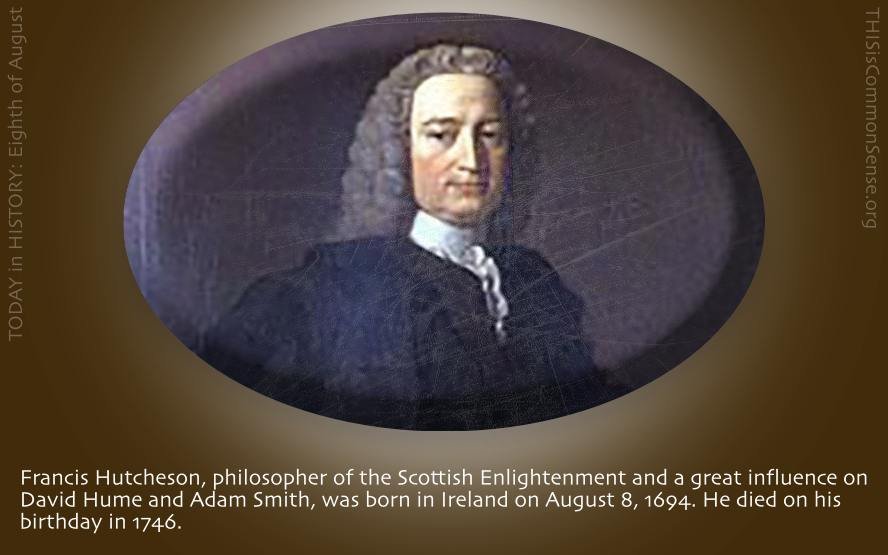
Francis Hutcheson, philosopher of the Scottish Enlightenment and a great influence on David Hume and Adam Smith, was born in Ireland on August 8, 1694. He died on his birthday in 1746.
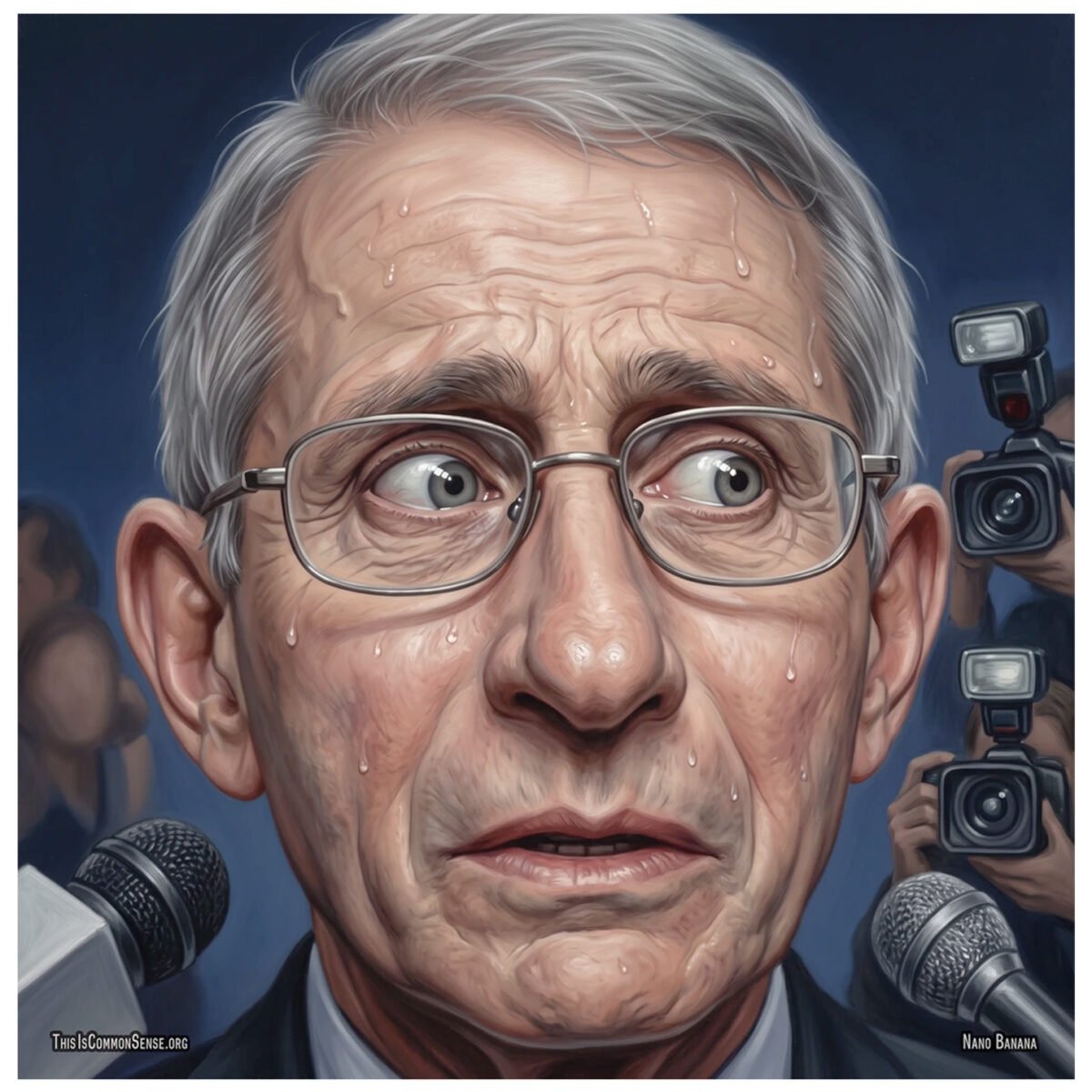
The former director of the NIAID and former Chief Medical Advisor to President Biden made it sound like the Kentucky senator was trying to put him in prison. But what Dr. Paul asked of Dr. Fauci was an apology — not jail-time.
Why, though?
“If we don’t want this to happen again, him acknowledging that he was wrong to fund this research will be a word of caution and warning to the next generation of people to come through,” the senator told Mark Halperin. “And the debate will have ultimately been won on ‘gain of function.’
“The danger of it.”
The point, Rand Paul says, is to stop the madness of this type of research.
Earlier in the interview he had noted that scientists had warned that the results at the Wuhan Institute of Virology should not be published. It would be a blueprint, or recipe, for a never-ending biological warfare by terrorists.
The whole interview is worth listening to. Mark Halperin does what so few journalists do when confronting a contentious issue: formulate each question in epistemically sound terms, for clarity. “Is that an established fact in your mind, or do you need to know more?”
Here are some responses from Sen. Paul:
There’s more. Let’s praise a journalist for asking clear questions and a politician for giving clear answers.
Especially about the coronavirus origin.
This is Common Sense. I’m Paul Jacob.
Illustration created with Nano Banana
See all recent commentary
(simplified and organized)
See recent popular posts
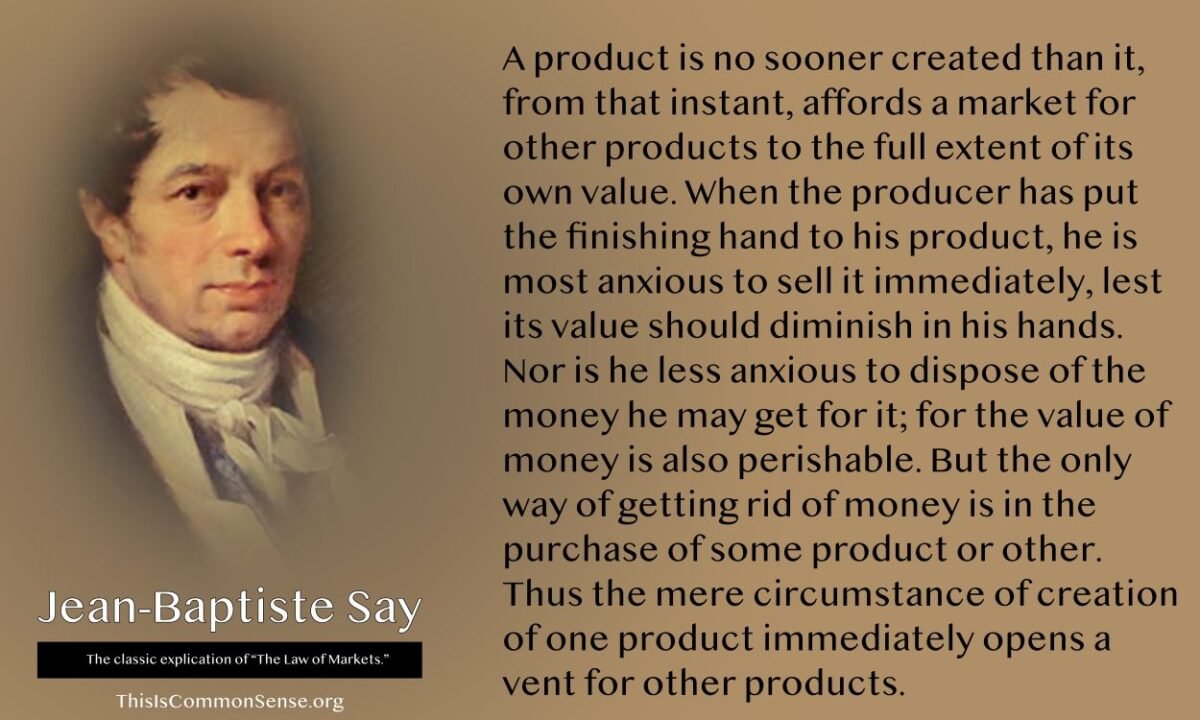
It is worthwhile to remark that a product is no sooner created than it, from that instant, affords a market for other products to the full extent of its own value. When the producer has put the finishing hand to his product, he is most anxious to sell it immediately, lest its value should diminish in his hands. Nor is he less anxious to dispose of the money he may get for it; for the value of money is also perishable. But the only way of getting rid of money is in the purchase of some product or other. Thus the mere circumstance of creation of one product immediately opens a vent for other products.
Jean-Baptiste Say, A Treatise on Political Economy (1834, sixth American ed.), pp. 138–139.
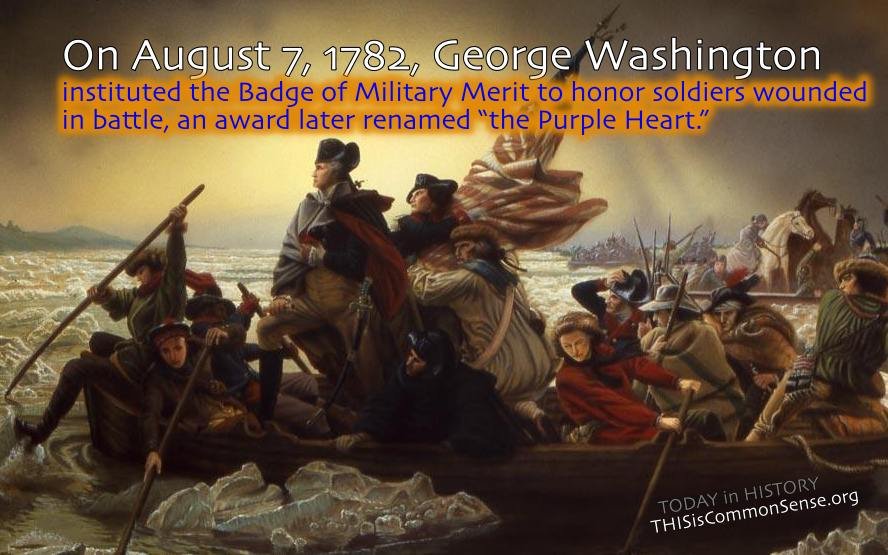
On August 7, 1782, George Washington instituted the Badge of Military Merit to honor soldiers wounded in battle, an award later renamed “the Purple Heart.”
Illustration: “Washington Crossing the Delaware,” Emanuel Leutze, 1851, Oil on canvas (Metropolitan Museum of Art, New York City), depicting an event in 1776, not 1782.
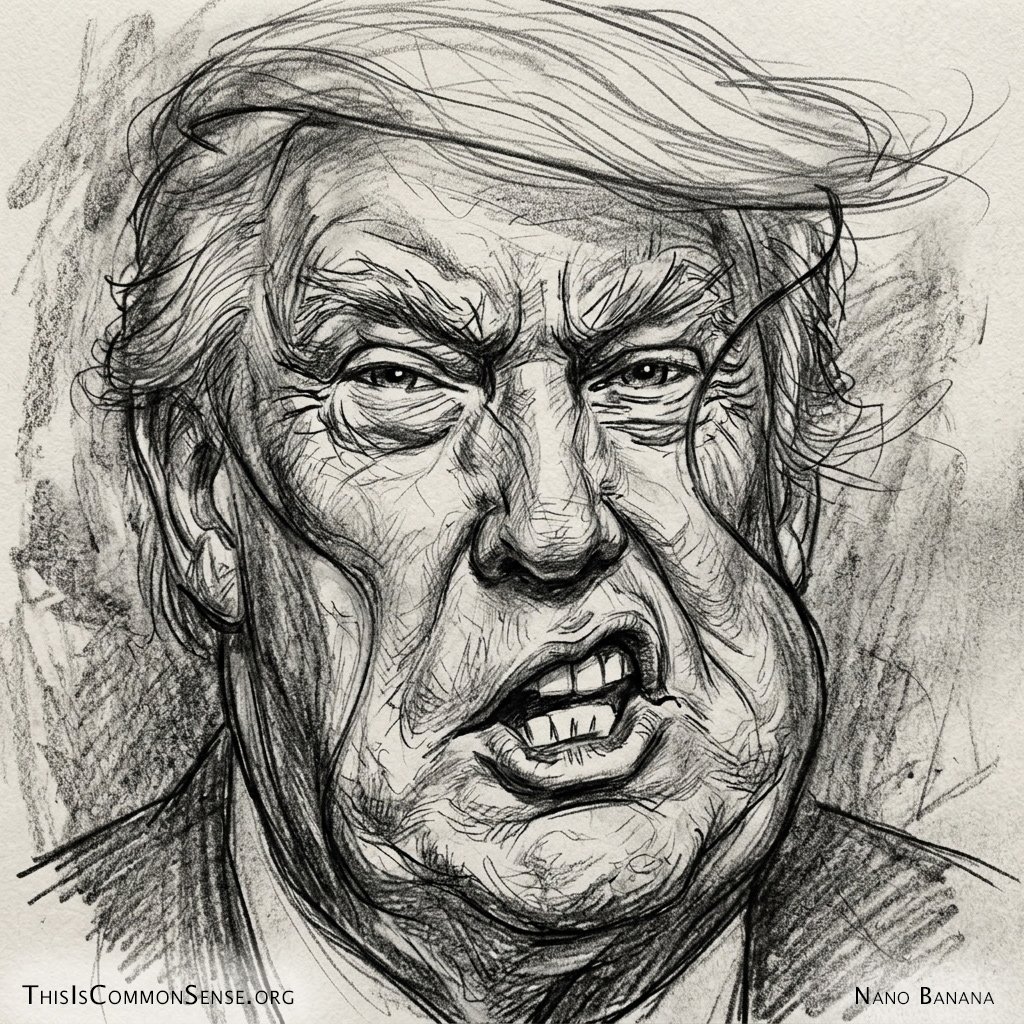
Or perhaps he is just momentarily confused.
The president recently asserted that oil companies are making too much money right now and “ought to give back” some of it to the public. This, although “I’m a big free enterprise guy.”
But oil companies don’t owe buyers anything more than the oil they supply. Nor, when prices are low, do buyers owe oil companies or gas stations more money than what they pay.
In markets, a sudden big drop in supply of a good — like oil, shipments of which might be blocked by wars in the Middle East — tends to lead to higher prices.
Companies unable to ship or sell the good lose money. If demand remains the same or increases, prices for the part of the supply still available go up. Which means more profits and more money to expand production and distribution.
Consumers of oil should want its producers to be as successful as possible. That’s just reason, common sense. High profits encourage and fund more digging, refining, and distribution, and attract more competition — ultimately increasing supply to reduce prices.
Whenever supply of an urgently needed good takes a hit, producers should be as free as possible to deal with the problem and to enjoy the rewards of dealing with it successfully. Any big free enterprise guy should be able to understand this.
You too, Mr. President.
This is Common Sense. I’m Paul Jacob.
Illustration created with Nano Banana
See all recent commentary
(simplified and organized)
See recent popular posts
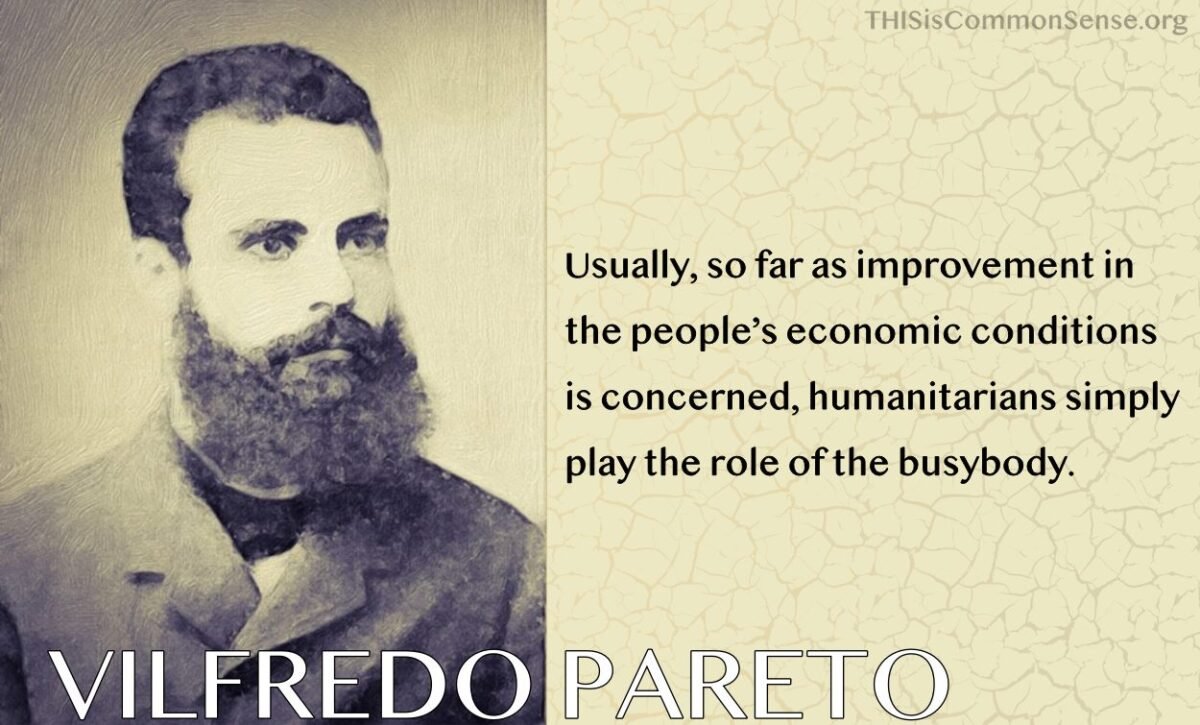
Usually, so far as improvement in the people’s economic conditions is concerned, humanitarians simply play the role of the busybody.
Vilfredo Pareto, Manual of Political Economy (1971, Ann S. Schwier, trans. from the French edition of 1927), p. 301.
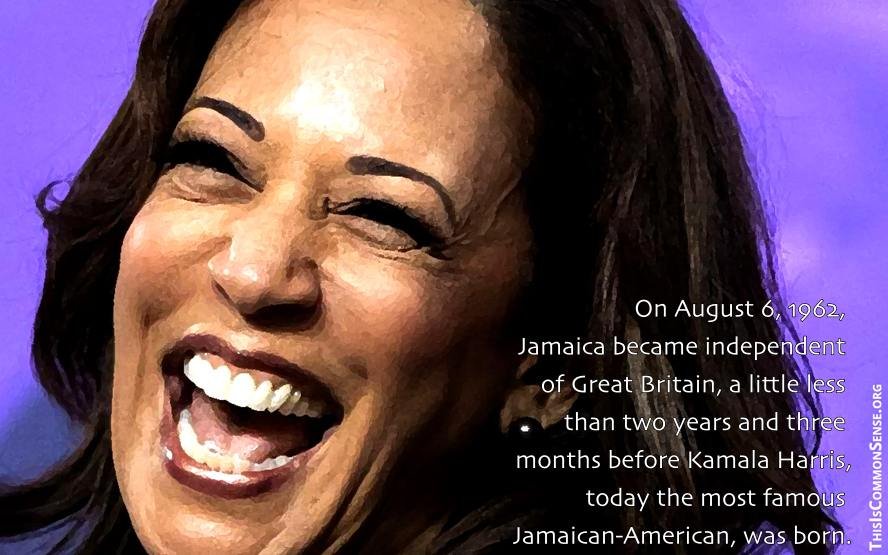
On August 6, 1962, Jamaica became independent of Great Britain, a little less than two years and three months before Kamala Harris, the most famous Jamaican-American, was born.

One scheme is to punish owners of a second home by imposing a so-called “pied-à-terre tax,” a tax on the second residence of wealthy New Yorkers above and beyond regular property taxes.
Now, the assumption that anybody with a second home, or an expensive second home in an expensive property market, must be rolling in liquid funds is faulty. The notion that if you have more wealth than somebody else it should be taken from you? Also faulty.
The new tax bill is going to many New Yorkers with only one home. And the website set up (speaking loosely) to permit challenges of the designation of one’s home as a pied-à-terre is proving nightmarish
One recipient of an extra-tax bill, for $43,000, is Karen Young, who has lived in her brownstone with her husband for thirty years. Two minutes of research would have prevented the mistake, she observes. “Is this a witch hunt?”
New assaults on our rights often have two parts. One part is really horrific. The other part is even more horrific in some other way. The greedy government may eventually withdraw or correct the even more horrific form of the assault; at which point everybody is relieved . . . except anyone noticing that the first form, also horrific, and serving as precedent, is still ongoing.
Was that the game plan here?
This is Common Sense. I’m Paul Jacob.
Illustration created with Nano Banana
See all recent commentary
(simplified and organized)
See recent popular posts
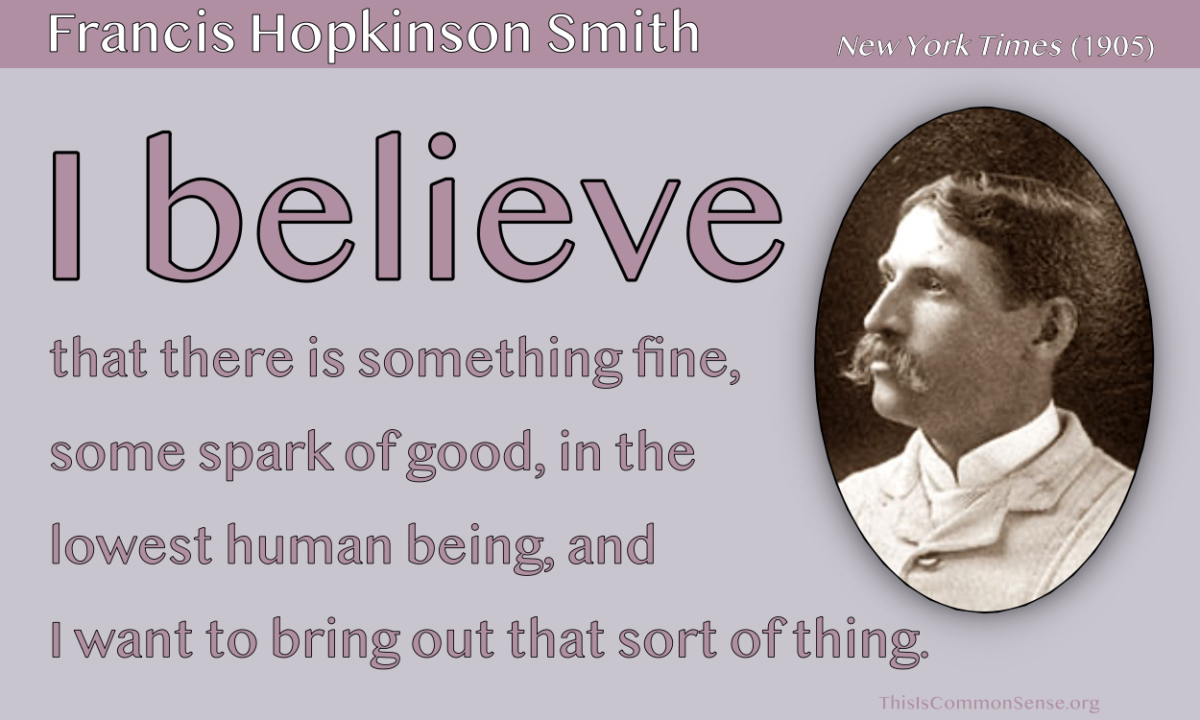
I believe that there is something fine, some spark of good, in the lowest human being, and I want to bring out that sort of thing.
Francis Hopkinson Smith, discussing his goal in fiction writing in a New York Times interview, January 29, 1905. Smith, in addition to writing novels such as Col. Carter of Cartersville (1891) and Peter: A Novel of Which He Is Not the Hero (1908), designed the base of the Statue of Liberty, among other public projects.
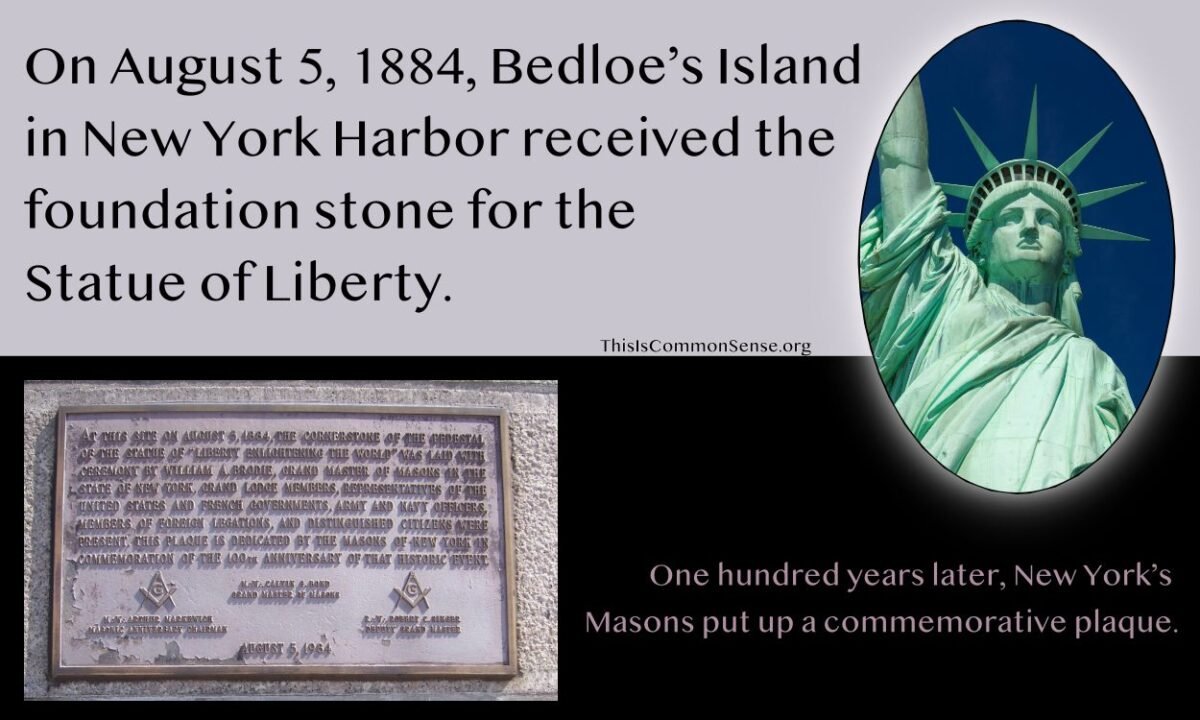
On August 5, 1884, Bedloe’s Island in New York Harbor received the foundation stone for the Statue of Liberty.
One hundred years later, New York’s Masons put up a commemorative plaque that read, in part:
At this site on August 5, 1884, the cornerstone of the pedestal of the Statue of “Liberty Enlightening the World” was laid with ceremony by William A. Brodie, Grand Master of Masons in the State of New York. Grand lodge members, representatives of the United States and French governments, Army and Navy officers, members of foreign legations, and distinguished citizens were present. This plaque is dedicated by the Masons of New York in commemoration of the 100th anniversary of that historic event.
The island was renamed Liberty Island, in 1956.