The War on Drugs led to the use of police state tactics and widespread corruption.
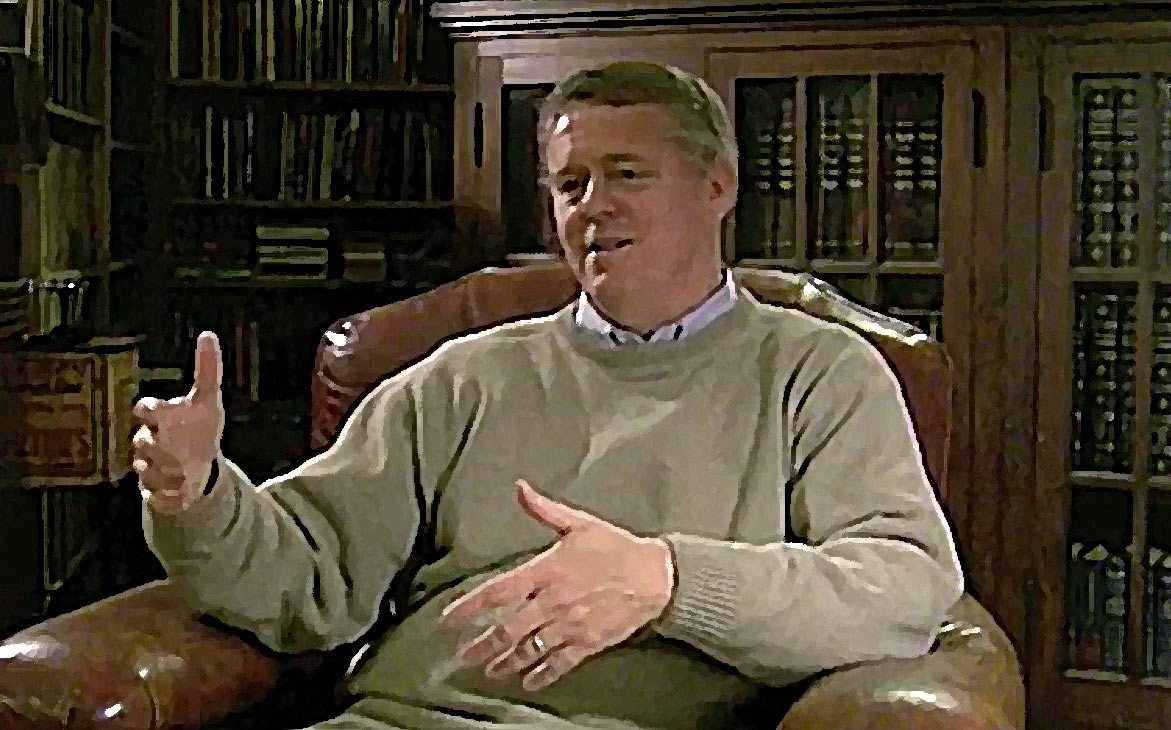
The War on Drugs led to the use of police state tactics and widespread corruption.
Every once in a while, a judge makes a judgment so sensible, it’s as if he had this Common Sense column in mind.
U.S. Magistrate Judge Edmund Brennan has determined that the same right to video-record police in public also applies within a would-be videographer’s home.
The case involves a 2011 search of the home of Mary Crago, which was subject to search without warrant under the terms of her probation. Defendant Kenneth Leonard deleted a video recording she made of the search, telling her that recording it was prohibited. In court Leonard has contended that no right to video-record police officers has been established for persons on probation or in a non-public setting.
To this, Judge Brennan responds that if a plaintiff has “a clearly established constitutional right to record from a public place where the plaintiff has the lawful right to be, a plaintiff surely has such a right in his or her home.”
Brennan sees no “no principled basis” for the assumption that we have a protected right to record officers performing their duties in public that “does not extend to those performed in a private residence. The public’s interest in ensuring that police officers … do not abuse [their] authority … does not cease once they enter the private residence of a citizen.”
If anything, it is even more urgent to protect a citizen’s right to document proceedings when an officer’s actions are shielded from public view — from other witnesses.
But of course. It’s just Common Sense, isn’t it?
I’m Paul Jacob.
If you see what is right and fail to act on it, you lack courage.
Yesterday morning, Paul Waldman of the Washington Post wondered why libertarians and limited government conservatives weren’t all over the Ferguson riot suppression, and the police shooting that sparked the whole fracas. He recognized that Reason magazine’s website has covered it, but, he noted, “the politicians and conservative media figures who claim to be the most fervent advocates of individual freedom and to care the most about misuse of government power have been silent.”
One might be tempted to conclude they believe that when somebody’s grandson has to pay taxes on their inheritance, it’s a horrifying injustice that demands redress, but when somebody else’s grandson gets shot walking down the street, that’s just how things go sometimes.
Or maybe one should yield, instead, to the temptation to wait and see what they say when they say it. Rep. Justin Amash tweeted about it later in the day. But Waldman got his licks and innuendo in first.
The whole thing smacks of bad government to me — deadly misgovernment — but I can understand why many folks might want to reserve judgment.
Weighing on the wait-and-comment-later side of this particular debate, it is worth acknowledging that the information so far has been awfully confusing. Especially since the Ferguson government has been cracking down on reporting and video recording, as well as being not very forthcoming about the initial shooting or the autopsy.*
The 24-hour news cycle is bad enough. The 24-hour commentary/reaction cycle is doubly daunting. Forgive me if I don’t have anything profound to say yet. I’m sure, when the facts become clearer, at least I will make my thoughts known.
Isn’t it too early to make comments about comments not made?
This is Common Sense. I’m Paul Jacob.
* Those are good reasons to be protesting in Ferguson. There are no good reasons for looting Ferguson businesses.
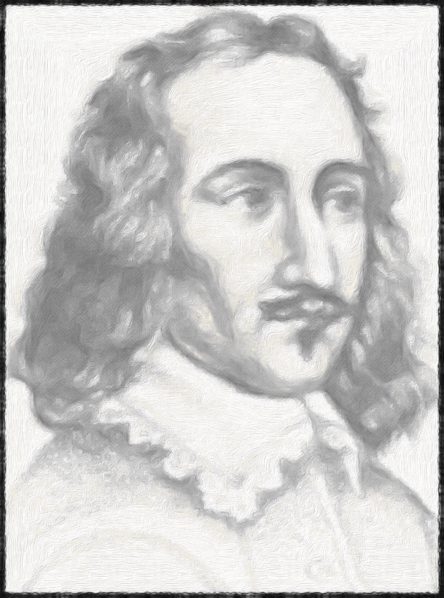
And this is man’s prerogative and no further; so much and no more may be given or received thereof: even so much as is conducent to a better being, more safety and freedom, and no more. He that gives more, sins against his own flesh; and he that takes more is thief and robber to his kind — every man by nature being a king, priest and prophet in his own natural circuit and compass, whereof no second may partake but by deputation, commission, and free consent from him whose natural right and freedom it is.
There’s been a lot of talk about Robert Draper’s New York Times article on a possible “libertarian moment.” On Townhall, “last weekend,” I focused on the partisan political aspect of the movement. There was a lot of curious stuff in the article, and I haven’t seen anyone comment on one of its stranger passages.
Call it a moment of culture shock.
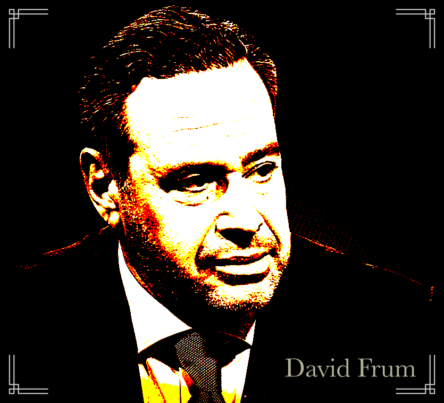
“What does that mean, ‘I own myself?’ ” David Frum, a former speechwriter for George W. Bush and Republican commentator, sputtered in exasperation when we spoke later. “Can I sell myself? If I can’t, I don’t own myself.”
Taken at face value, one could simply answer Frum by mentioning that in olden times people could sell themselves — into slavery.
Or one could make an extended political point. “Haven’t we all sold ourselves long ago?” That might be unnerving.
But the informed answer is this: “We can’t sell ourselves because our ‘self-propriety’ (as Richard Overton put it long ago) differs from other kinds of ownership. Our self-ownership is inalienable. That’s why it’s so important.”
It’s like this: You own you, I own me — we are free.
It turns out, Mr. Frum, that this “inalienability” idea was central to much discussion of rights at the founding of our country. Funny you don’t seem to know anything about that.
This is Common Sense. I’m Paul Jacob.
For every one, as he is himself, so he has a self-propriety, else could he not be himself; and of this no second may presume to deprive any of without manifest violation and affront to the very principles of nature and of the rules of equity and justice between man and man. Mine and thine cannot be, except this be. No man has power over my rights and liberties, and I over no man’s. I may be but an individual, enjoy my self and my self-propriety and may right myself no more than my self, or presume any further; if I do, I am an encroacher and an invader upon another man’s right — to which I have no right. For by natural birth all men are equally and alike born to like propriety, liberty and freedom. . . .
From “Richard Overton shoots An Arrow against all Tyrants from the prison of Newgate into the prerogative bowels of the arbitrary House of Lords and all other usurpers and tyrants whatsoever” (1646).
On August 12, 30 BC, Queen Cleopatra VII committed suicide, ending the Ptolemaic dynasty of Egypt and providing grist for literary works such as Shakespeare’s great tragedy, Antony and Cleopatra.
On this day in 1898, an Armistice ended the Spanish-American War, a war commemorated best by sociologist and economist William Graham Sumner in his classic essay “The Conquest of the United States by Spain.”
Ah, the Paul Krugman Problem! How does Nobel Laureate economist-cum-New York Times progressive-blogger come to his conclusions?
The other day, the eminent Scott Sumner noted — in “The power of wishful thinking?” — that in the space of one year Krugman seemed to gain a great deal of certainty about how vital it is to reduce inequality.
Sumner quotes Krugman from a year ago, when he frankly admitted that he’d like to agree with Joe Stiglitz’s thesis about inequality, but just wasn’t able to persuade himself.
Unfortunately, Krugman hasn’t given us a lot of reason to follow his “lead,” his new-found faith in Stiglitzian equality. Sumner cites a possible “inspiration” for Krugman’s new tune: Krugman’s employer, the New York Times, has, as editorial policy, shifted leftward on such issues. And then Sumner waxes philosophical:
Sometimes an economist will change his view on a single issue because of some new empirical study (although that actually doesn’t happen as much as you’d think, or as much as you might like). But what about when an economist suddenly swings sharply to the left or right on a whole range of unrelated issues?
Many people do go through radical conversions; you can find interesting conversion testimonies of a religious nature, if not so many in political economy.
As for me, the subject of inequality continues to fascinate, like picking at a scab.
I suspect that rising inequality is caused by the very institutions that Paul Krugman regards as bedrock: institutions that redistribute money from one group to another; institutions that regulate behavior for the benefit (we’re told) of the worse off; institutions altogether “progressive.”
Surely there would be more downward mobility for the rich and upward mobility for the poor in a freer society than in a more Krugman-approved society.
This is Common Sense. I’m Paul Jacob.
Last week’s interview with New York Times columnist Thomas Friedman brought a rare admission from President Barack Obama.
Friedman asked, “What’s the biggest thing you’ve learned doing foreign policy?”
“I’ll give you an example of a lesson I had to learn that still has, you know, ramifications to this day,” Obama replied, “and that is our participation in the coalition that overthrew Gaddafi in Libya.”
The president was quick to defend the “lead from behind” 2011 intervention, itself, as “the right thing to do,” because “had we not intervened, it’s likely that Libya would be Syria, right?”
Or Iraq, perhaps?
He decided to attack Libya militarily, Mr. Obama went on to explain, precisely “because Gaddafi was not going to be able to contain what had been unleashed there” (via the Arab Spring) and thus, “there would be more death, more disruption, more destruction.”
Does that make any sense? Was Gaddafi’s inability to wield more complete and total power over his rivals within the country plausibly be the rationale behind the NATO intervention?
In acknowledging his error, the president said, “What is also true is, I think we underestimated . . . the need to come in full force — if you’re going to do this. Then it’s the day after Gaddafi’s gone, when everyone’s feeling good, everybody’s holding up posters saying ‘Thank You, America!’ At that moment, there has to be a much more aggressive effort to rebuild societies that don’t have any civic traditions.”
Of course, it isn’t possible to “re-build” that which you admit never existed.
And it isn’t the role of the U.S. Government.
This is Common Sense. I’m Paul Jacob.