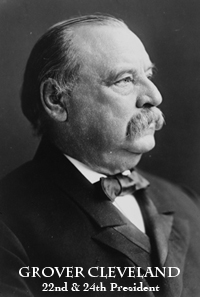
 What is the use of being elected or re-elected unless you stand for something?
Categories
What is the use of being elected or re-elected unless you stand for something?
 On October 30, 1907, Sol Tax was born. Tax, an important anthropologist at the University of Chicago, organized a four-day conference on military conscription, which was the start of an intellectual movement that led to the end of the draft less than seven years later. Tax’s most famous work was probably his study of a Guatemalen Indian economy, “Penny Capitalism.”
Every once in a while somebody explains that “we” don’t need this or that product, however great it may be and however great the demand for it. For example, a tech reviewer dubs Apple’s latest iPad models “largely unnecessary,” given last-year models almost as capable.
 The charge of unnecessariness is surely false when we’re talking about customers who do want the most cutting-edge technology and can put it to good use. But it’s false in a broader perspective too — unless we suppose that all advances in human civilization beyond the level of the hut and the bearskin are “largely unnecessary” to human survival and well-being.
If technological progress is necessary, so are key aspects of how that progress happens, including the fact that it so often happens by “largely unnecessary” increments. Any given marginal advance in computer or PC tech may have been dispensable. But the same can’t be said of the process of cumulative improvement as a whole. Consider, for example, that some ninety percent of what we now do on our PCs would have been impossible to do with the 1980 PC. Our 2014 laptops could not have been crafted without myriad intermediate advances.
As striving human beings, our needs evolve as our means improve and enable us to pursue ends that we could not have pursued with less powerful means. Ergo, I welcome every little improvement we can get. And I can hardly wait for my 2025 iPad.
This is Common Sense. I’m Paul Jacob.
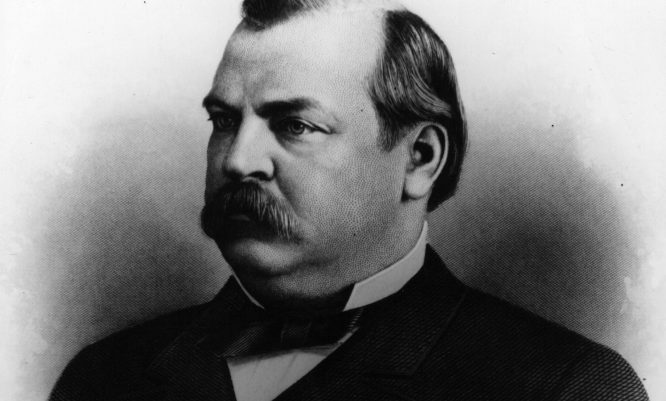
When more of the people’s sustenance is exacted through the form of taxation than is necessary to meet the just obligations of government and expenses of its economical administration, such exaction becomes ruthless extortion and a violation of the fundamental principles of free government.
President Stephen Grover Cleveland, Second Annual Message (December 1886).
A few weeks ago, The Washingtonian published a best of/worst of list about Congress. It stands out amongst other “tops” lists because the voting is done by White House staffers. This is what the employees think about their prima donnas. I mean bosses.
The most interesting winner appeared near the end, “Lobbyists’ Worst Enemy.”
The “Lobbyists’ Best Friend” category was topped by John Boehner and Eric Cantor. The “Worst Enemy”— which has to be the highest badge of honor on this list — is Justin Amash.
 And if you are wondering why lobbyists might not take a shine to this Republican Representative from Michigan’s Third Congressional District, consider the calumnies his detractors directed against him.
Mike Rogers, also a Michigan House Republican, accused Amash of being “Al Qaeda’s best friend in the Congress” because of Amash’s well-known anti-NSA stance. Devin Nunes, from California’s Republican delegation, insisted that Amash “votes more with the Democrats than with the Republicans,” was not serious, and just liked siding with the GOP’s opponents.
A debunking in Rare (“America’s News Feed”), published in June, beat down all these charges. Not only has Amash voted with his party over 80 percent of the time, he’s voted against former House Speaker Nancy Pelosi more than any other Representative.
But there’s something more impressive about Amash, as Rare points out. He has voted every chance he got. He has the longest tardy-free voting record in Congress. And, furthermore, Amash explains, via social media, every vote he makes.
That is, he does his job.
No wonder lobbyists don’t like him.
This is Common Sense. I’m Paul Jacob.
On October 29, 539 BC, Cyrus the Great entered the city of Babylon as conqueror. His general policy of religion toleration would be extended to the Jews, who were not long after allowed to return to their homeland.
On the same date in 1923 AD, the Ottomon Empire’s dissolution marked the start of the Turkish Republic.
I would rather the man who presents something for my consideration subject me to a zephyr of truth and a gentle breeze of responsibility rather than blow me down with a curtain of hot wind.
 On October 28, 1886, in New York Harbor, the Statue of Liberty was dedicated by President Grover Cleveland, despite the fact that the monument was not a federally funded project.
Outrageous. That’s the best word for the recent court decision letting the Internal Revenue Service off the hook for ideologically targeting organizations that apply for tax-exempt status.
 True the Vote, which combats voter fraud, sued the Internal Revenue Service because of the tax agency’s deliberate obstruction of applications from Tea Party and conservative organizations like True the Vote. The long delay in approval was costly in part because many prospective contributors to TTV had been awaiting the granting of 501(c)(3) status before going ahead with their donations. True the Vote’s president, Catherine Engelbrecht, was also harassed by other government agencies after submitting the application to IRS.
Nevertheless, Judge Reggie Walton has cavalierly dismissed the suit, asserting that the eventual granting of the tax-exempt status means that the IRS had taken adequate “remedial steps to address the alleged behavior.”
Following the same exalted principle of jurisprudence, Walton would presumably dismiss charges against a mugger so long as at some point the arrested criminal had tossed the wallet back to his victim.
The dismissal, no matter how outrageous, is not in the tiniest bit surprising.
IRS personnel often behave as if they may assault our rights (e.g., to our bank accounts) with impunity, so long as they occasionally defer to our protests by announcing temporary or cosmetic reforms. Others in government cooperate in letting the agency run riot. Perhaps because they agree that the IRS (maybe themselves, too) should enjoy virtually unlimited power over us.
Or perhaps simply because they, like the rest of us, are scared of the IRS.
This is Common Sense. I’m Paul Jacob.
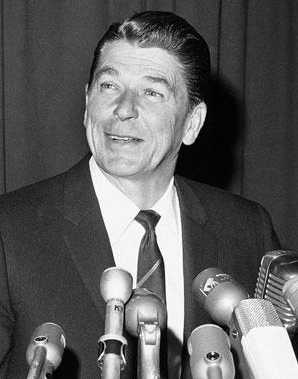 On October 27, 1964, Ronald Reagan delivered a speech on behalf of Republican candidate for president, Barry Goldwater, thereby launching Reagan’s political career. The speech came to be known as “A Time for Choosing.”