After logic we must proceed to philosophy proper. Here too we have to learn from our predecessors, just as in mathematics and law. Thus it is wrong to forbid the study of ancient philosophy. Harm from it is accidental, like harm from taking medicine, drinking water, or studying law.
While running for the Senate, Elizabeth Warren informed Lawrence O’Donnell and his MSNBC audience that she didn’t understand how Congressfolk could keep playing the stock market while in office. She trotted out the notion of stock management via blind trusts.
She and O’Donnell understand that members of Congress have apparently irresistible opportunity to leverage for their private benefit insider information and their power to change policy. It’s no secret: many a pol enters Congress as moderately upper middle class only to leave lining his coffin in gold.
“I realize there are some wealthy individuals — I’m not one of them — but some wealthy individuals who have a lot of stock portfolios,” she insisted.
Her clumsy, folksy “lot of stock portfolios” statement let her pretend not to be rich, when, in truth, she’s a multimillionaire living in a $5 million house . . . but with stock only in one company.
Politic precision.
In the Washington Examiner recently, Byron York explained her nuanced answer to the question of whether she was “going to run for president”:
Warren’s response was, “I’m not running for president.”
That’s the oldest lawyerly evasion in the book. Warren, a former law professor, did not say, “I am not going to run for president.” Instead, she said she is “not running,” which could, in some sense, be true when she spoke the words but no longer true by, say, later this year.
How Clintonian. She pretends not to be wealthy while running on “inequality,” and then — while pitching a campaign book — pretends not to be running for the presidency at all.
And misses the obvious anti-corruption planks: complete, minute-by-minute Web-based congressional investment transparency. And term limits.
This is Common Sense. I’m Paul Jacob.
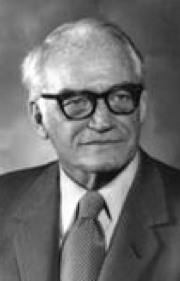
William of Ockham (Occam)
It is vain to do with more what can be done with fewer.
On May 25, 1810, citizens of Buenos Aires expelled Viceroy Baltasar Hidalgo de Cisneros starting the Argentine War of Independence.
On May 25, 1925, John T. Scopes was indicted for violating Tennessee’s Butler Act, which made it unlawful to teach evolution in any state-funded school. The Scopes Trial — formally known as The State of Tennessee v. John Thomas Scopes and informally known as the Scopes Monkey Trial — drew intense national publicity, as reporters flocked to Dayton, Tennessee, to cover the big-name lawyers representing each side. William Jennings Bryan, three-time presidential candidate for the Democrats, argued for the prosecution, while Clarence Darrow, the famed defense attorney, spoke for Scopes. Scopes was found guilty, but the verdict was overturned on a technicality and he went free.
Townhall: Freedom of Choice for Vets
Another scandal for the president. Another defeat for his beloved socialism.
See this weekend’s Common Sense column at Townhall.com . . . and then come back here for some backstory:
- Washington Free Beacon: GOP Rep. Proposes Health Care Vouchers So Vets Can Opt Out of VA Health System
- CBS News: VA whistleblower: Patients “were dying while waiting”
- CNN: A fatal wait: Veterans languish and die on a VA hospital’s secret list
- NYT op-ed by Dr. Sam Foote: Why I Blew the Whistle on the V.A.
- CNN’s The Lead: US Rep. Jeff Miller Interview – breaks Phoenix bonus
- Washington Free Beacon: The REAL REASON Liberals Are ‘Madder Than Hell’ About the VA Healthcare Scandal
- MSNBC Morning Joe: Sen. Tester (D-Mont.) applauds the VA
- President Obama’s Weekly Public Address – video
- GAO Report: Ongoing and Past Work Identified Access Problems That May Delay Needed Medical Care for Veterans
On May 24, 1775, John Hancock was elected president of the Second Continental Congress. Hancock’s involvement with Samuel Adams and his radical group, the Sons of Liberty, won the wealthy merchant the dubious distinction of being one of only two Patriots (the other being Sam Adams) that the Redcoats marching to Lexington in April 1775 to confiscate Patriot arms were ordered to arrest. When British General Thomas Gage offered amnesty to the colonists holding Boston under siege, he excluded those same two men from his offer.
Tim Jacob talks about the current term limit situation in his home state of Arkansas:
On May 23, 1788, South Carolina became the 8th state to ratify the U.S. Constitution.
Other May 23 events include:
* 1813: South American independence leader Simón Bolívar entered Mérida, where he was proclaimed El Libertador (“The Liberator”), leading the invasion of Venezuela.
* 1900: Sergeant William Harvey Carney became the first African American to be awarded the Medal of Honor, for his heroism in a Civil War battle fought 37 years prior, in 1863.
* 1958: Birthday of American comedian and game show host Drew Carey.
It was merely an “administrative error.”
Phoenix Veterans Affairs Health Care System Director Sharon Helman was awarded an $8,500 bonus, even while her operation was under investigation for falsifying patient wait times and possibly causing the deaths of 40 veterans.
The bonus has now, after much publicity, been rescinded.
Sadly, the veterans who died in a fraudulently inefficient system cannot be brought back to life.
The hefty bonus money adds cruel insult on top of a much more serious injury — one we now know extends far beyond Phoenix. The investigation has spread to 26 facilities.
Major veterans organizations demand that Veterans Affairs Secretary Shinseki resign, or that the president (who once again discovered the crisis from media reports) replace him. That’d be a logical first step, signaling in deeds, not just words, that folks will be held accountable.
The personnel changes shouldn’t stop there. And those guilty of fraud should also face criminal charges.
Still, some gloss over this scandal. Montana Senator Jon Tester says Shinseki should stay and that the VA has done a “remarkable” and “a pretty darn good job.”
A Washington Post editorial played down the scandal, noting that “Delayed treatment has been an issue for decades.”
The Post is half-right. The problem of this federal healthcare bureaucracy shortchanging vets is certainly not new.
But Rep. Andy Harris (R-Md.) is 100 percent right. The Navy vet and doctor, with years of VA experience, wants to offer vets a choice between the VA or a voucher to pay for their private care.
It’s a solution aimed at protecting the vets who need care, rather than the VA bureaucracy.
This is Common Sense. I’m Paul Jacob.
This is a story about how technology is making things better. About 840 times better.
What’s represented by that multiple is price — the far lower price of a machine that 53-year-old Jose Delgado Jr. uses instead of the left hand he was born without.
For three years he had used a prosthesis costing $42,000. Its myoelectric technology detects electrical signals in muscle tissue in order to operate prosthetic fingers.
But the gadget’s capacity to grip? Rudimentary.
Now Delgado has a more capable prosthesis, the result of the latest technological breakthrough.
And it costs just 50 bucks.
3D printing has been advancing rapidly, sometimes controversially. It is now possible to produce a working metal gun with the technology.
It’s hard to see what can be controversial about Delgado’s new 3D-printed prosthesis, though.
Is the price for real? Perhaps the $50 incorporates only immediate production costs, and that other factors involved in developing and marketing the Cyborg Beast could make it pricier. But given what’s been demonstrated, even its most expensive incarnations would have to be orders of magnitude cheaper than earlier prosthetic tech.
It also does the job better.
The Beast’s mechanical plastic fingers are much better articulated than those of its predecessor. It grips objects more firmly and precisely, manipulates them more dexterously. Delgado dramatically demonstrates the superiority in a YouTube video produced by 3D Universe.
Such products of human ingenuity are stunning. Yet soon we’ll take for granted what they now make possible for the first time. And there’s a lot more to come. We live in interesting times.
This is Common Sense. I’m Paul Jacob.