Categories
crime and punishment judiciary

A Right to Hide Wrongs?

Are public officials entitled to a right to privacy that must be “balanced against” our right to protect ourselves from their misconduct?

Too often, how to adjudicate rights is regarded as a matter of juggling competing interests, whatever those interests may be, rather than of specifying

  • the nature of the relevant right,
  • whether it is fundamental or derivative, and
  • when it does and does not properly apply.

The right to life, for example, entails the right to peaceably earn a living and to acquire and exchange property — but not to steal somebody else’s property.

Thus there’s no call for judges to furrow their brows over how to “balance” your right to your wallet with a mugger’s “right” to it. Whatever rights a thief has, he has never had a right to your wallet. Nor to immunity to the consequences of stealing.

Similar considerations apply to the “right to privacy” of government officials guilty of misconduct in their official capacity.

Whatever information about themselves which, even so, officials may be entitled to withhold from us, this right-to-keep-stuff-about-me-confidential can’t encompass evidence of abuse of power. We are entitled to that information for the sake of combating such abuse and protecting our own rights.

So Eugene Volokh is right to conclude, with respect to the June 11 Chasnoff v. Mokwa decision — a case originating in what certain cops did with tickets taken from scalpers — that it “should be obvious” that “Police officers have no constitutional ‘right of privacy’ in records” of misconduct.

This is really little more than basic law.

Indeed, this is Common Sense. I’m Paul Jacob.

Categories
Today

August 7

On August 7, 1782, George Washington instituted the Badge of Military Merit to honor soldiers wounded in battle, an award later renamed “the Purple Heart.”

Categories
ideological culture local leaders

An Epic Rebuke

The Good Ol’ Boy Network is under attack. And there’s no nicey face, kiss-and-make-up from its enemy, Rep. Justin Amash (R-Mich), to his just-defeated primary opponent, Brian Ellis.

Ellis called Amash to congratulate his opponent on election night, after Amash defeated Ellis by a rather large margin. Amash refused to answer Ellis’s call.

No wonder. During the campaign, Ellis sure didn’t play nicey-nice, calling Amash “Al-Qaida’s best friend.”

Amash is well known as a Tea Party candidate, someone who fairly consistently opposes crony capitalism. Ellis was heavily funded by the Chamber of Commerce, local and national . . . and you know what that means.

Or should. The Chamber, “while claiming to be ‘pro-free-market,’” Ryan McMaken explains at The Circle Bastiat, “has gone after him for not spending enough government money. This is not surprising. Business groups like Chambers of Commerce are not free-market organizations at all, but rent-seeking lobbying groups looking for government favors.

There’s nothing new here. When Ron Paul was in Congress, the US Chamber ranked him as one of the worst members, giving him the lowest score of any Republican. In Chamber-speak, being “free-market” means voting for things like TARP and various bailouts and No Child Left Behind.

Are you for the freedom principle, or a mere insider free-for-all?

That principle may be why Amash rebuked not only Ellis but Ellis’s major backer, former Rep. Pete Hoekstra, as well. “You are a disgrace,” Amash lambasted Hoekstra. “And I’m glad we could hand you one more loss before you fade into total obscurity and irrelevance.”

Harsh. Though refreshing candor. In a fight over principle, nicey-nice may not suffice.

This is Common Sense. I’m Paul Jacob.
Categories
Thought

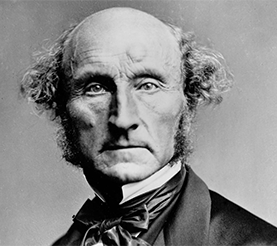
Herbert Spencer

The universal basis of co-operation is the proportioning of benefits received to services rendered.

Categories
crime and punishment

Cold War Casualty

The Cold War never quite ended. At least two countries still sport that old-fashioned “Second World” status of ostensibly communist, definitely totalitarian, and utterly crazed leadership: North Korea and Cuba.

Alan Gross, age 65, was convicted of un-Cuban activities in 2011, and has since been serving a 15-year prison sentence. He was a subcontractor, working in Cuba, for the U.S. Agency for International Development. What, precisely, did he do “wrong”?

U.S. officials said Gross was merely trying to help Cubans bypass the island’s stringent restrictions on Internet access. But Cuban authorities say Gross was part of a plot to create “a Cuban spring” and destabilize the island’s single-party communist government.

The two interpretations are not exactly at odds with one another. Sure, he was trying to bring the Internet to Cuba. And that’s why the communist government was suspicious: free information would likely bolster opposition to the commie way of stasis.

Which just goes to show how awful single-party states are, how mind-crushingly awful communism is: restrictive; vindictive; paranoid; cowardly.

These qualities are supposed to be absent from New Socialist Man, of course, qualities found only — at least, in ultra-left theory — under capitalism and democracy.

But, instead, they serve as hallmarks of governments that cannot trust their subjects with even a smidgeon of freedom.

Gross is now reportedly weak, and has given up on life. Prison life in a prison society is not worth it, he says.

We can hope for a prisoner exchange. But really, what’s needed is a change of government in Cuba.

This is Common Sense. I’m Paul Jacob.

Categories
Thought

Herbert Spencer

People … become so preoccupied with the means by which an end is achieved, as eventually to mistake it for the end. Just as money, which is a means of satisfying wants, comes to be regarded by a miser as the sole thing to be worked for, leaving the wants unsatisfied; so the conduct men have found preferable because most conducive to happiness, has come to be thought of as intrinsically preferable: not only to be made a proximate end (which it should be), but to be made an ultimate end, to the exclusion of the true ultimate end.

Categories
media and media people Second Amendment rights

Rapid-Response Counterfire

If somebody tries to polemically gun down your rights, button your flak jacket and shoot back.

It may take years — say, if you’re John Locke answering Robert Filmer.

Sometimes you’ve got only seconds.

You’re on a gab show being watched by millions. Somebody says something unwise, illogical and destructive — but possibly persuasive to a certain percentage of viewers. Unless you reply, instantly, with something wise, logical and constructive, you lose your chance.

If it’s dueling YouTube videos, maybe it takes a couple of days to blast the enemy and win a viewership the size of a small city.

The offending “celluloid” I have in mind is a Bloomberg-funded skit that opens with the caption “Warning: this video depicts scenes of domestic violence.” An armed ex-boyfriend breaks into a woman’s home and threatens to take their kid. The woman calls the police — minutes away when seconds count. The video implies that the way to “stop gun violence against women” is to get rabid-ex-boyfriend-empowering guns off the streets.

Two days later, Liberty PA had posted a parody-rebuttal. This time, the prospective victim flourishes a shotgun to scare off the ex. Opening caption: “Warning: this video depicts scenes of self-defense.” Closing caption: “Stop gun control against women.”

Bull’s-eye.

The video-rebuttal didn’t cost much more to make than the quick wit and time of a few alacritous participants. Within a couple days — credit partly yours, O modern technological infrastructure! — it had garnered 72,000 hits.

On Fox’s Red Eye and elsewhere the inanity of the original propaganda piece was pointed out. But it was the Liberty PA video response that really brought the point home.

This is Common Sense. I’m Paul Jacob.

Categories
Thought

Herbert Spencer

The truth is, that those who have never entered upon scientific pursuits know not a tithe of the poetry by which they are surrounded.

Categories
Thought

Alexis de Tocqueville

No protracted war can fail to endanger the freedom of a democratic country.

Categories
free trade & free markets

Help Airbnb Win in San Fran

Whenever companies invent radical new ways of making life easier, there’s a good chance someone will kvetch about how hazardous the new way is and/or how rudely inconvenient for those wedded to old ways.

That’s true when it comes to smartphone apps that helps users buy rides outside the usual regulated-taxi context (as I’ve discussed here and here). It’s also true in the case of Airbnb, whose app connects renters and home owners.

Airbnb and other companies are fighting to reform San Francisco’s restrictive housing laws, which have helped inflict one of the most hellish housing markets in the country. The Fair to Share San Francisco website says that the town’s housing laws are “outdated” — which understates the case, since the strictures weren’t valid to begin with. Regulators prohibit San Francisco residents from subletting their residences for fewer than thirty days.

This makes things tough for an app designed to broker short-term rentals.

Airbnb has also been hassled in New York State, where it has been forced to turn over some data about its users to the attorney general as prelude to turning over even more data about users the AG decides may be breaking the law.

It is indeed unfair to outlaw you from peacefully using your own property as you wish. If you live in the San Francisco area, you can help change Fog City’s smoggy housing laws by signing a petition at the Fair to Share site.

Strike a blow for Common Sense. I’m Paul Jacob.

Original photo by Dave Alter, “Lombard Street San Francisco,” some rights reserved.